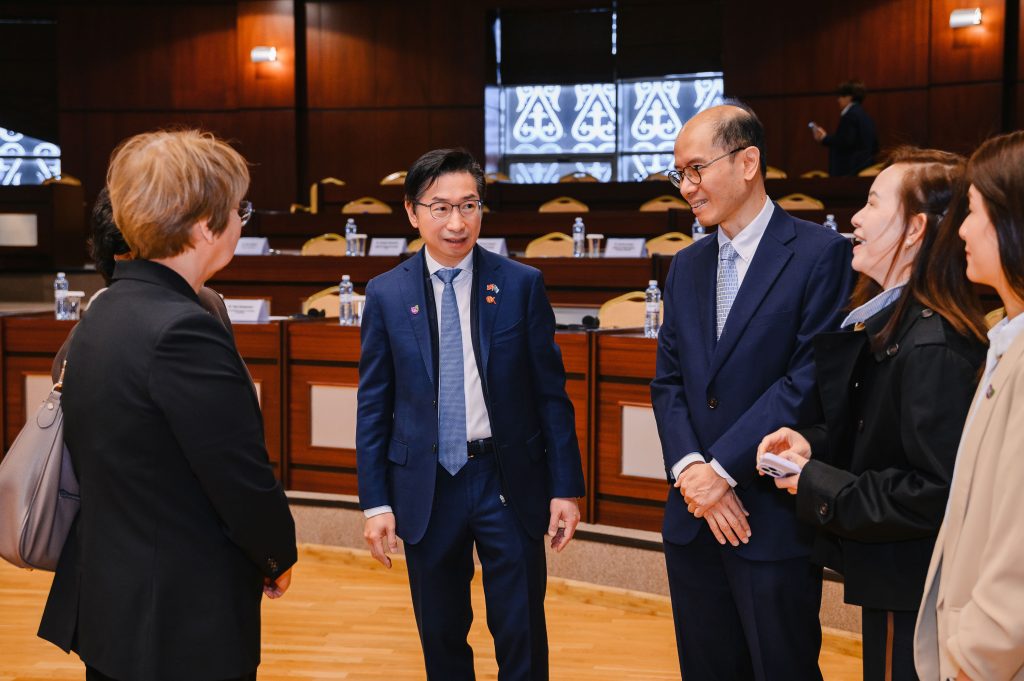

On September 9–10, NU hosted the second module of the Women Leadership Development Programme (WLDP), bringing together around 80 participants from academia, government, business and the non-governmental sector. The two-day intensive focused on strategic leadership, financial decision-making and effective management.
The module was opened by NU Vice President Gulmira Kanay, one of the programme’s authors. Over the two days, participants explored practical tools for securing grant funding, gender-responsive budgeting, compliance, and strategies for scaling initiatives.
Aida Sagintayeva, Vice Provost and Dean of the NU Graduate School of Education, highlighted the importance of a cross-sectoral approach to leadership development: “Leadership is the ability to influence resources and build alliances beyond institutional boundaries. Our goal is to strengthen women’s capacity to lead change.”
One of the programme’s distinctive elements was the integration of the arts into leadership and management development. During special sessions with Kazakhstani artists and cultural figures, including Professor Leila Makhat of the T. K. Zhurgenov Kazakh National Academy of Arts, participants explored creativity as a source of resilience and a tool for developing leadership thinking. The module concluded with a panel discussion on decision-making in resource-constrained environments.
The first WLDP module was held in June 2026. At its opening, NU President Waqar Ahmad identified increasing women’s representation in STEM disciplines and academic positions as one of the key challenges facing the sector.
Women’s leadership remains an important issue across other sectors as well. As highlighted at the launch of the programme, women own nearly half of small and medium-sized businesses in Kazakhstan, while their representation in political leadership and Parliament remains at 17–18%.
About the programme: The WLDP was jointly developed by NU’s Graduate School of Education (GSE), Graduate School of Public Policy (GSPP), and Graduate School of Business (GSB), in partnership with the National Commission for Women’s Affairs and Family and Demographic Policy under the President of the Republic of Kazakhstan. Participants will present their final projects at the end of November 2026. The programme reflects NU’s commitment to contributing to the UN Sustainable Development Goals, particularly SDG 5, “Gender Equality,” and SDG 10, “Reduced Inequalities.”