A research team at NU has secured KZT 2 billion in government Program Targeted Funding to develop technologies for producing lithium-ion battery materials from locally sourced raw materials.
The three-year programme (2026–2028) represents an important step toward strengthening Kazakhstan’s technological independence, reducing reliance on imported battery materials, and creating high-value-added products from domestic raw materials.
The project will focus on processing Kazakhstan’s iron- and phosphorus-rich resources into materials for lithium iron phosphate (LFP) batteries, which are widely used in electric vehicles and energy storage systems. The team aims to establish a pilot-scale production facility with an annual capacity of up to 50 tonnes of battery materials and develop a functional lithium-ion battery prototype, demonstrating the potential to translate university research into industrial applications and paving the way for domestic battery manufacturing in Kazakhstan.
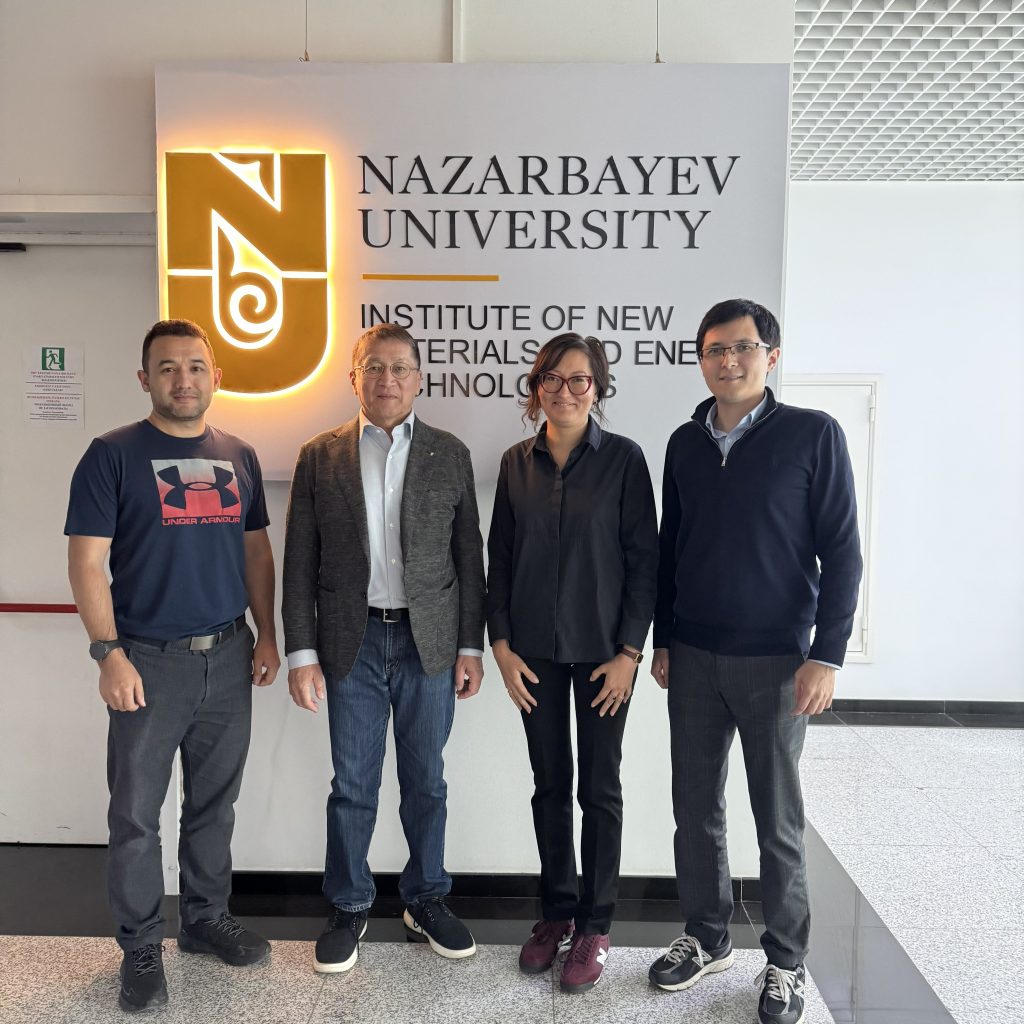
The programme is led by Zhumabay Bakenov, Academician of National Academy of Sciences of Kazakhstan and NU Professor, and NU Associate Professor Nurzhan Umirov. It will be implemented at NU’s Institute of New Materials and Technology (INMET), in collaboration with industrial and international partners. Researchers will develop technologies to remove impurities from locally sourced raw materials and process them into compounds needed to manufacture battery components.
Building on the research team’s existing scientific achievements and technological developments, the programme will advance innovative battery materials technologies toward pilot-scale production and commercialization. It will also strengthen industry partnerships, facilitate technology transfer, and develop a new generation of highly skilled researchers and engineers.
The initiative represents an important step toward establishing Kazakhstan’s domestic battery materials industry, reducing dependence on imports, and increasing the value generated from the country’s mineral resources. By transforming locally sourced raw materials into high-value-added battery products, the programme will contribute to industrial diversification, strengthen national technological capabilities, and enhance Kazakhstan’s competitiveness in the rapidly growing global critical materials supply chain and energy storage sector.