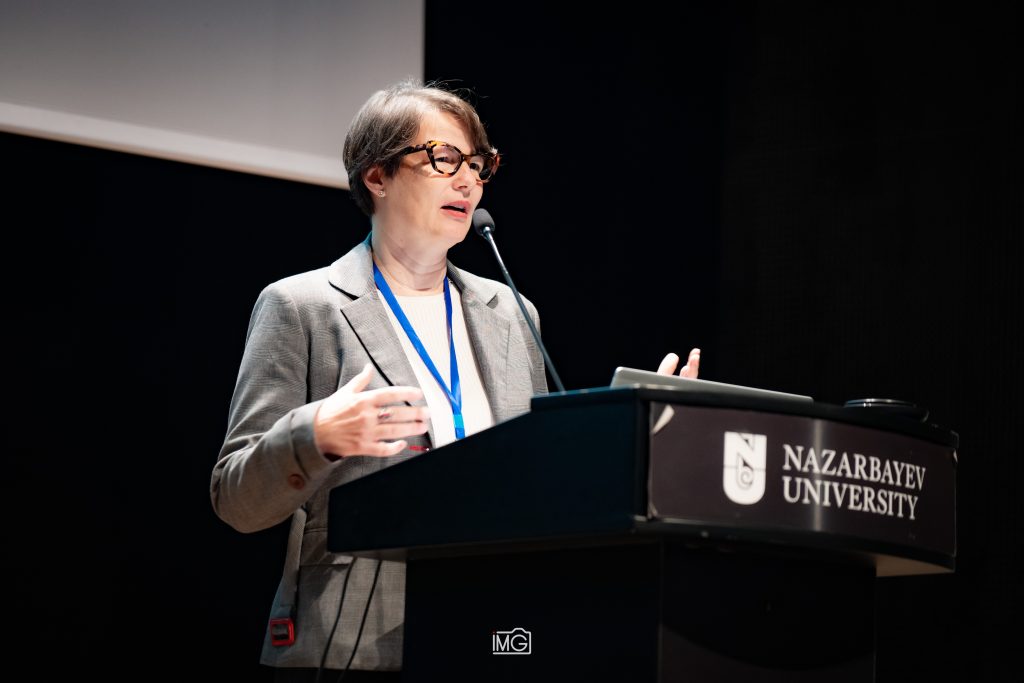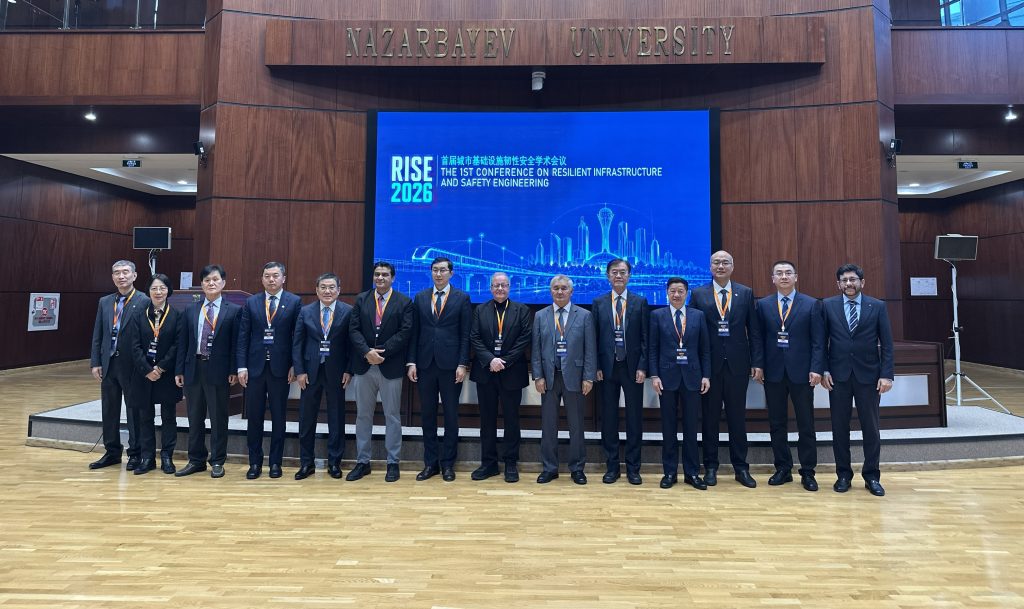
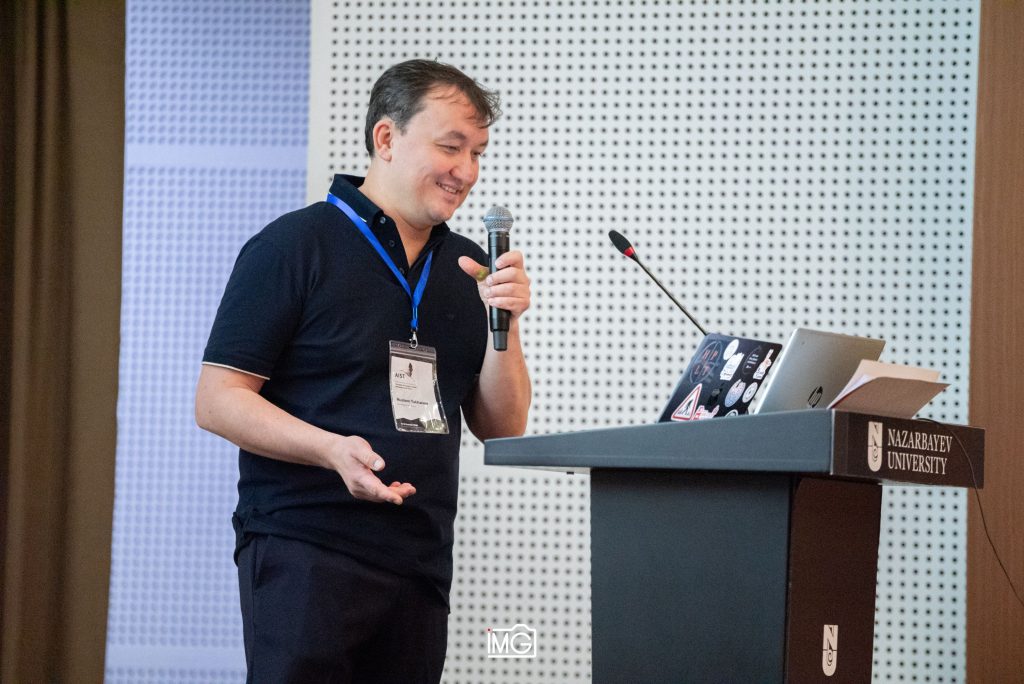
Businesses need more than professionals who can use off-the-shelf artificial intelligence tools. They also need specialists capable of developing, adapting and improving AI technologies. Experts discussed the role of research and the skills required for effective AI adoption at the international AIST 2026 conference, held at Nazarbayev University (NU) on 16–18 October.
The conference brought together more than 130 participants, with its research community representing institutions in at least 25 countries across Europe, Asia and North America. Discussions covered a wide range of AI methods and applications, from machine translation for Kazakh to assessing the reliability of large language models. A central focus was the research behind AI technologies, including algorithm development, how models work and the limitations of existing systems.
“Kazakhstan hosts a number of conferences on machine learning, data analysis and natural language processing. With AIST, we want to create a platform that puts research itself and the people behind it at the centre: machine learning specialists, mathematicians, language technology experts and data scientists,” said Rustem Tahanov, Assistant Professor at NU. “The conference also features research at the intersection of computer science and linguistics. I see this as one of AIST’s distinctive strengths.”
Research expertise is also essential to translating AI advances into practical applications. Alexander Panchenko, a representative of Skoltech and AIRI and a member of the AIST 2026 organising committee, said that simply using existing tools was not enough to integrate AI effectively into business and education.
“Artificial intelligence is gradually becoming part of existing business processes, manufacturing and education, creating opportunities for automation and modernisation. Organisations that fail to adapt risk falling behind. This makes it important to go beyond practical skills and understand how models work, what their capabilities are based on and where their limitations lie,” Panchenko said.
“We need specialists who can do more than use ready-made solutions — they must be able to develop and modify them and understand how they work. This knowledge is essential for integrating AI in ways that are technically sound and economically effective,” he added.
The scientific programme featured more than 50 research presentations. Several focused on Kazakhstan and the languages of the region, including Russian–Kazakh machine translation, Kazakh and Kyrgyz text recognition, and the detection of AI-generated reviews in Kazakh. Other studies explored land-cover classification in Kazakhstan’s steppes using satellite data and risk modelling in motor insurance.
AIST has been held since 2012. This year’s conference at NU was organised by the School of Computer Science and Artificial Intelligence (SCAI). The participants’ research papers are planned for publication in Springer conference proceedings.