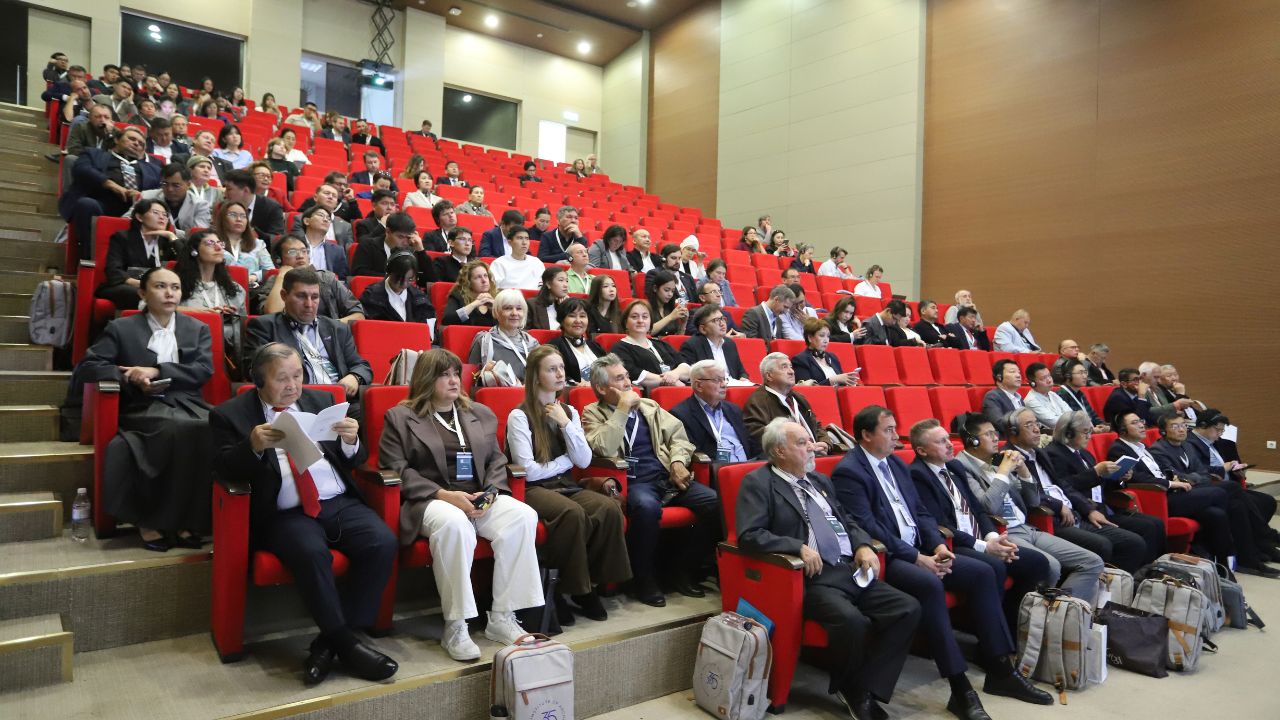
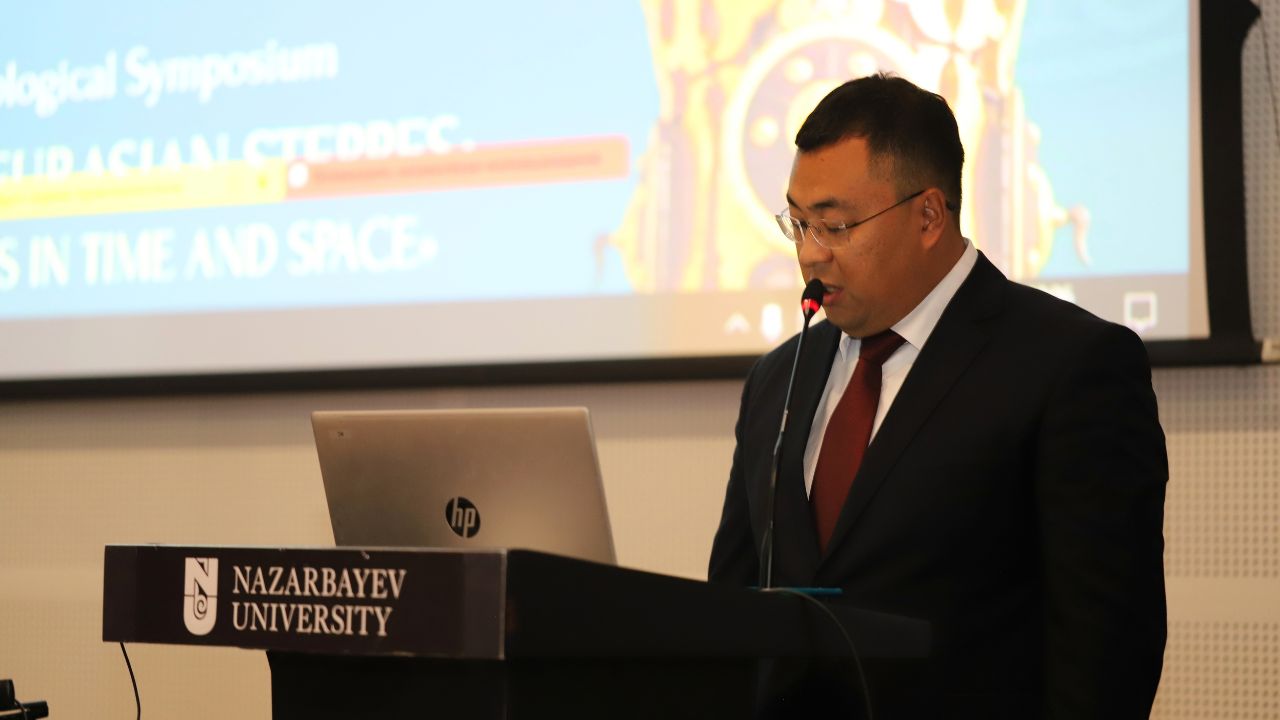
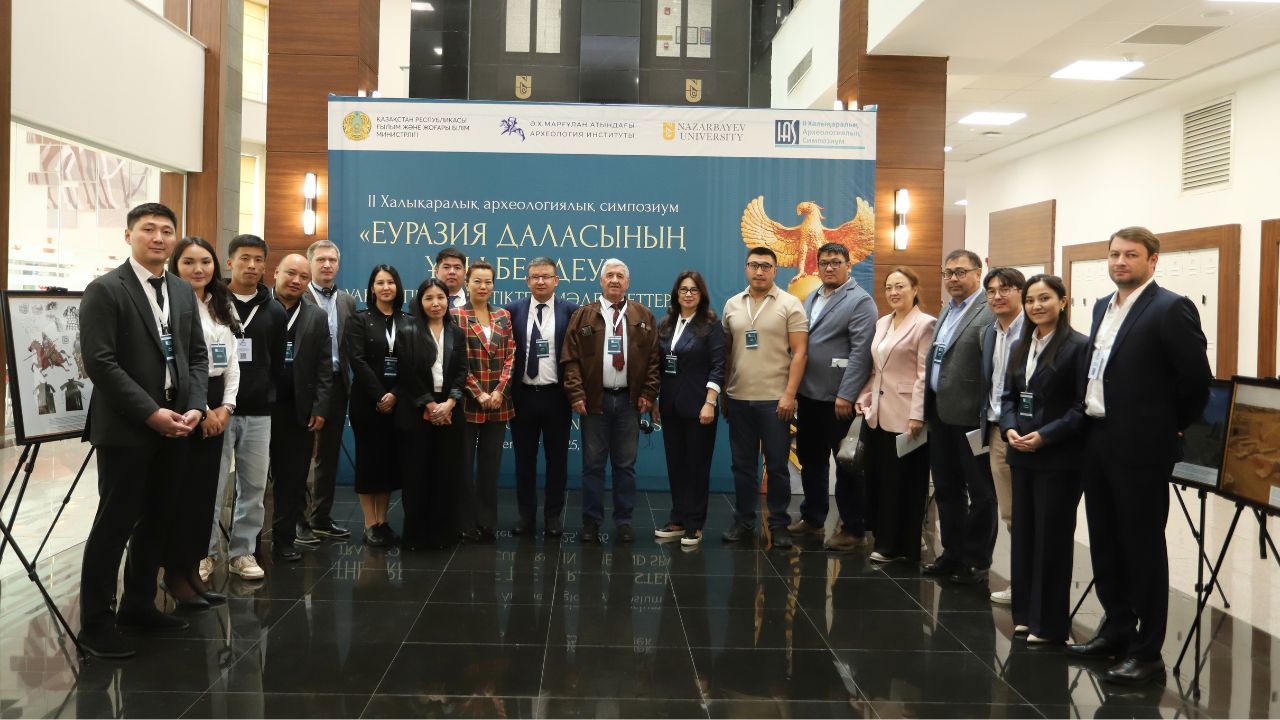



More than 150 researchers from Kazakhstan and around the world gathered at Nazarbayev University (NU) on Sept. 24–25, 2026, for the II International Archaeological Symposium, “The Great Belt of the Eurasian Steppes: Transformation of Cultures in Time and Space.” Organized by NU in partnership with the A.Kh. Margulan Institute of Archaeology and supported by the Committee of Science of Kazakhstan’s Ministry of Science and Higher Education, the symposium marked the 35th anniversary of the Institute of Archaeology.
Researchers from Kazakhstan, Azerbaijan, Uzbekistan, Kyrgyzstan, Russia, China, Germany, France, Israel, the United States, the United Kingdom and other countries discussed key questions in Eurasian archaeology — from Stone Age cave sites and Bronze Age metallurgy to the formation of steppe societies and the development of medieval urban centers.
Almas Tolegenuly, acting deputy chairman of the Committee of Science, highlighted the symposium’s role in advancing archaeological research in Kazakhstan and strengthening its integration into the international research community. NU President Professor Waqar Ahmad, noting the significance of holding the symposium in the 35th year of Kazakhstan’s independence, highlighted the contributions of NU archaeologists to the study of the country’s history.
“Academic excellence is reflected in the impressive publication record of our faculty in top-ranked Scopus journals, placing our scholars among the most published researchers in Kazakhstan. Part of this success comes from our commitment to partnership and to building sustained collaboration with Kazakhstani institutions as well as leading research organizations around the world,” Professor Waqar Ahmad said.
Akan Ongaruly, director general of the A.Kh. Margulan Institute of Archaeology and a candidate of historical sciences, reviewed the development of archaeology in Kazakhstan since independence, the Institute’s unifying role in advancing the field, and priorities for future research.
“To develop a fundamental scientific paradigm and a framework for understanding the spiritual and material heritage of Kazakhstan’s prehistoric past, we need to begin developing a unified concept for archaeological science in Kazakhstan. We will also begin work on a multivolume publication, Archaeology of Kazakhstan, and continue publishing book series based on archaeological materials and research,” Akan Ongaruly said.
The international symposium was first held in Almaty in 2024, providing a platform for researchers to discuss major questions in Central Asian archaeology. The first symposium identified several key areas of research, including the chronology of the Stone and Bronze ages, the heritage of early nomadic societies, and the emergence of steppe urban culture. These themes were developed further in the program of the second symposium.
The 2026 program featured four thematic sessions focused on research findings from cave sites; Bronze Age mining and metallurgical complexes and the spread of metals; the formation of social and political organization in steppe societies; and the urbanization of early medieval settlements.
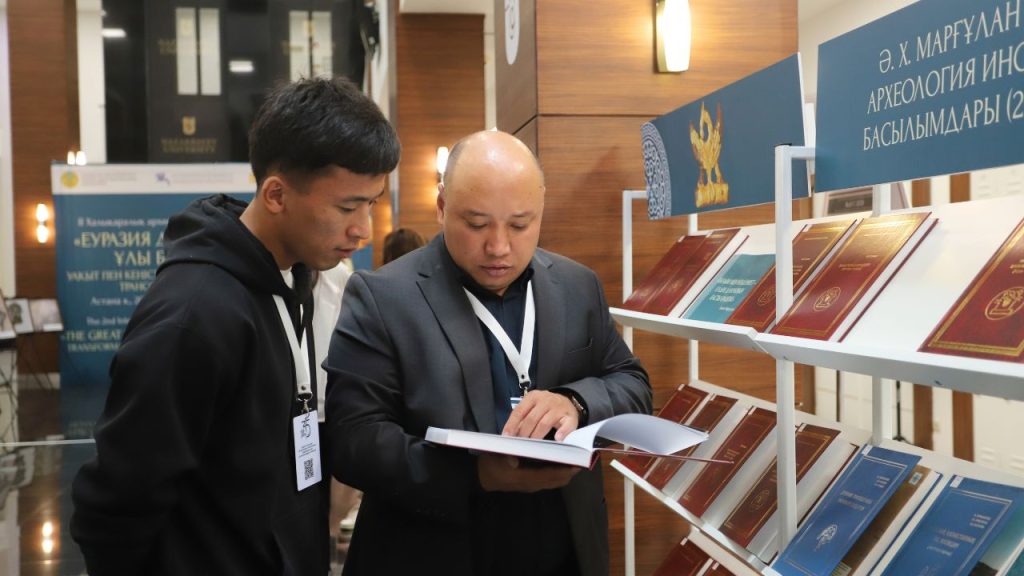
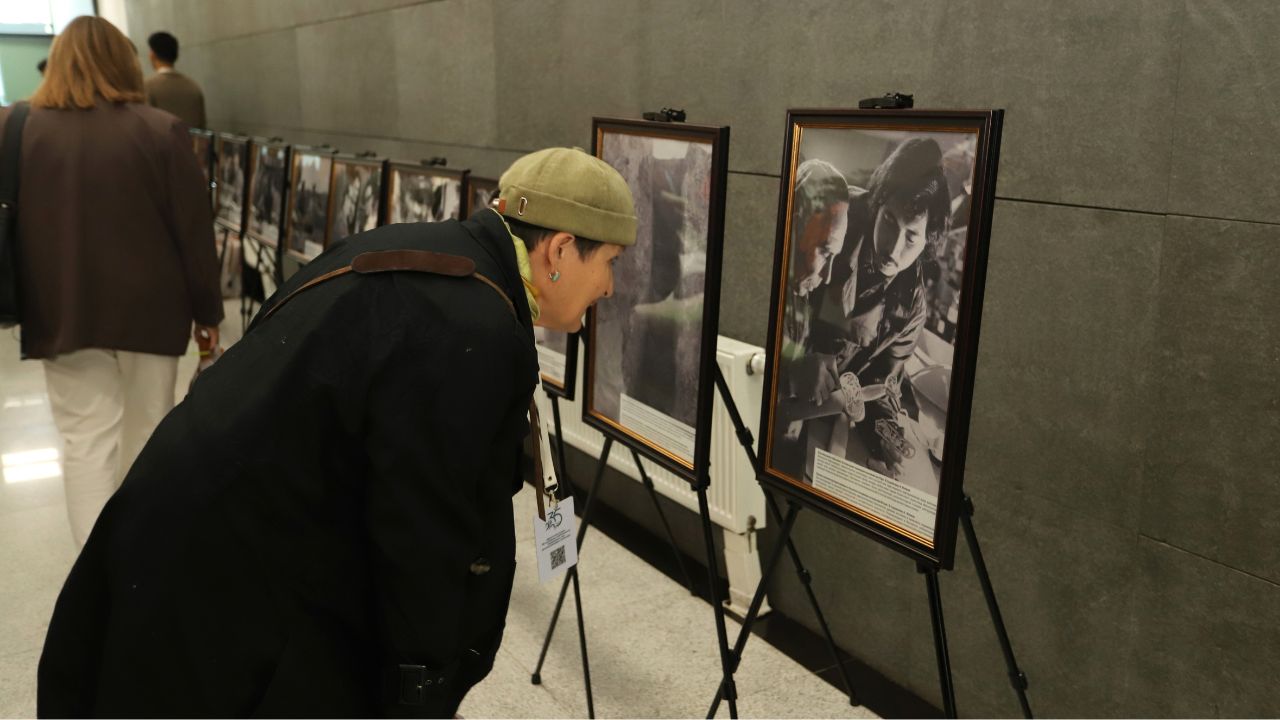
The symposium also featured an exhibition highlighting recent archaeological expeditions and discoveries, as well as the “Dialogue With Time…” photo exhibition, which presented rare archival photographs documenting the work of archaeologists and their research in the field.