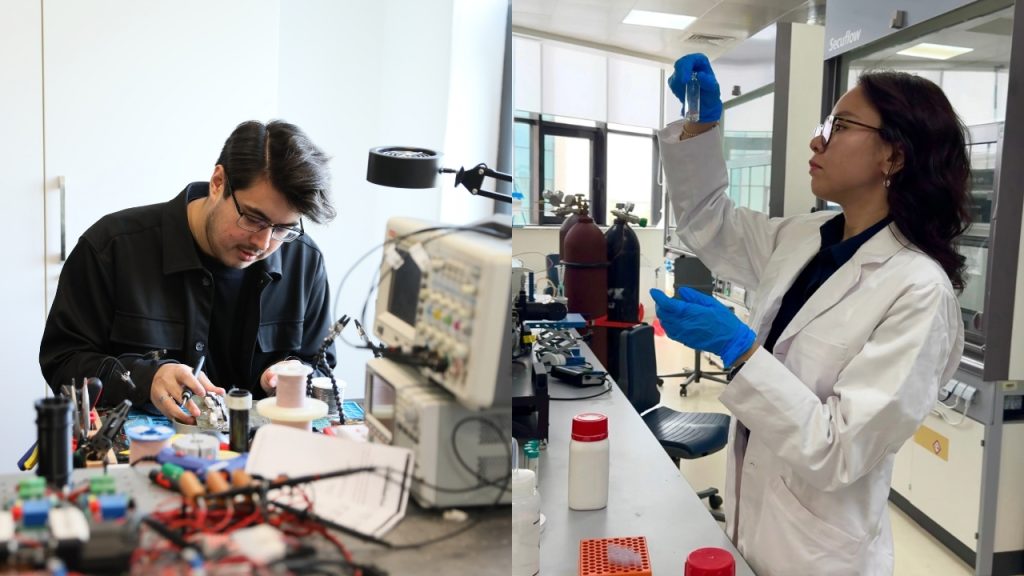
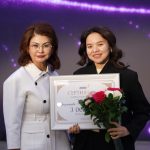
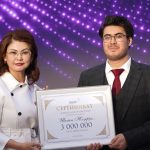
From their first year, NU students can become part of research teams and begin working on their own projects while still pursuing their degrees. Anel Urazaliyeva first entered a research laboratory as a master’s student in Biomedical Engineering at NU. Today, she works as a research fellow, developing a nanogel for photodynamic cancer therapy. Yussuf Shakhin, a fourth-year PhD candidate, is developing a robotic system that uses artificial intelligence to inspect power transmission lines and detect faults.
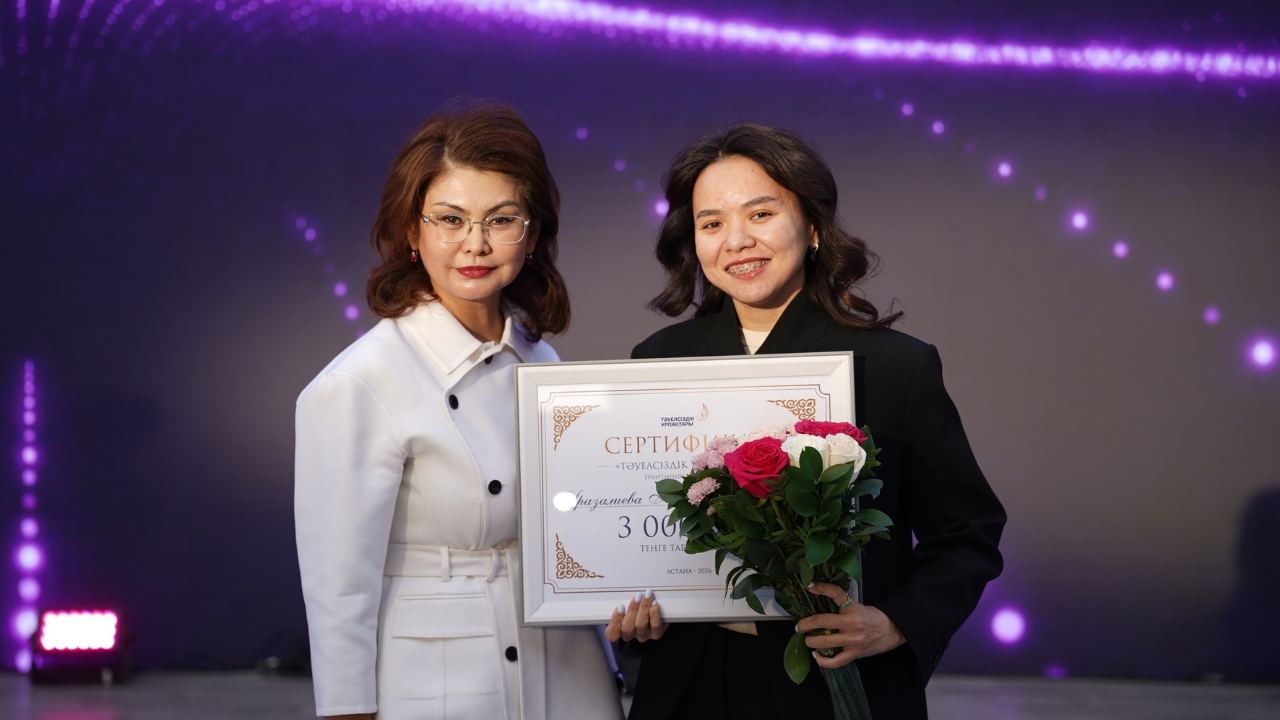
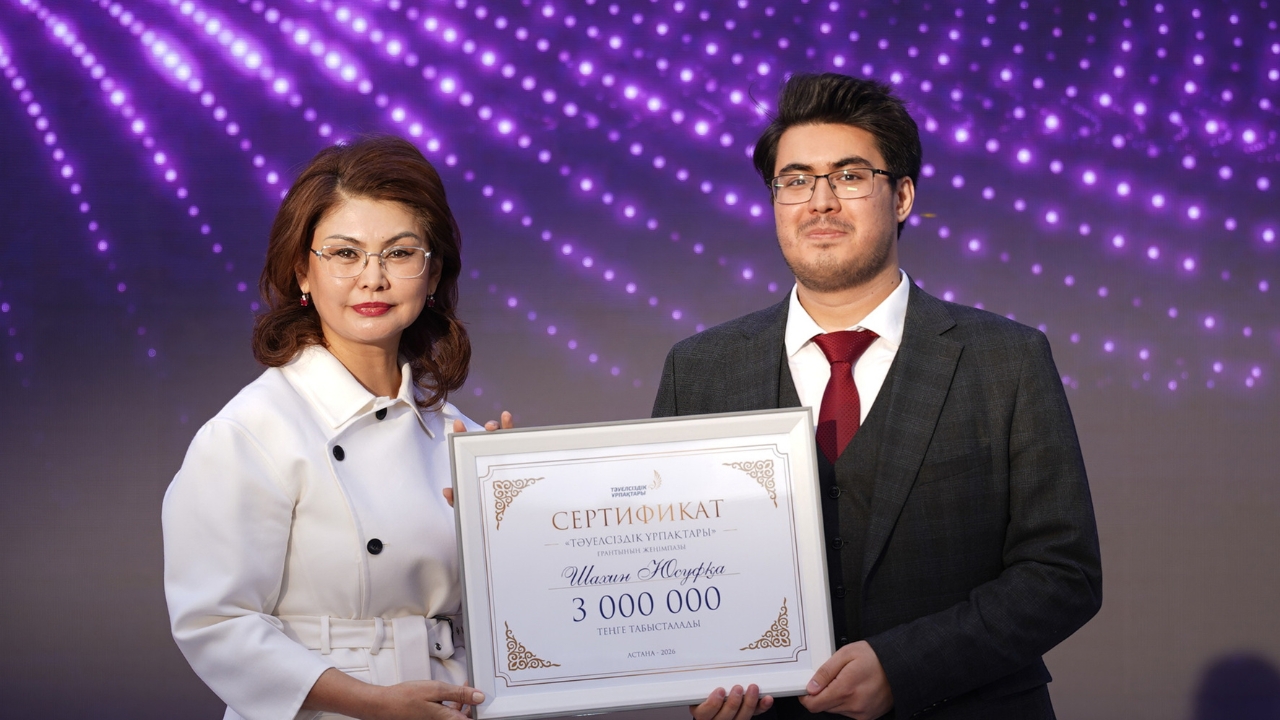
This year, both researchers received the Täuelsizdik Urpaktary state grant in the Science category, established by the Ministry of Culture and Information of the Republic of Kazakhstan.
Anel Urazaliyeva came to research from clinical medicine. She now works as a senior research fellow in the Photonic Materials and Biophotonics group led by Professor Chang-Keun Lim.
The team is looking for ways to make photodynamic therapy more precise and effective. The idea emerged during a discussion with her professor while she was pursuing her master’s degree. Urazaliyeva was encouraged to explore photodynamic, X-ray and proton therapies and look for ways to improve their effectiveness and precision in targeting tumors.
“My thesis focuses on nanoparticles for photodynamic cancer therapy. After completing my master’s degree, I stayed on in the professor’s group as a research assistant. So far, I have published two scientific papers in international journals. Over the past two years, they have been read more than 10,000 times and cited 36 times by researchers around the world,” Anel said.
Chemotherapy and radiation therapy remain among the main approaches to cancer treatment. But both can affect healthy tissue as well as tumors. Photodynamic therapy offers a more targeted approach, but it has an important limitation: light can penetrate tissue only a few millimeters.
“A special, harmless substance is introduced into the body. When exposed to light, it produces reactive oxygen species that selectively destroy cancer cells. The problem is that light can penetrate tissue only a few millimeters. That is why photodynamic therapy is currently used mainly for tumors near the surface of the body. If a tumor is located deep inside the body, the light simply cannot reach it. Our solution is to place the light source inside the tumor itself,” she explained.
To achieve this, the researchers are developing a nanogel containing lanthanides, rare-earth elements that can generate light inside a tumor and be activated remotely. Once the light is absorbed by a photosensitizer, it triggers the production of reactive oxygen species (ROS), which can destroy cancer cells from within.
The nanogel functions like a sponge containing several components positioned within close proximity to one another. The goal is to activate the system using low doses of X-ray or proton radiation. The project is currently at the preclinical stage, with researchers conducting experiments on breast and colorectal cancer cells.
“This is exactly why I left clinical medicine for research: a doctor can help an individual patient here and now, while a successful research project can change the way a disease is treated for tens of thousands of people around the world,” Anel said.
She is also training new research assistants from among NU’s master’s and undergraduate students. Anel plans to pursue a PhD and continue developing the project, with the long-term goal of bringing the nanogel closer to practical application.
Yussuf Shakhin’s research tackles a very different challenge: electricity. A fourth-year PhD candidate in robotics at NU’s School of Computer Science and Artificial Intelligence (NU SCAI), he conducts his research in the Power Conversion & Motion Control Laboratory, led by Professor Ton Duc Do and co-supervised by Dr. Ahmad Bala Alhassan.
Yussuf is developing a robotic system for inspecting power transmission lines. The system combines robotics, computer vision, multispectral sensing and artificial intelligence. Its goal is to detect problems that would otherwise require complex and time-consuming inspections, including thermal anomalies, conductor damage and defects in infrastructure components. The scale of the challenge is significant. Kazakhstan has about 28,000 kilometers of overhead power transmission lines, making their inspection a labor-intensive task.
“According to the national modernization program, the average level of wear across electricity networks is 76%. In 2023, Kazakhstan also lost 9.72% of the electricity generated through transmission and distribution, compared with a global average of 6.95%. These losses are not only an energy problem but also an economic one for the power system,” he said.
His project brings together several components: a robotic platform, AI algorithms for fault detection, and a system for continuous monitoring of power transmission lines. AI plays a central role.
“AI running on the onboard computer provides the system’s primary visual analysis capability. In the future, the data collected by the system could be used for predictive analysis of infrastructure conditions, helping grid operators identify developing faults and plan maintenance more efficiently,” researcher explained.
Yussuf Shahin is currently testing the robotic platform on an experimental NU setup designed to evaluate robotic systems for power transmission lines. His team is also working on other energy-related challenges. Under the supervision of Dr. Ahmad Bala Alhassan, researchers are developing AI-based energy management systems for hybrid wind and solar microgrids.
For both researchers, science is more than a series of laboratory experiments. It is a way to address practical challenges. The opportunity to engage in research while still studying allows NU’s young scientists to follow the full path from an initial idea and early experiments to technologies that may one day move beyond the laboratory and into real-world use.