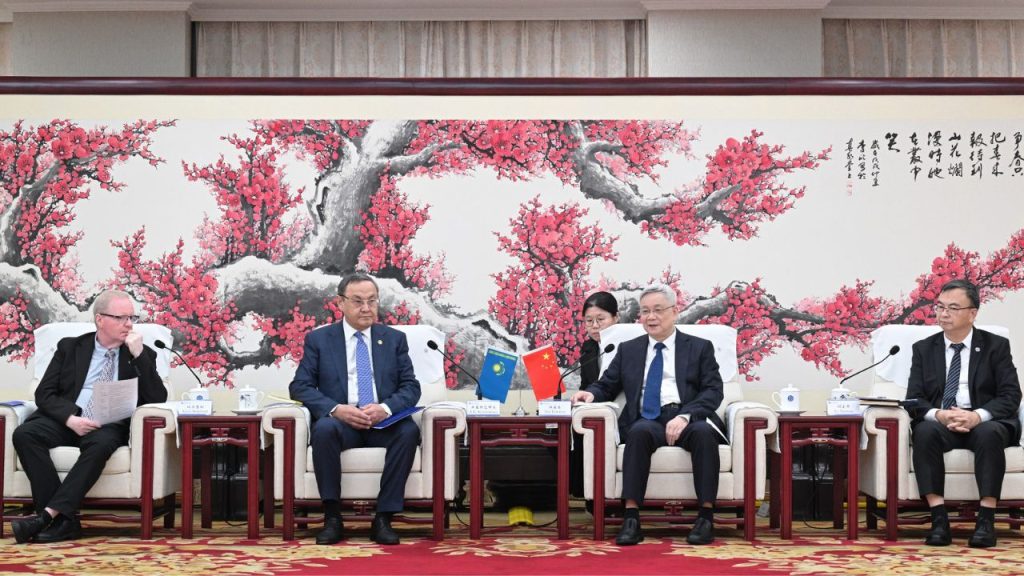
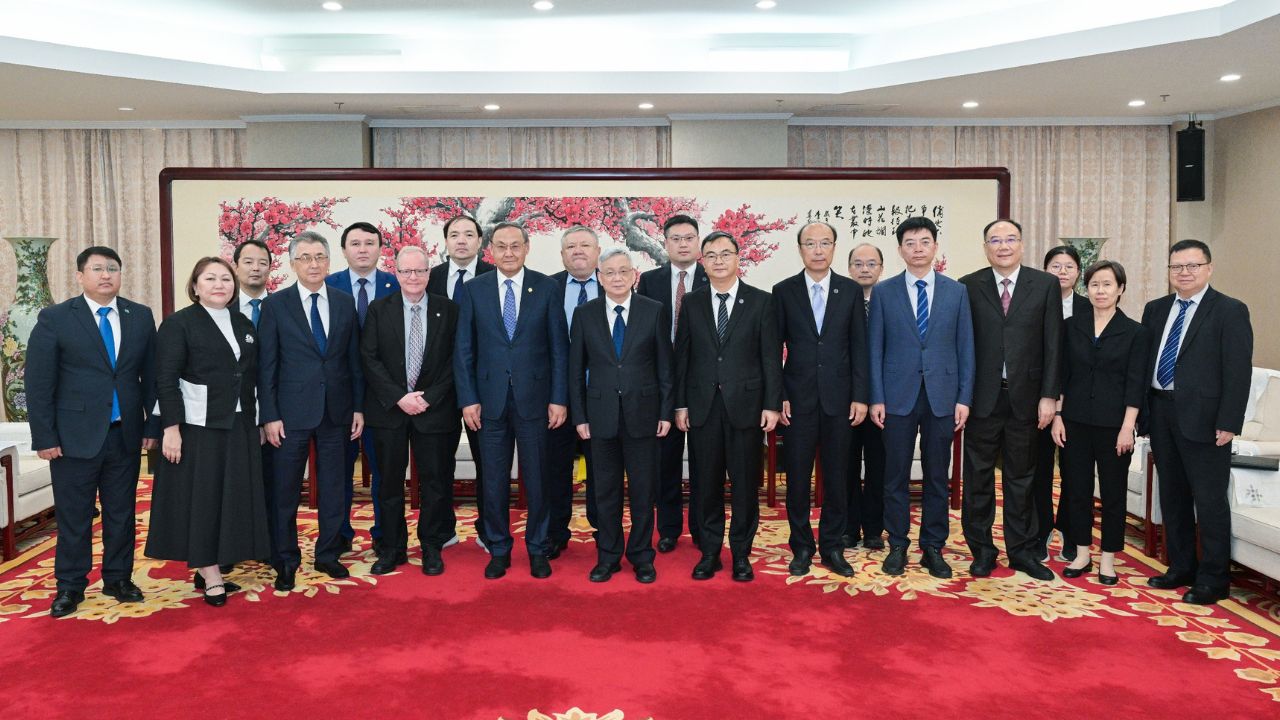
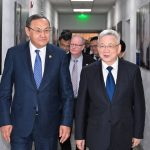
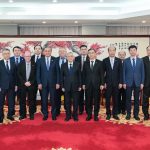
Kazakhstan and the Chinese Academy of Sciences (CAS) have agreed to move toward implementing joint scientific and technological projects in four priority areas. The agreement was reached on August 18, 2026, during a visit by a delegation from the National Academy of Sciences of the Republic of Kazakhstan under of the President of the Republic of Kazakhstan to CAS. The delegation was led by Akhylbek Kurishbayev, President of the National Academy of Sciences. Nazarbayev University was represented by Professor Bjorn Birgisson, Vice Provost for Research and Innovation at Nazarbayev University, who is also a member of the Swedish Royal Academy of Sciences.
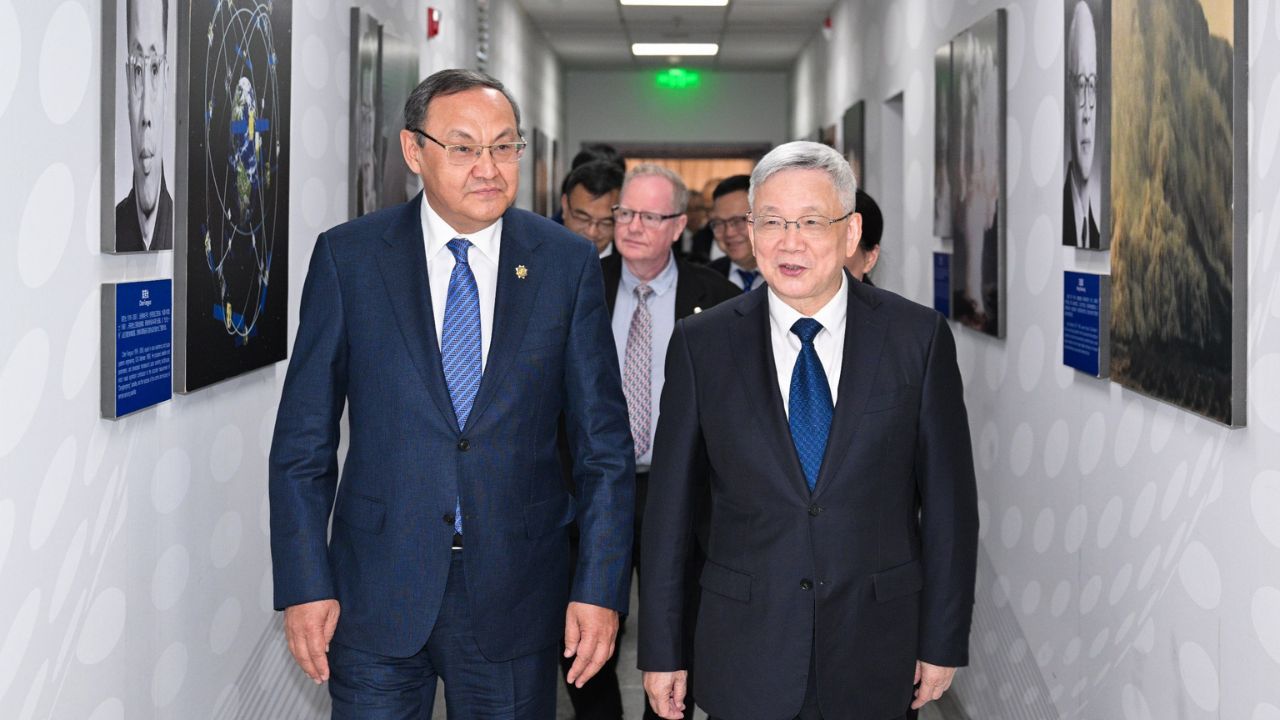
During the visit, the delegation toured the Aerospace Information Research Institute, The International Research Center of Big Data for Sustainable Development, Institute of Automation, the Institute of Geographic Sciences and Natural Resources Research, and the Institute of Processing. The delegation also held a high-level working meeting with Professor Jianguo Hou, President of the Chinese Academy of Science (CAS) and Professor He Hongping, Vice President of CAS.
“These meetings and discussions are providing the building blocks for a greatly enhanced collaboration with the CAS and our Kazakhstan National Academy, with significant new opportunities for NU in key areas such as robotics, manufacturing, new sustainable processes for critical minerals mining, energy, water, resilience and precision agriculture,” said Professor Bjorn Birgisson.
Under one of the priority areas, the development of joint satellite infrastructure for space-based monitoring, the parties discussed a project to launch five satellites to monitor water resources and glaciers, agricultural land and pastures, floods, droughts, wildfires, land degradation, and other environmental and climate-related risks.
The second area will focus on AI for Science—the use of artificial intelligence directly in scientific research. Potential applications range from analyzing scientific literature and large datasets to identifying patterns, generating and testing hypotheses, modeling complex processes, planning experiments, and predicting outcomes.
The third area covers joint research in nuclear physics, materials science, safety, and emerging energy technologies. The parties discussed potential cooperation on small modular reactors, radiation-resistant materials, and new types of nuclear fuel.
The fourth area may involve the Chinese Academy of Sciences in the development of the Alatau City science and technology ecosystem. Kazakhstan is interested in drawing on the experience of Chinese innovation hubs, particularly Shenzhen, where research organizations, engineering centers, technology companies, investors, and industry are brought together within an integrated innovation ecosystem.
Developing the next generation of researchers will be a cross-cutting area of cooperation. CAS President Hou Jianguo proposed establishing opportunities for Kazakh researchers to pursue doctoral and postdoctoral training at the Chinese Academy of Sciences in priority areas of collaboration.