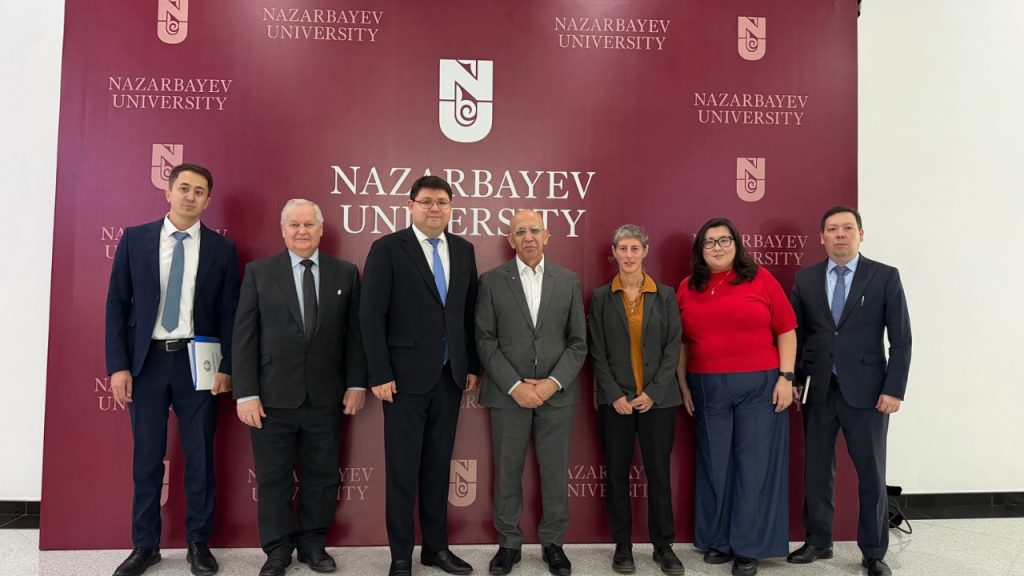
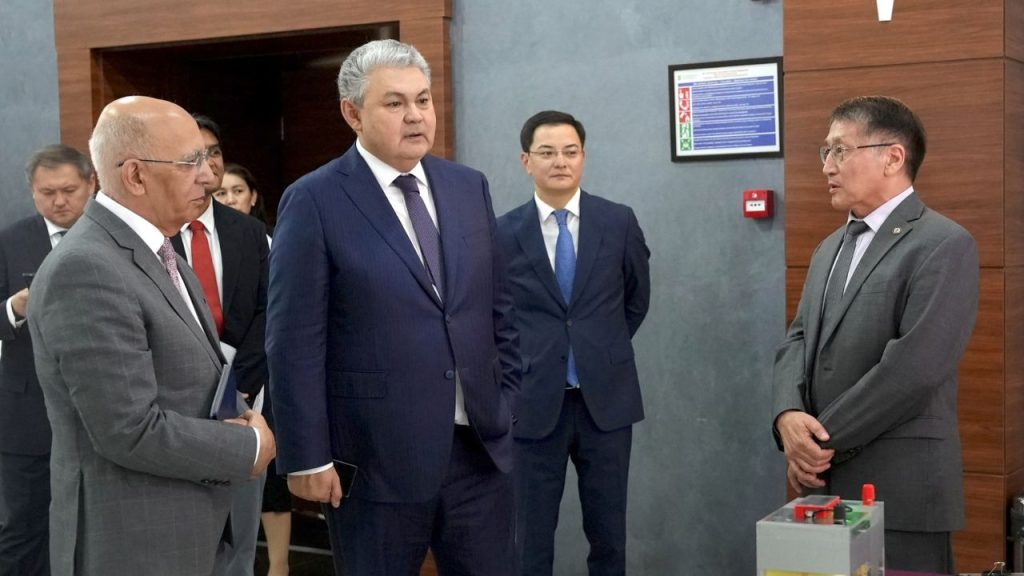
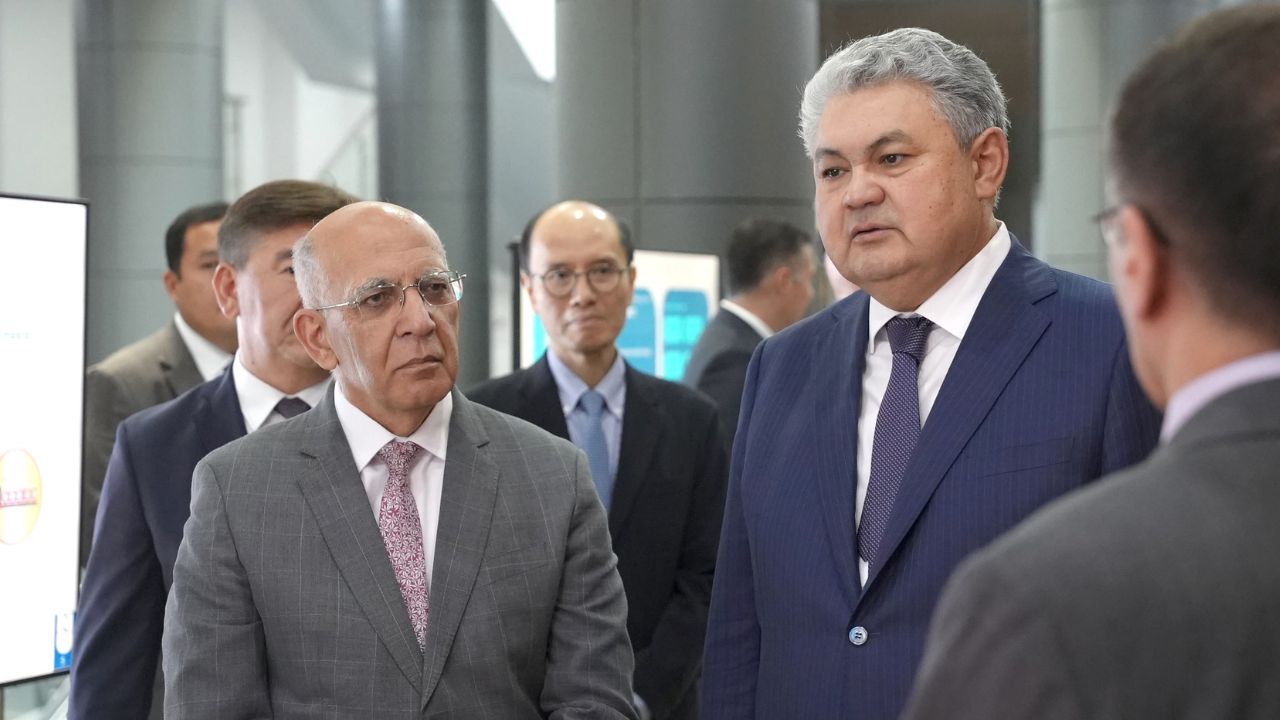
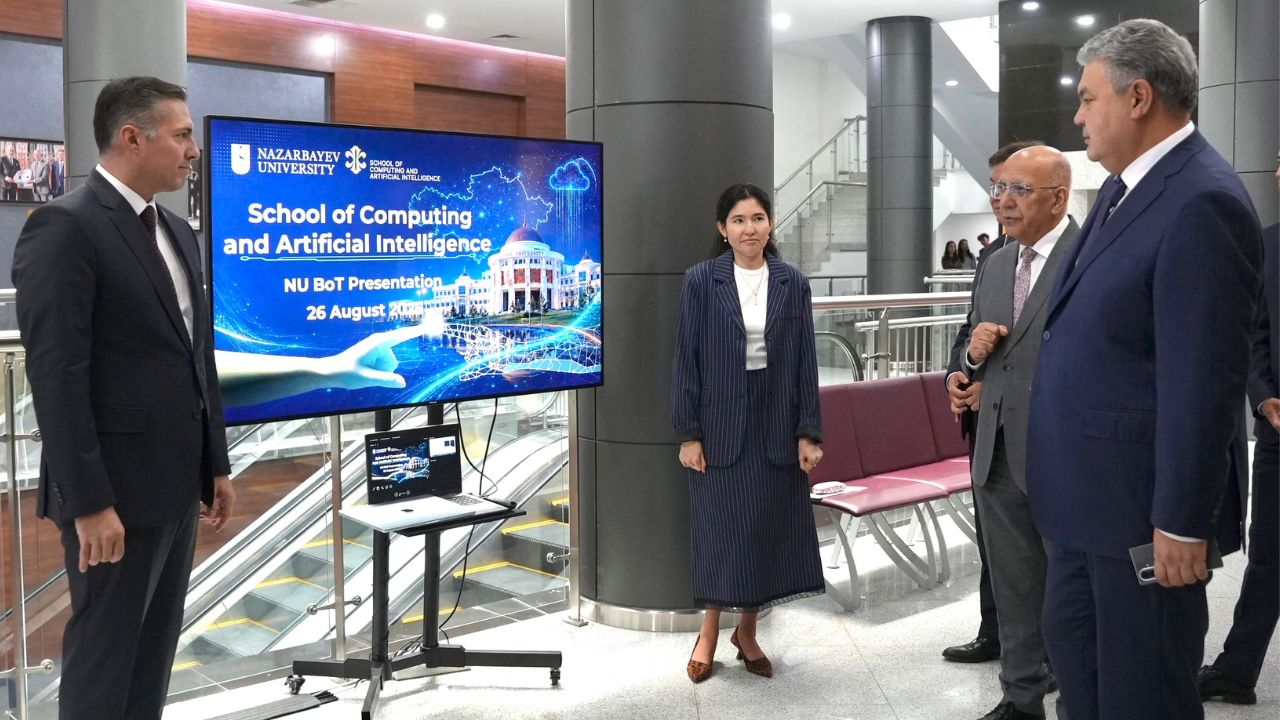


The Nazarbayev University (NU) Board of Trustees held its 60th anniversary meeting on August 25, chaired by Mr Yermek Kosherbayev, Minister of Foreign Affairs of the Republic of Kazakhstan.
The Board focused on the progress of NU’s “World Class – Made in Kazakhstan” Strategy for 2026–2031.
Addressing the Board, NU President Professor Waqar Ahmad congratulated colleagues on the start of the new academic year and highlighted strong interest in the University among prospective students from Kazakhstan and abroad.
“This year, NU received a record number of applications – around 12,000. We also welcomed a record number of international students. This reflects the growing trust in NU and its reputation internationally. As a leading university in the region, NU is committed to advancing research, with more than 80% of our research outputs in Q1 journals, working closely with industry to translate research into real-world impact, and developing the next generation of leaders who can contribute to Kazakhstan and beyond”, – Professor Ahmad said.
NU President highlighted the role of the University’s governance bodies in supporting its long-term development, noting that the Supreme Board of Trustees and the Board of Trustees bring together valuable expertise and perspectives from Kazakhstan and abroad and provide strategic guidance as the University continues to grow.
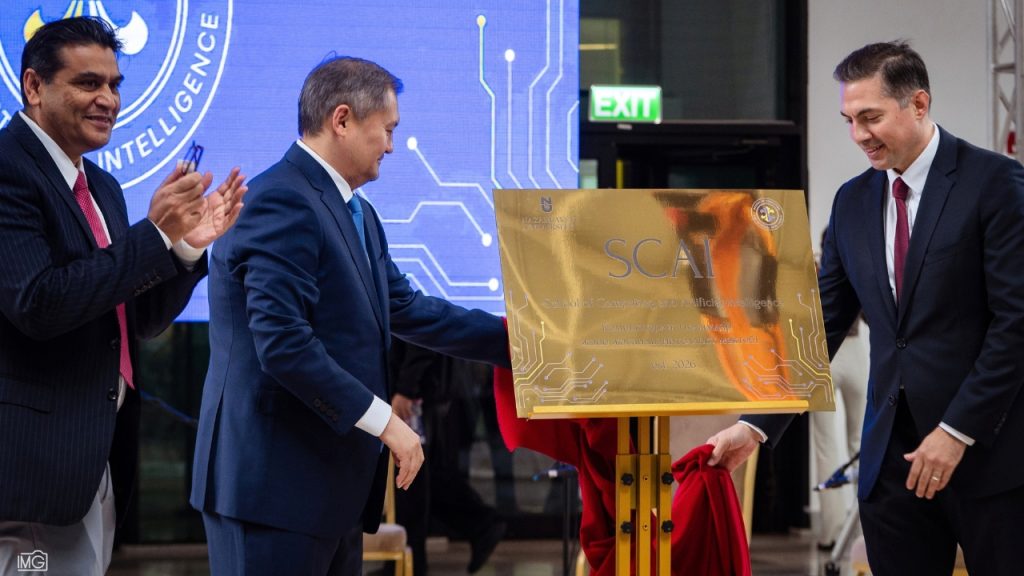
He also presented the new School of Computing and Artificial Intelligence (SCAI), established in line with the priorities of the national Digital Qazaqstan strategy approved by the President of Kazakhstan.
Mr Yermek Kosherbayev, Chair of the Board of Trustees, reviewed NU’s report on its current activities and outlined several key priorities.
“It is important to strengthen connections between research and industry, expand opportunities for Kazakhstan’s researchers, and develop expertise in artificial intelligence. Today, NU, NIS, and the NU&NIS Foundation must not only build on their achievements but also increase the impact of their work on the economy and society. Research should more effectively translate into real-world applications, while educational institutions should prepare professionals who can both use existing technologies and develop innovative solutions of their own,” Yermek Kosherbayev said.