


Researchers discuss antimicrobial resistance, Kazakhstan’s antibiotic use and the One Health approach
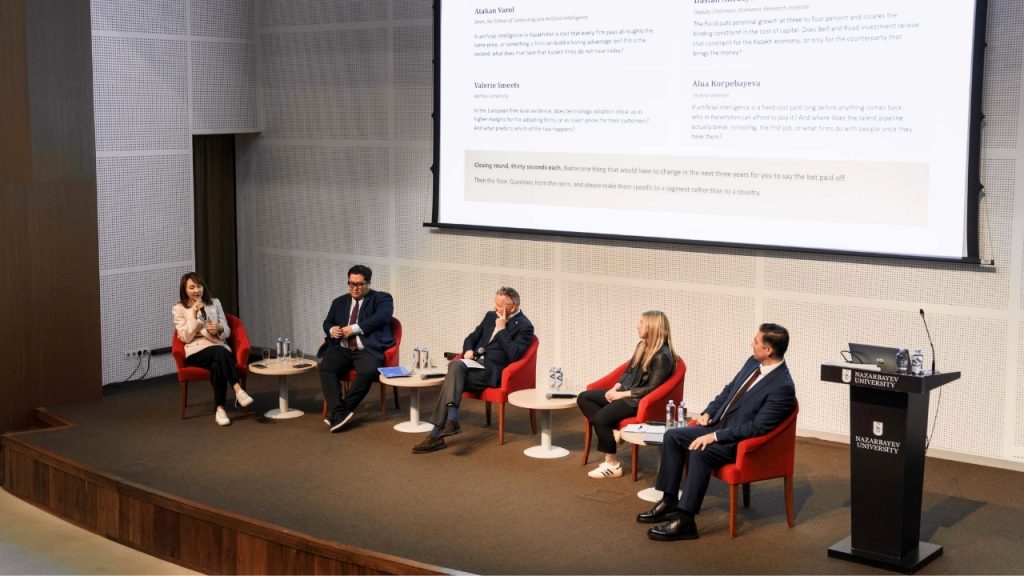
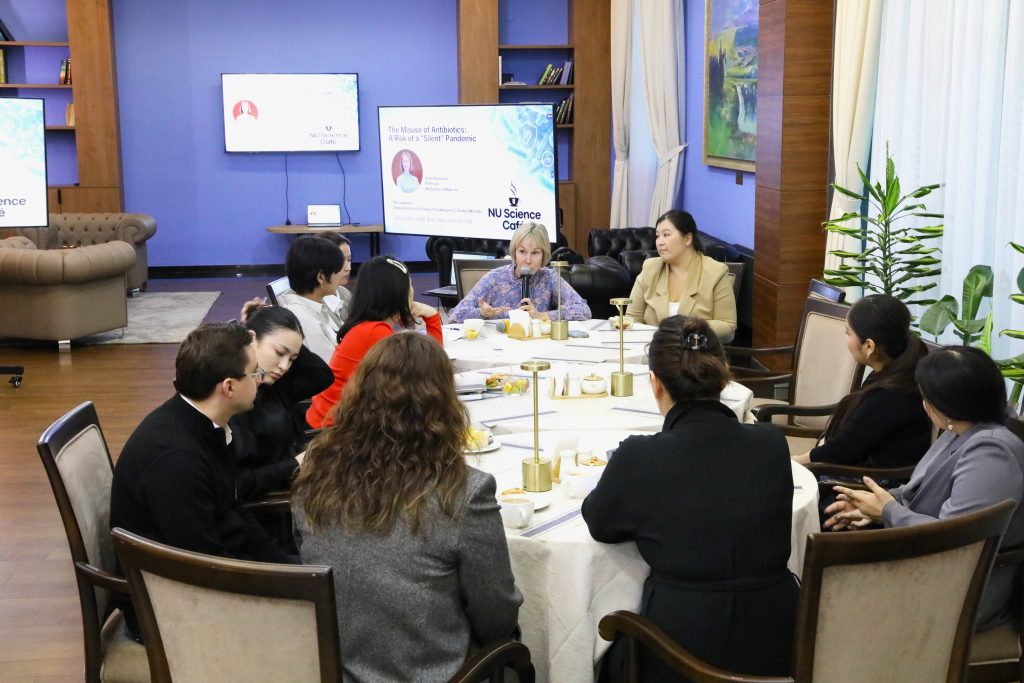
Antimicrobial resistance (AMR) was the focus of the latest NU Science Café, a popular science platform launched by Nazarbayev University’s Press Office in early 2026 to bring researchers and journalists together and make complex scientific topics accessible to wider audiences.
The discussion brought together Professor Yuliya Semenova of NU School of Medicine, PhD students Dariga Zhazykbayeva and Zhanar Kosherova, and medical resident Zhadyra Mustafa to explore why antibiotics are gradually becoming less effective and what Kazakhstan can do to address the growing challenge.
For Professor Semenova, AMR became a research priority through her clinical experience. After nearly three decades in medicine, she began noticing that antibiotics which had worked effectively for years were no longer producing the same results. Further research helped her identify a key reason: bacteria were developing resistance, partly due to the frequent and inappropriate use of antibiotics.
The World Health Organization (WHO) lists AMR among the top ten global public health threats. A global analysis published in The Lancet in 2024 projected that antimicrobial resistance could directly cause about 1.9 million deaths annually by 2050. Kazakhstan faces similar challenges. Antibiotic consumption has increased, particularly in the outpatient sector. In 2024, the share of antibiotics from the WHO’s Access group, recommended for routine use, declined to 37.9% in Kazakhstan, below the WHO target of at least 60%.
A study in Kazakhstan found that 40% of respondents among the general population had used antibiotics without a prescription. Antibiotics are also frequently taken for conditions such as colds, even though they do not treat viral infections.
At the national level, NU School of Medicine researchers are developing two initiatives: the Antibiotic Resistance Map of Kazakhstan and the Antibiotic Consumption Map of Kazakhstan, as part of research grants for 2025–2027.
The projects aim to build large-scale datasets covering different regions and healthcare settings. The resistance map will track major bacterial pathogens associated with urinary tract, respiratory tract, bloodstream, and skin and soft tissue infections. The consumption map will examine antibiotic use in hospitals and outpatient settings. Together, these tools are expected to help clinicians and policymakers identify regional patterns, improve prescribing practices and develop evidence-based antimicrobial stewardship guidelines. Initial research findings have already resulted in peer-reviewed publications.
The 4 November session concluded the 2026 NU Science Café programme, which has brought together researchers and journalists throughout the year to explore topics ranging from artificial intelligence and environmental sustainability to medicine, space and public health. Through the initiative, NU Press Office continues to create opportunities for scientists to share their research beyond academia and bring important scientific issues into public discussion.