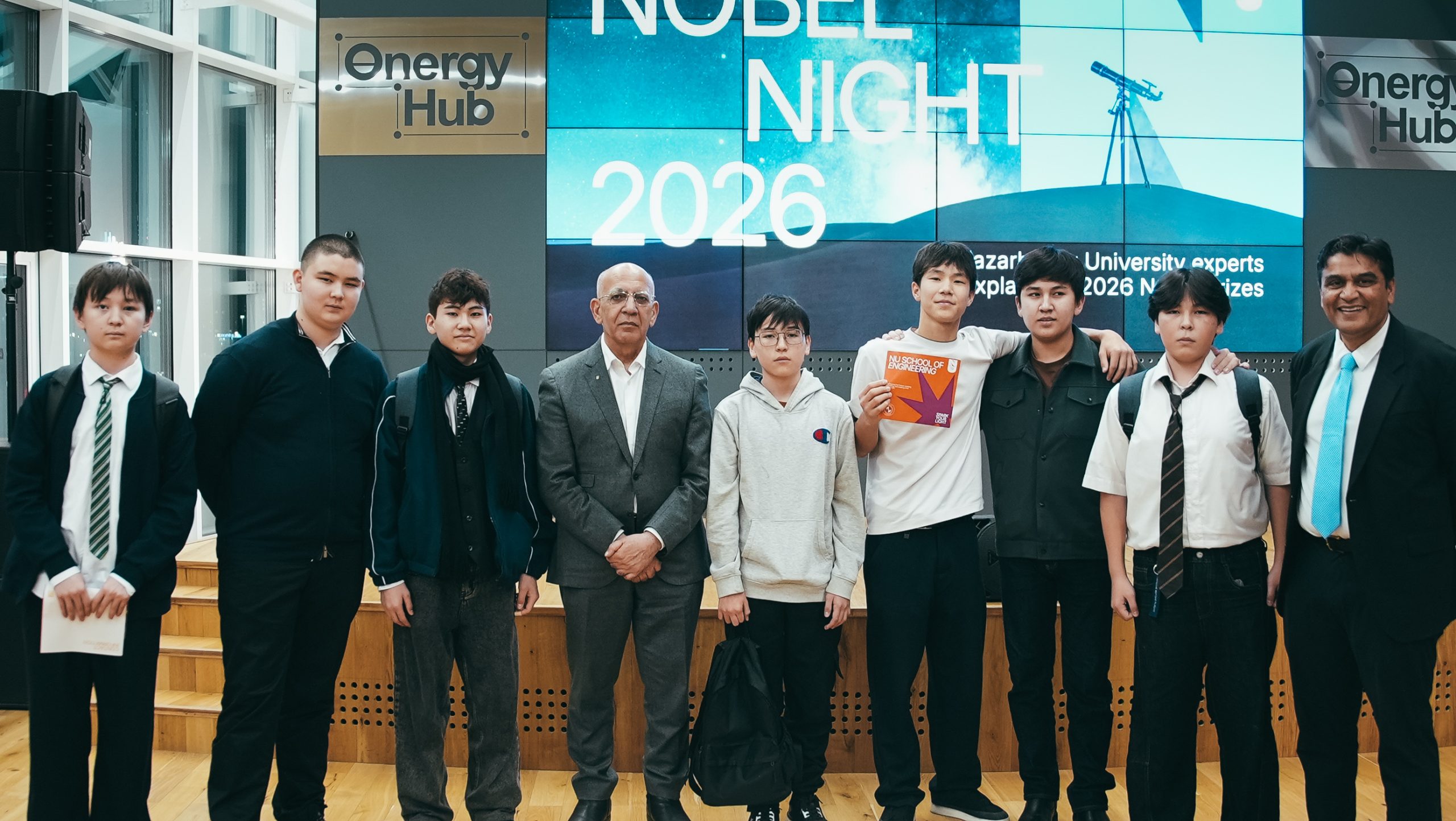
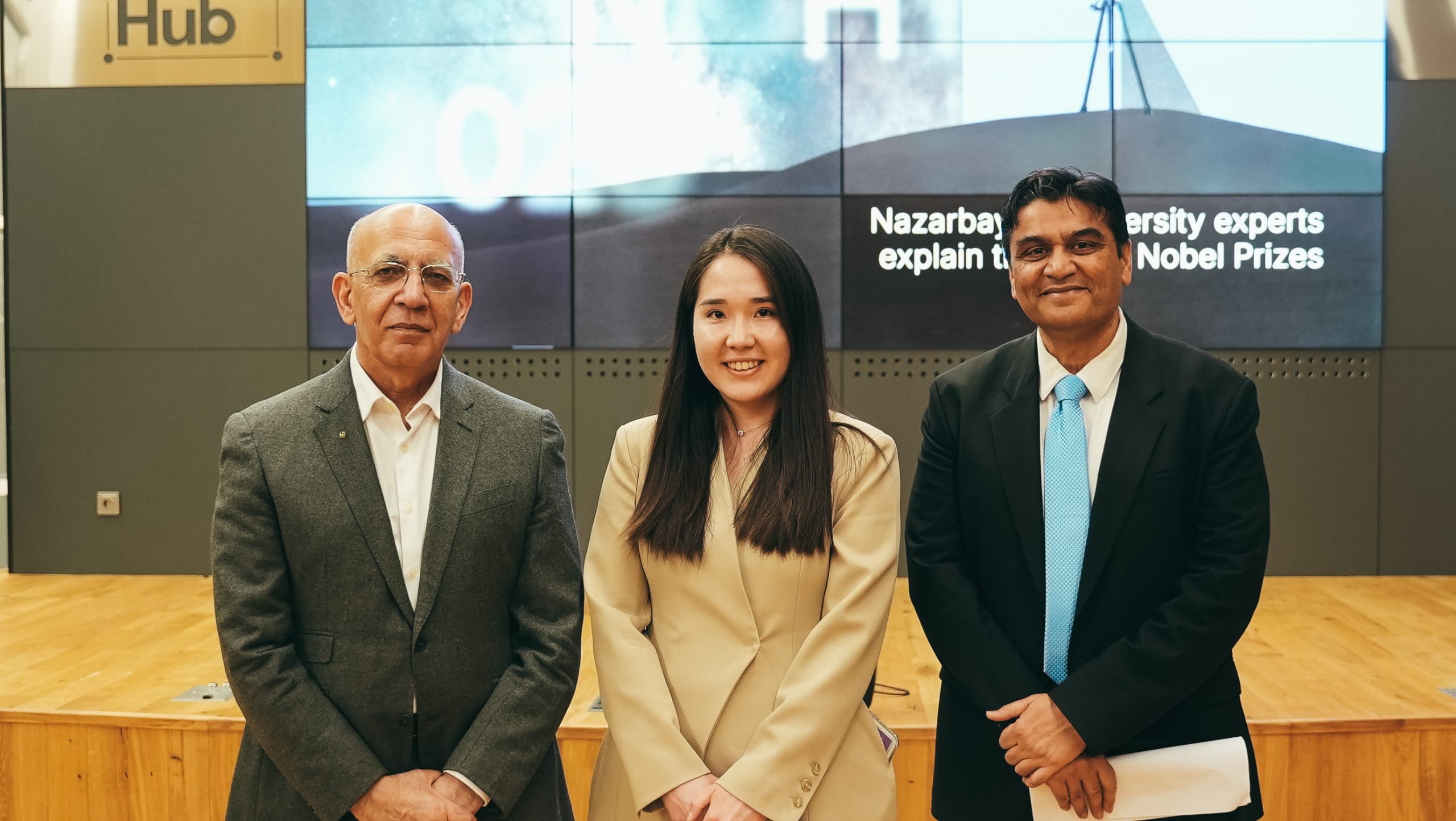
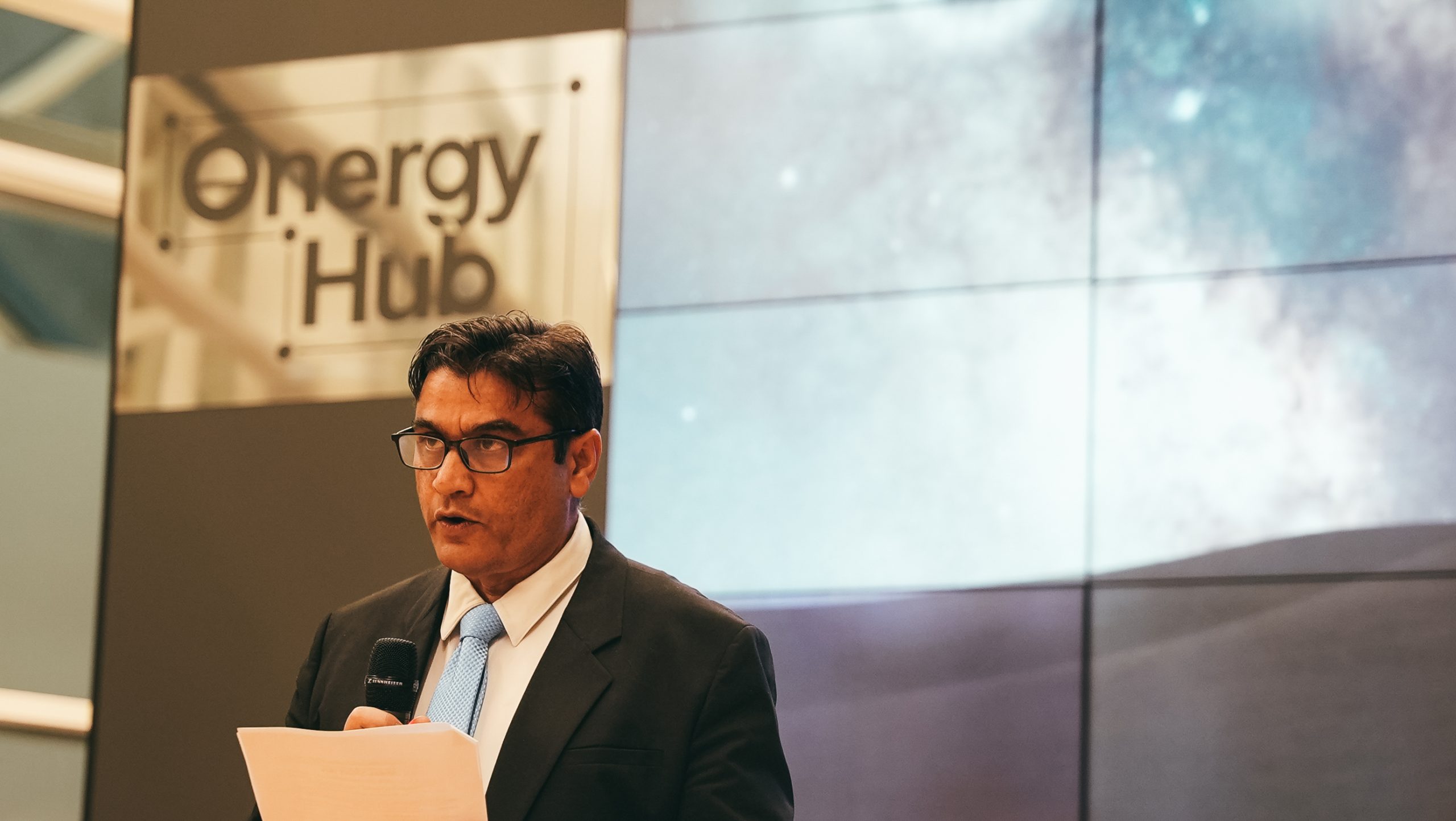

Nazarbayev University (NU) hosted its first Nobel Night on 25 November, bringing together six university professors to explain the achievements recognised by the 2026 Nobel Prizes and Fields Medal.
The event offered audiences an opportunity to explore major achievements in physics, economics, medicine, chemistry, literature and mathematics. Each presentation broke down complex ideas into accessible explanations, showing what the researchers had achieved and why their work matters. Six NU academics took the audience through this year’s award-winning work:
Physics – Dr Michael R. R. Good
The 2026 Nobel Prize in Physics was awarded to Francis Halzen for his contributions to the IceCube Neutrino Observatory and the discovery of high-energy neutrinos from space. Neutrinos are tiny particles that can travel through almost anything without being stopped, giving scientists a new way to study distant events in the universe.
Economic Sciences – Dr Giulio Seccia
The 2026 Sveriges Riksbank Prize in Economic Sciences in Memory of Alfred Nobel was awarded to Robert E. Hall and Michael Woodford for their research on the foundations of economic stabilisation. Their work helps explain how decisions made by individuals and businesses affect the wider economy and how policymakers can respond to economic changes.
Physiology or Medicine – Dr Alexandr Pak
The 2026 Nobel Prize in Physiology or Medicine was awarded to Karl Deisseroth, Peter Hegemann and Georg Nagel for discoveries involving optogenetics. This technique allows researchers to use light to control individual nerve cells, helping them understand how the brain works and how its activity influences behaviour.
Chemistry – Dr Salimgerey Adilov
The 2026 Nobel Prize in Chemistry was awarded to Henri B. Kagan and Kenso Soai for their research into how chemical reactions can produce one preferred form of a molecule rather than its mirror image. This is important because the shape of a molecule can affect how it behaves, including how medicines work in the human body.
Literature – Dr Maria Rybakova
The 2026 Nobel Prize in Literature was awarded to Canadian writer Anne Carson for her original literary work, which brings classical traditions into dialogue with contemporary writing. Her work combines poetry, translation and essays, creating new ways to explore stories and ideas from the past.
Mathematics (Fields Medal) – Associate Professor Alejandro J. Castro Castilla
The 2026 Fields Medals were awarded to Yu Deng, John Pardon, Jacob Tsimerman and Hong Wang for outstanding contributions to mathematics. Their research explores complex problems involving waves, geometry, numbers and patterns, helping mathematicians better understand some of the fundamental structures of the world.
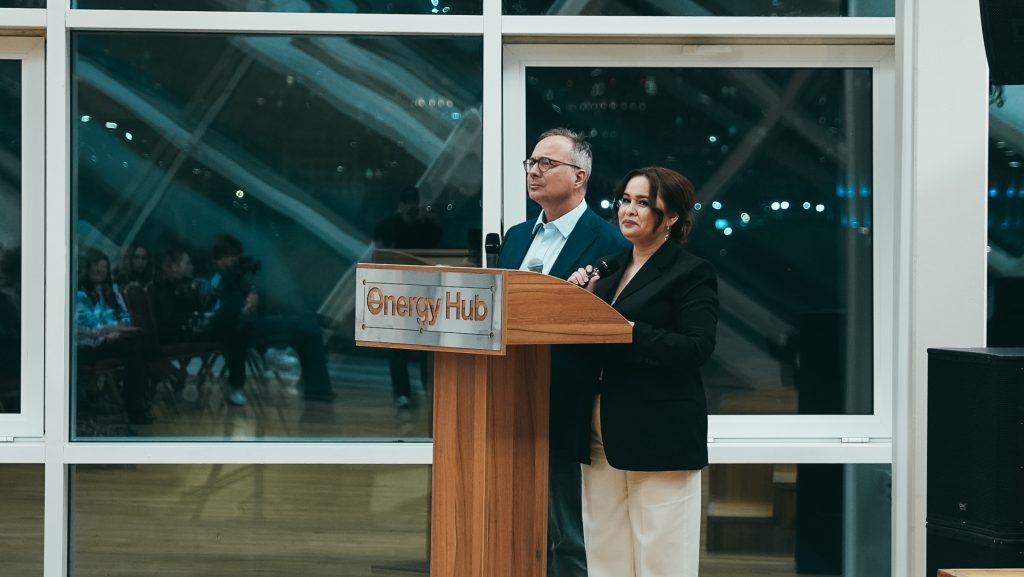
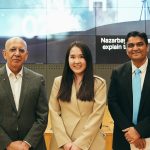
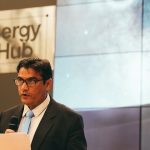
The evening was conducted in English and moderated by Professor Riccardo Pelizzo, Dean of the NU Graduate School of Public Policy, and science communicator Damel Mektepbayeva.
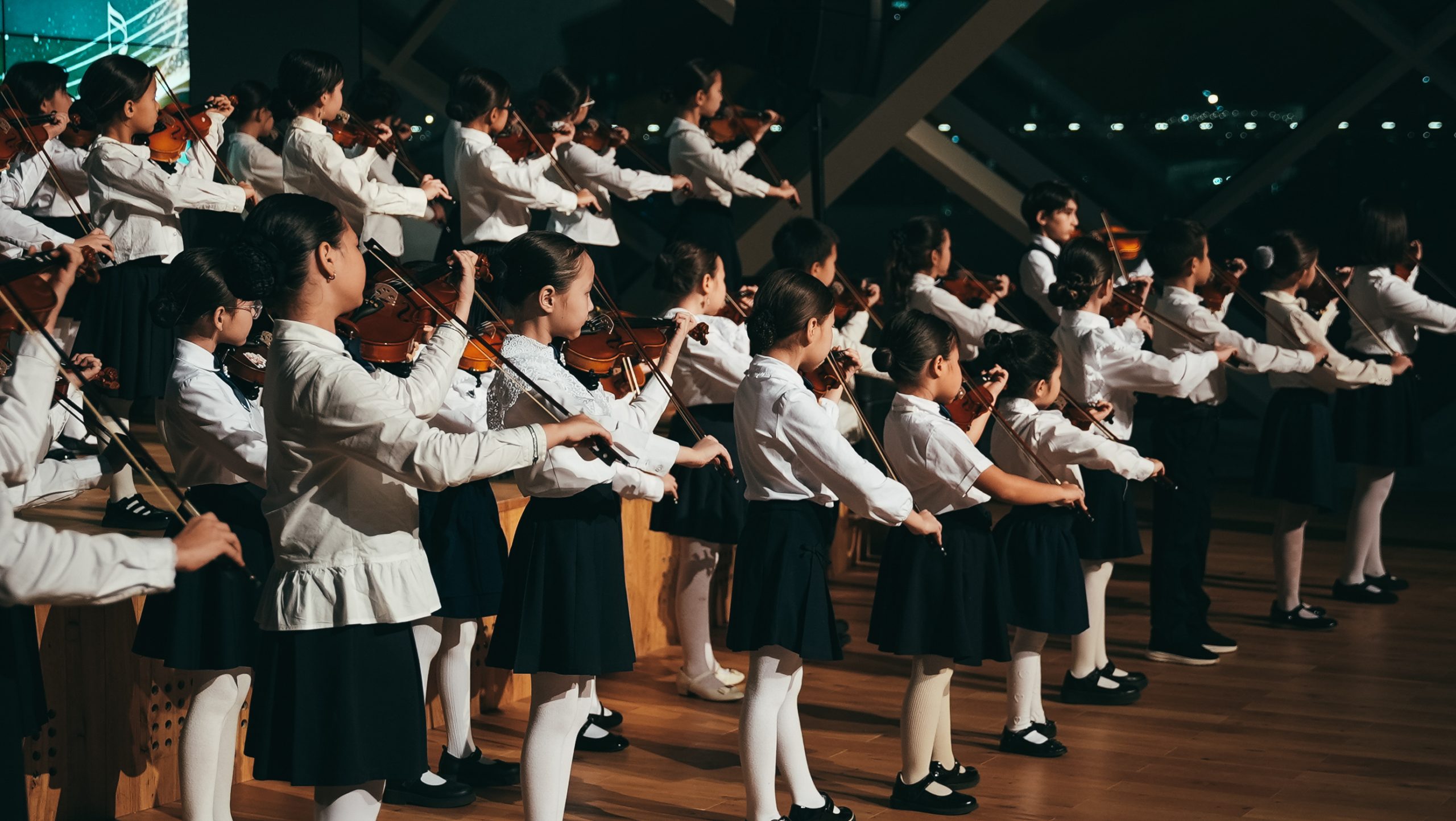
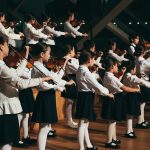
The programme also featured a BTCS Drama Performance #1 and a violin performance by Quantum Tech School, adding artistic elements to the evening.
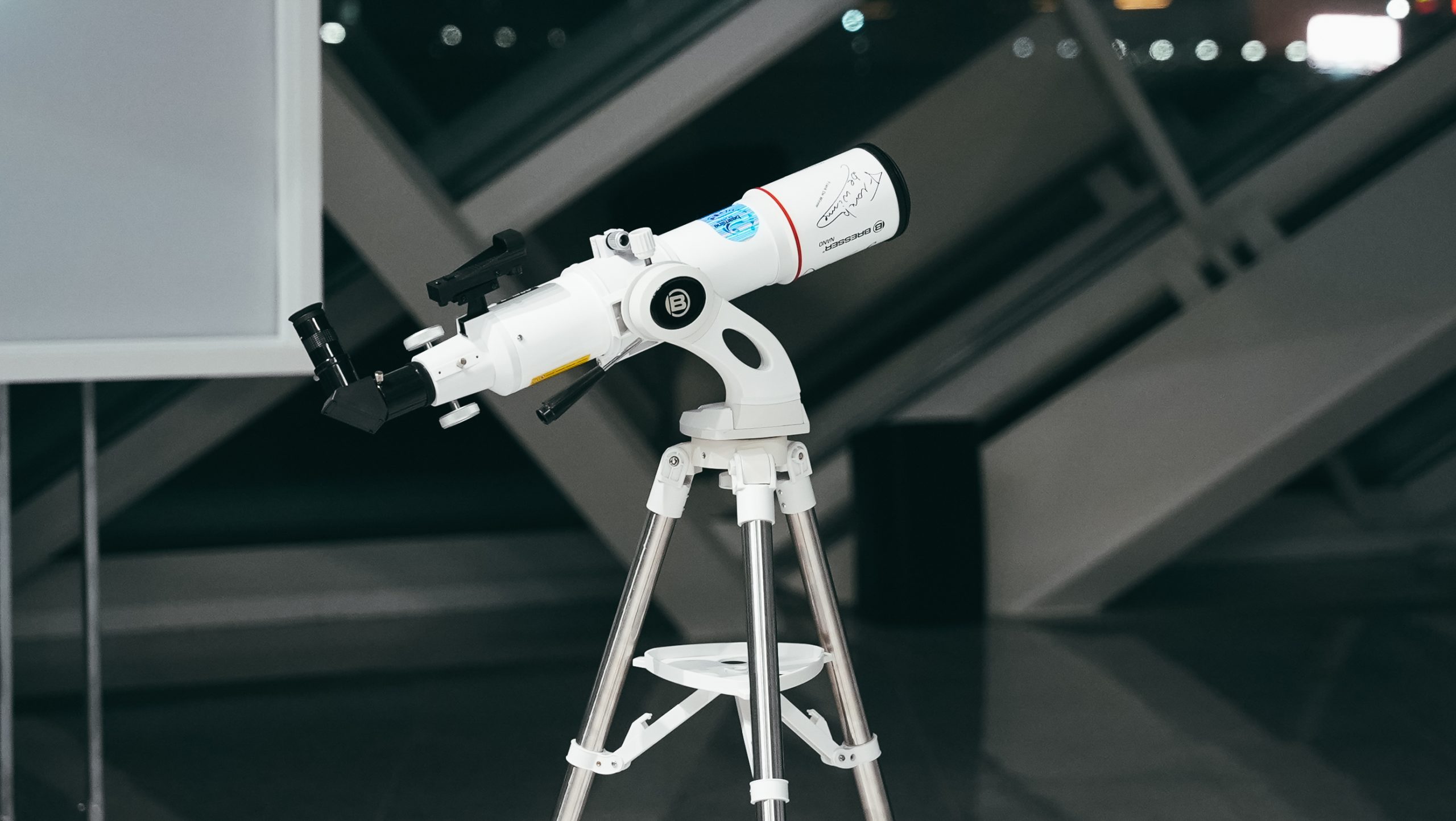
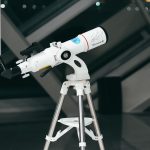
Guests also had the opportunity to look through a unique telescope signed by Nobel laureates François Englert, Gerard ‘t Hooft and Michel Mayor, as well as astronaut Frank De Winne. Ghent University presented the telescope to Alem Science during the visit of the King and Queen of Belgium to Kazakhstan.
Nobel Night was designed to bring major scientific and intellectual achievements beyond academic circles and make them part of public conversation. By explaining internationally recognised research in simple terms, the event demonstrated that important scientific ideas are not only for specialists but can also inspire curiosity and encourage wider public engagement with research. The event was co-organised by the NU Alumni Association and Onergy Creative Hub.