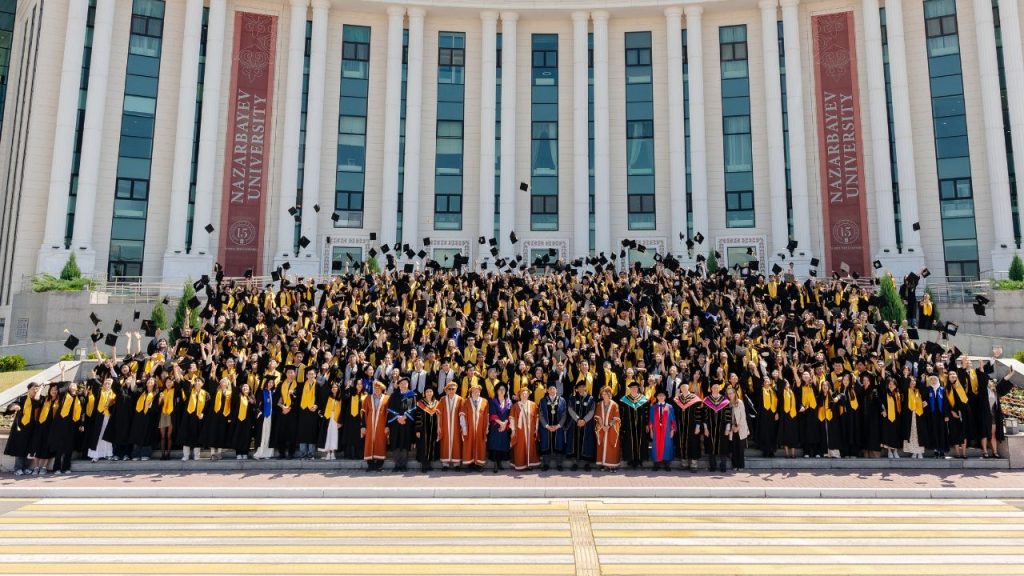

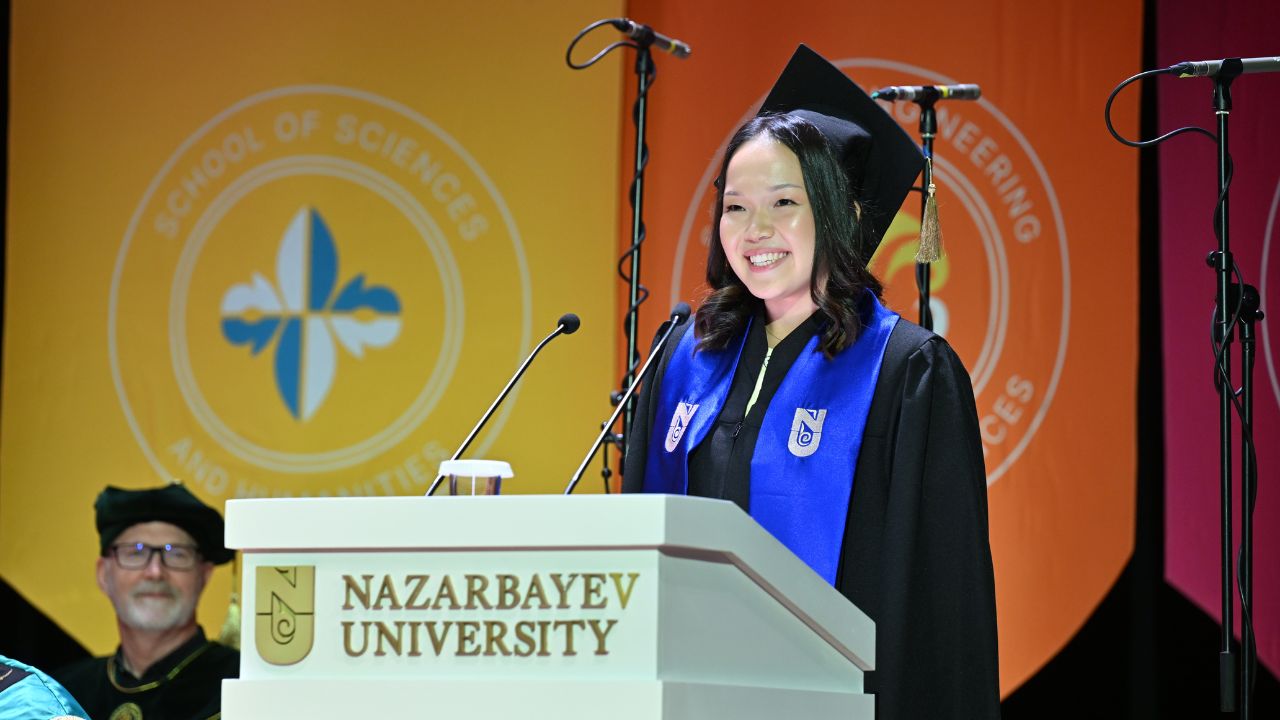
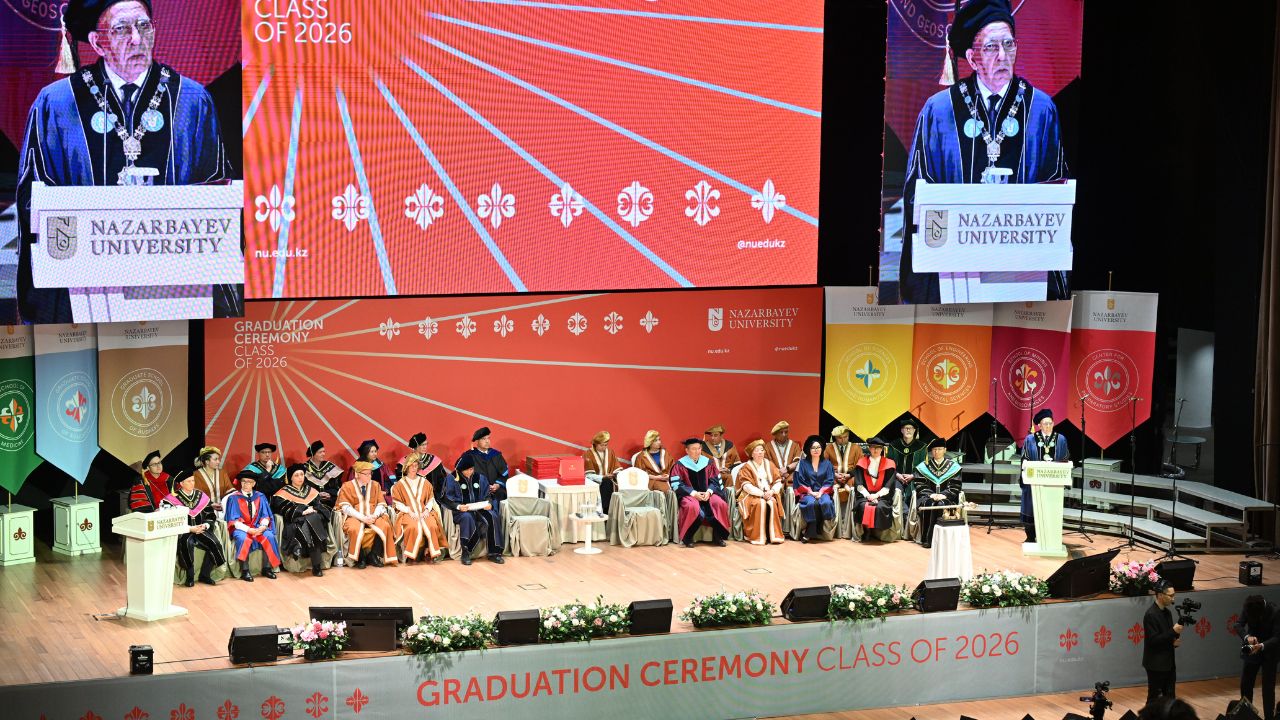






Nazarbayev University, Kazakhstan’s leading research university, marked a major milestone this year by graduating the largest class in its history. A total of 1,877 students received their degrees at the 2026 Commencement Ceremony in Astana, joining a growing community of NU alumni who are contributing to science, business, public service, healthcare, and education both in Kazakhstan and internationally.
Graduation by the Numbers:
| The Class of 2026 includes: | 1 877 |
| Bachelor’s graduates (UG) | 1 130 |
| Master’s graduates (GrM) | 647 |
| PhD graduates | 73 |
| Doctors of Medicine (MD) | 27 |
| Academic programs | 51 |
| Schools | 7 |
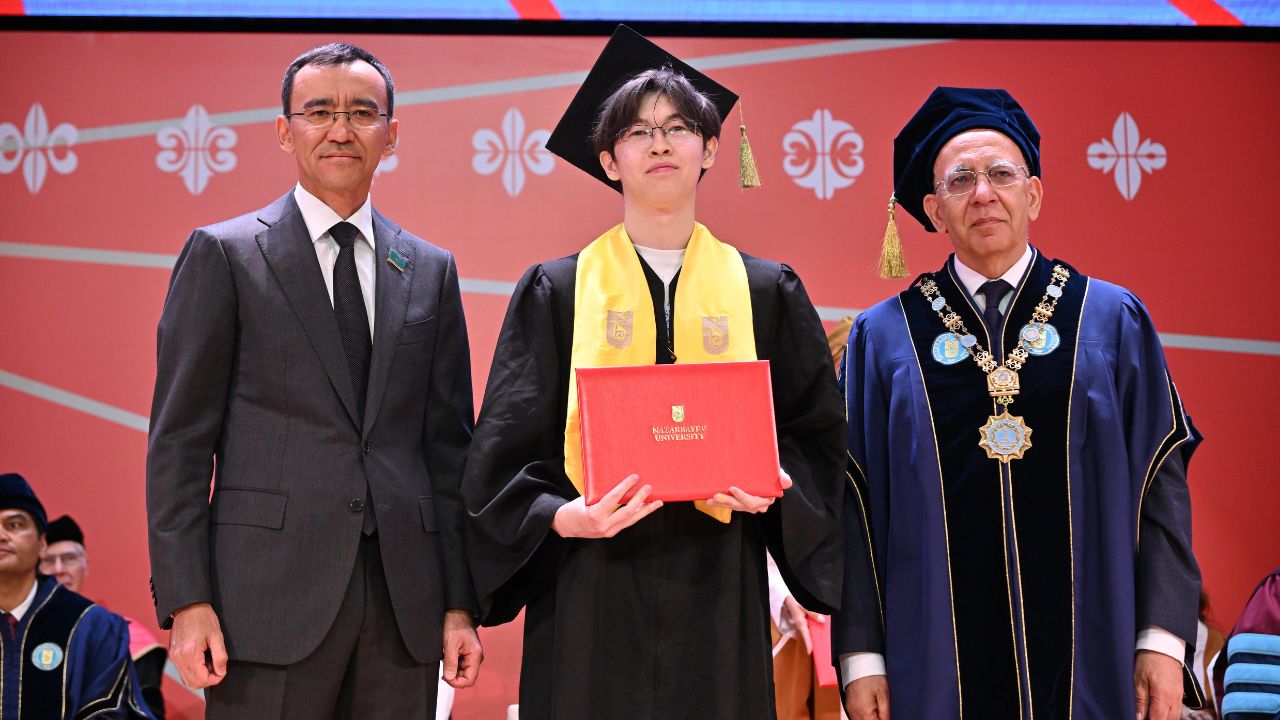
Chairman of the Senate of the Parliament of Kazakhstan Maulen Ashimbayev, who attended the ceremony as Guest of Honor, highlighted the university’s contribution to building Kazakhstan’s research, technological, and intellectual capacity. He noted that NU has become an important driver of research excellence and educational reform in the country, helping to establish modern academic standards and nurture a new generation of globally competitive professionals.
“President Kassym-Jomart Tokayev’s vision of a Just and Progressive Kazakhstan is a long-term reform agenda that requires the participation of society as a whole in advancing economic diversification, strengthening public institutions, and supporting science, education, business, and civil society. Graduates of Nazarbayev University are already making a meaningful contribution to these efforts. One notable example is Higgsfield AI, Kazakhstan’s first tech unicorn. Nearly 90% of its developers and specialists are graduates of NU. This is an important indicator of the competitiveness of Kazakhstan’s human capital and the quality of the university environment,” Maulen Ashimbayev said.
Technology and Innovation Lead Student Interest
Reflecting Kazakhstan’s growing focus on digital transformation and innovation, Computer Science was the most popular major among this year’s graduates, with 270 students completing the program. Together, technology-related disciplines, including Computer Science, Data Science, and Robotics, accounted for 351 graduates, underscoring the increasing demand for advanced digital and engineering skills.
| The most popular fields of study | Graduates |
| Computer Science | 270 |
| Economics | 131 |
| Mathematics | 111 |
| World Languages, Literature and Culture | 94 |
| Civil and Environmental Engineering | 86 |
| Sociology | 76 |
| Electrical and Computer Engineering | 71 |
| Political Science and International Relations | 60 |
| Biological Sciences | 59 |
| Chemical and Materials Engineering | 59 |
NU President Professor Waqar Ahmad: “Today, you join a growing community of NU alumni. Many of them are advancing scientific discovery. Others are building businesses, creating jobs, improving healthcare systems, shaping public policy, strengthening educational institutions, and leading social initiatives. Together, they demonstrate the transformative power of rigorous, research- based education grounded in strong values.”
The largest share of graduates came from the School of Engineering and Digital Sciences, which awarded degrees to 673 students, followed closely by the School of Sciences and Humanities, with 653 graduates. Together, these two schools account for more than 70 percent of the graduating class, reflecting NU’s commitment to developing expertise across both STEM disciplines and the humanities and social sciences.
| School | Number of graduates |
| SEDS — engineering and digital sciences | 673 (35,9%) |
| SSH — sciences and humanities | 653 (34,8%) |
| SoM — medicine | 186 (9,9%) |
| GSE — education | 107 (5,7%) |
| GSPP — public policy | 96 (5,1%) |
| GSB — business | 85 (4,5%) |
| SMG — geosciences | 77 (4,1%) |
Research Excellence: 73 New PhD Graduates
This year, 73 doctoral candidates successfully defended dissertations in fields ranging from robotics and chemical engineering to global health, public policy, and Eurasian studies. An additional 27 graduates earned the Doctor of Medicine degree. The strong representation of doctoral graduates reflects NU’s position as Kazakhstan’s first research university and its growing contribution to knowledge creation and innovation in the region.
Today, Nazarbayev University is ranked among the top 23 percent of universities worldwide in the Times Higher Education World University Rankings 2026, holds the leading position in Central Asia and the Caucasus, and is ranked 150th in Asia by Times Higher Education. Among young universities globally, NU is also recognized among the world’s top 106 institutions.