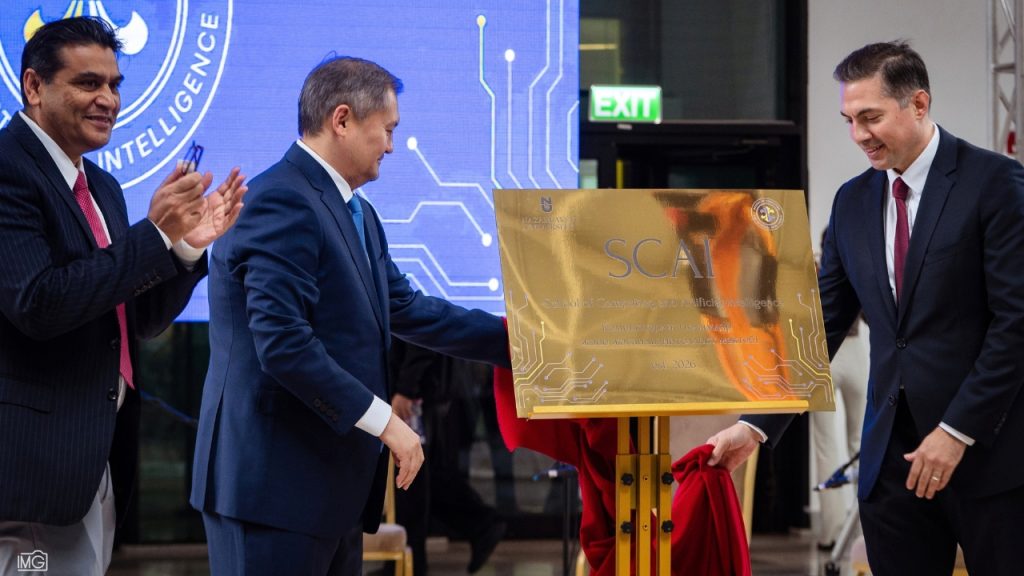
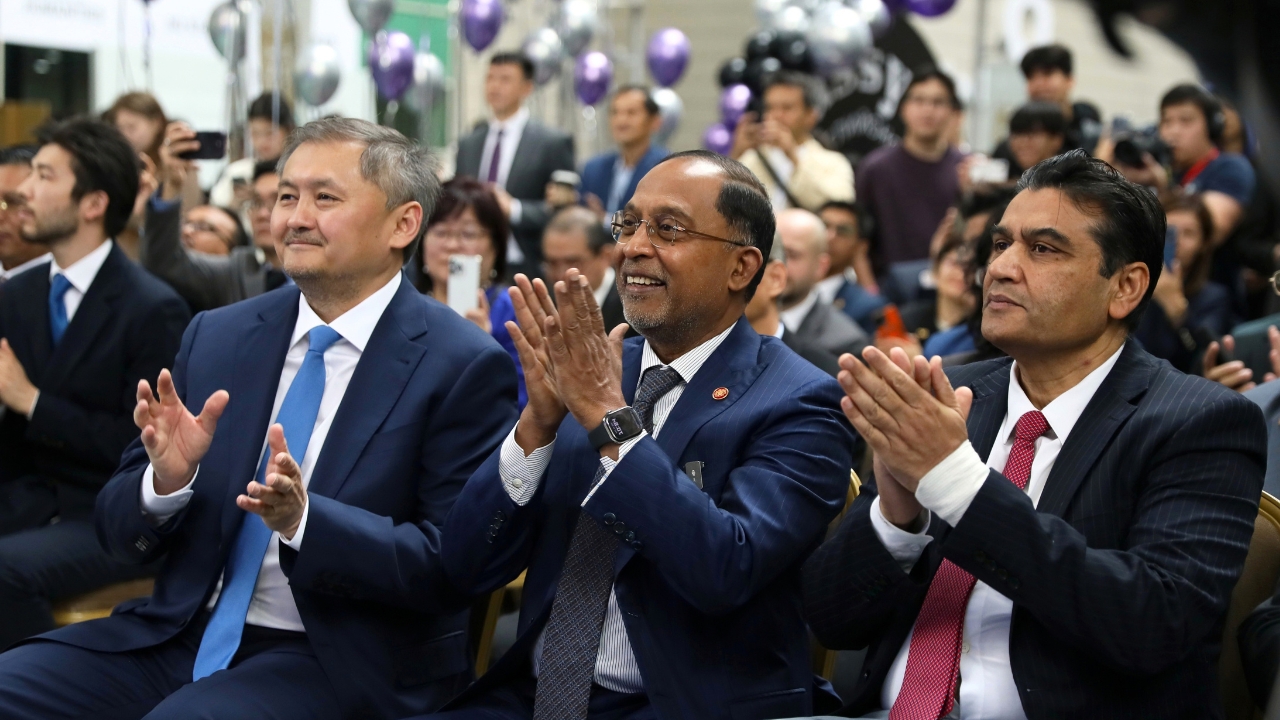
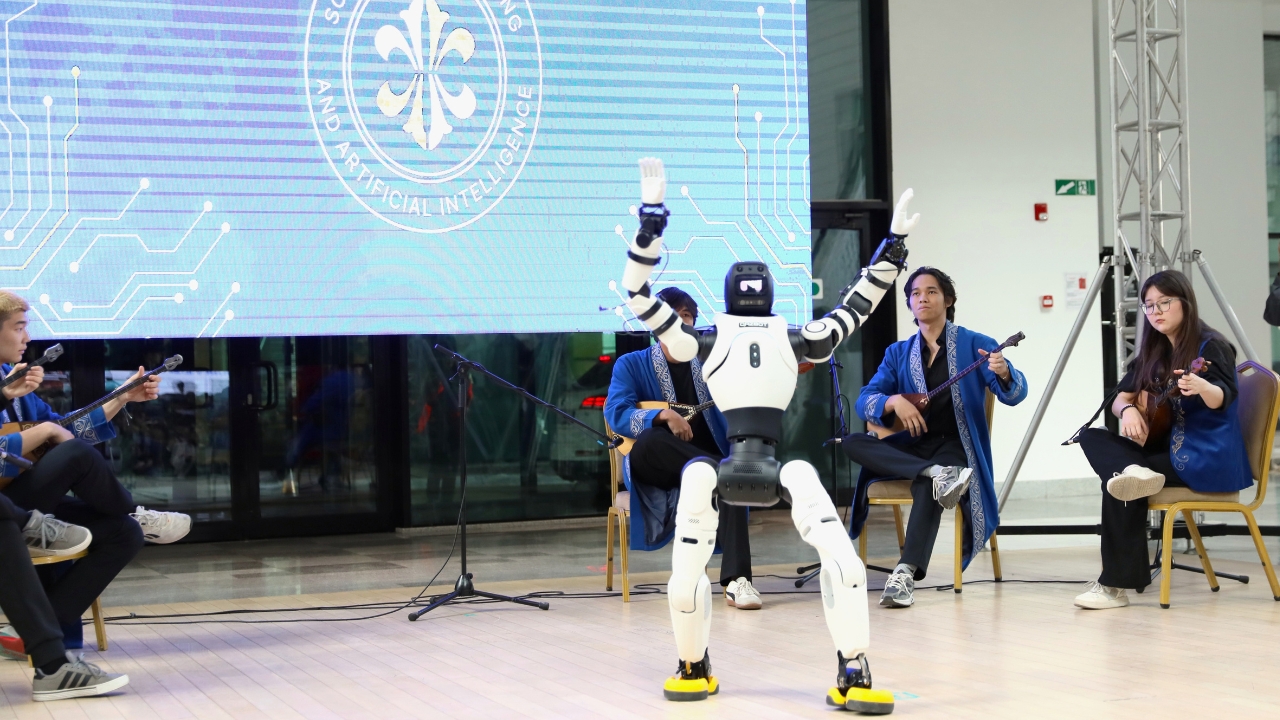




Nazarbayev University officially opened its School of Computing and Artificial Intelligence (SCAI) during NU Open House Day. SCAI was established in response to Kazakhstan’s growing need for expertise and research in digital technologies and artificial intelligence. The new school brings together NU’s strengths in computer science, artificial intelligence, mathematics, and robotics, creating an integrated platform for education, research, and technology development.
The opening ceremony was attended by Sayasat Nurbek, Kazakhstan’s minister of science and higher education. “Artificial intelligence can be seen as a new factor, a new force for Kazakhstan—one that can increase the efficiency of our national economy, production, and workforce. That is why today’s opening of the school is, in a sense, our national response,” Minister Nurbek said.
According to him, AI development is already moving beyond generative models. The next wave includes Agent AI – systems capable of autonomously performing complex tasks, and Physical AI, which brings artificial intelligence into the physical world.
“We need to be ready for these changes, and NU is well positioned to help prepare for them,” Minister Nurbek added.
During the SCAI presentation, Professor Durvudkhan Suragan, Vice Dean for Research and Innovation, outlined the school’s goals and capabilities, noting that more than 2,100 students are now enrolled, including 281 master’s students and 99 PhD students. In 2026, 608 new students joined the school. Its faculty includes around 70 professors.
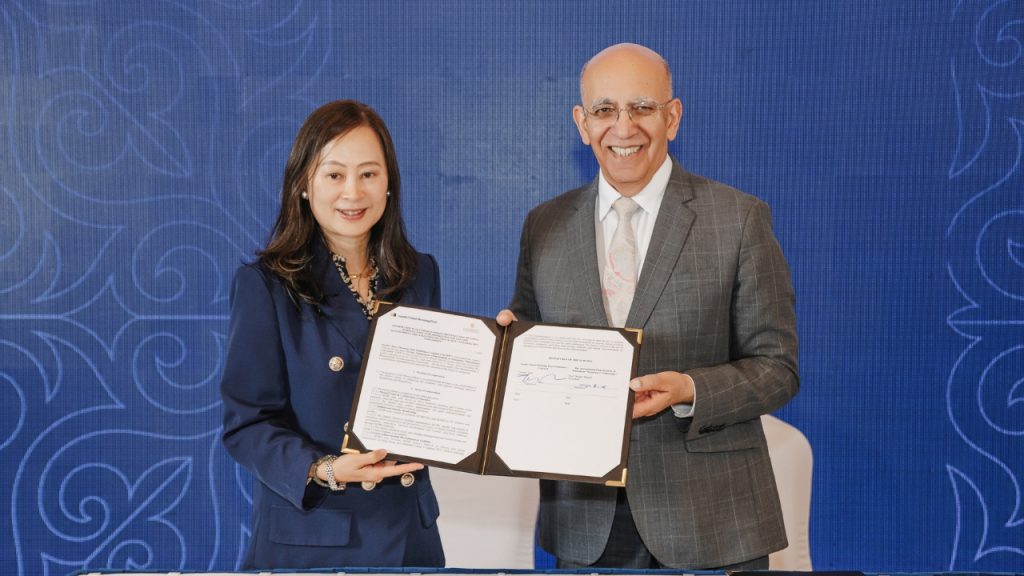
SCAI plans to expand its academic portfolio with a Bachelor of Science in Artificial Intelligence in partnership with The Hong Kong Polytechnic University (PolyU), a PhD program in “AI for X” focused on interdisciplinary research, and a master’s program in cybersecurity.
“This field is being fundamentally reshaped by AI, and strengthening Kazakhstan’s digital security requires specialists who have a deep understanding of generative AI and its applications,” Professor Atakan Varol, dean of SCAI, told participants at the event.
The school is also advancing research in Physical AI, urban analytics, computational finance, and the application of artificial intelligence across different fields. This work is supported by NU’s computing infrastructure, including the Shabyt, Muon, and Irgetas supercomputers. SCAI also works closely with NU’s Institute of Smart Systems and Artificial Intelligence (ISSAI), drawing on computing resources, foundation models, and data for research projects.
“When we created this school, we did not focus on the short-term outcomes. We also included Mathematics inside this school, and this is also something quite unique in the world, because we just don’t want only people who have practical skills, we want all of our students to have a very strong foundational base. If you look right now at the research teams of the top AI companies, you will see that most of them are from former International Mathematics Olympiad winners,” said Professor Varol.
SCAI also aims to accelerate the transition from research to practical applications. The school plans to expand its engagement with industry, support student technology projects, and create pathways for commercializing research. By 2030, SCAI aims to help launch more than 30 deep-tech startups.
The school is also strengthening its international academic profile. Two of its Bachelor’s degree programs—computer science and mathematics have received accreditation from ABET, an international organization that sets quality standards for programs in engineering, technology, and related fields. By 2030, SCAI aims to rank among the world’s top 250 universities for computer science in the Times Higher Education subject rankings.
Photo: NU Image