In many schools across Kazakhstan, robotics equipment remains underused. The challenge is not only a lack of resources but also the heavy workload placed on teachers and a shortage of specialists able to teach engineering and digital skills.
After encountering this gap firsthand, a group of young entrepreneurs set out to build a platform designed to make STEM education more accessible and practical for students in both urban and rural schools.
Artisan Education introduces students to robotics, programming and 3D modeling through hands-on projects and engagement with real technologies. During the 2024–2025 academic years, 3,252 students across 235 educational institutions in ten regions of Kazakhstan studied using the platform. Notably, 68 percent of participants came from rural schools.
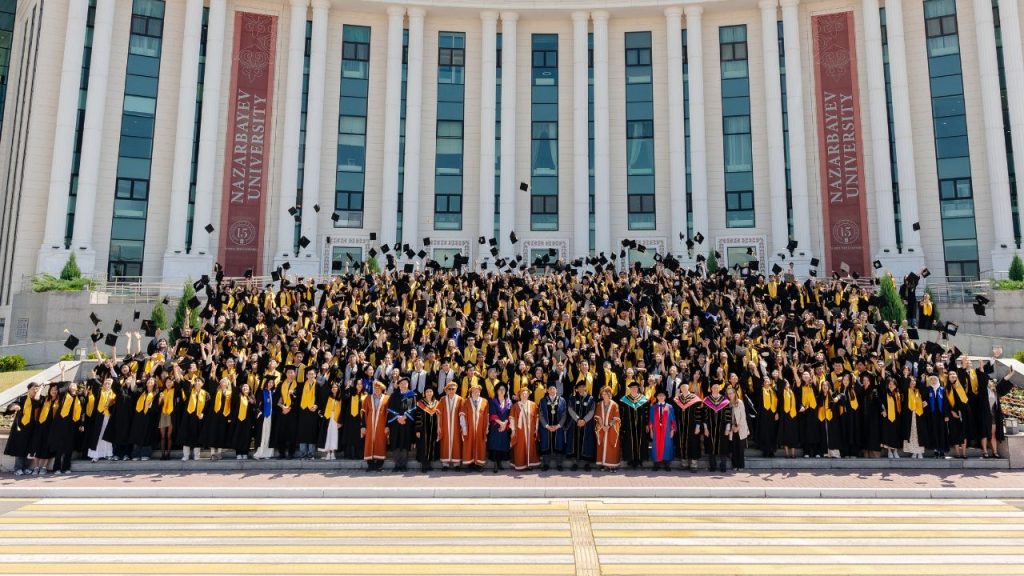
“In 2017, after graduating from Nazarbayev University with a degree in Robotics and Mechatronics, I began teaching robotics at the Republican Physics and Mathematics School in Astana and immediately saw the problem,” said Baglan Kuturbayev, CEO of Artisan Education. “Schools had the equipment, but there were not enough qualified teachers who could effectively work with students.”
Baglan Kuturbayev partnered with Alikhan Yessaly, who earned both his bachelor’s and master’s degrees in Robotics and Mechatronics from Nazarbayev University, and in 2023 launched an educational platform focused on robotics, programming and 3D modeling.
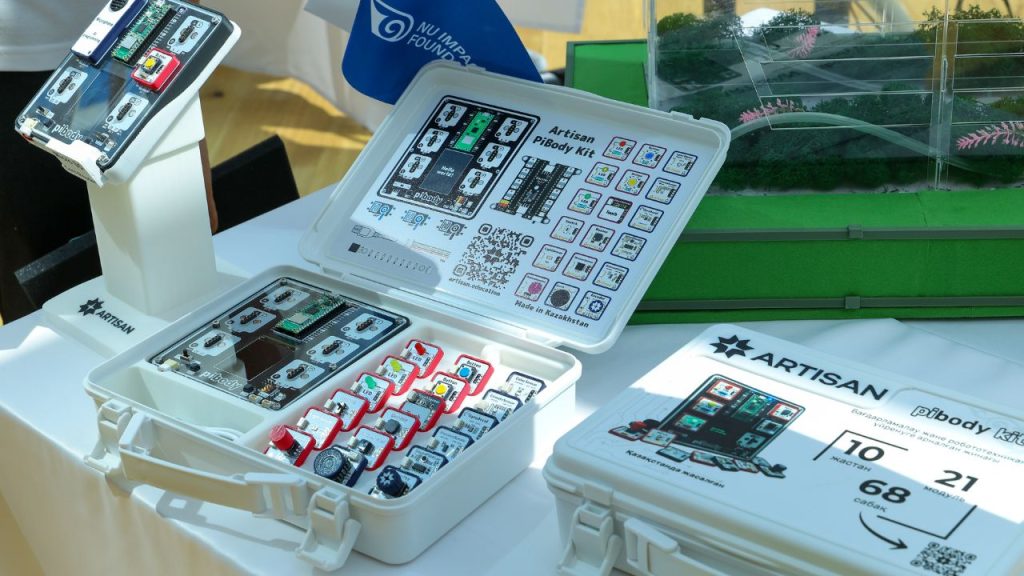
The platform is built around the Raspberry Pi Pico W microcontroller and is designed to simplify technology-based learning. It allows students and teachers to develop IoT and AI projects without complicated sensor connections, soldering or extensive wiring, making engineering concepts more approachable and easier to apply in practice.
Today, Artisan Education consists of a 13-member team, including eight Nazarbayev University students. The startup completed university-supported business incubation and acceleration programs and has already trained more than 250 teachers to use the platform and educational kits.
The team places particular emphasis on expanding engineering education in rural communities. Pilot projects launched in three villages in the Akmola region have given students opportunities to work with modern technologies and develop practical engineering skills close to home. According to the developers, participation in the initiative increased children’s interest in technology by approximately 30 percent.
Looking ahead, the team plans to expand the project to reach up to 90 percent of Kazakhstan’s rural and small schools while helping support the launch of at least ten technology startups. Their longer-term ambitions include entering international markets.