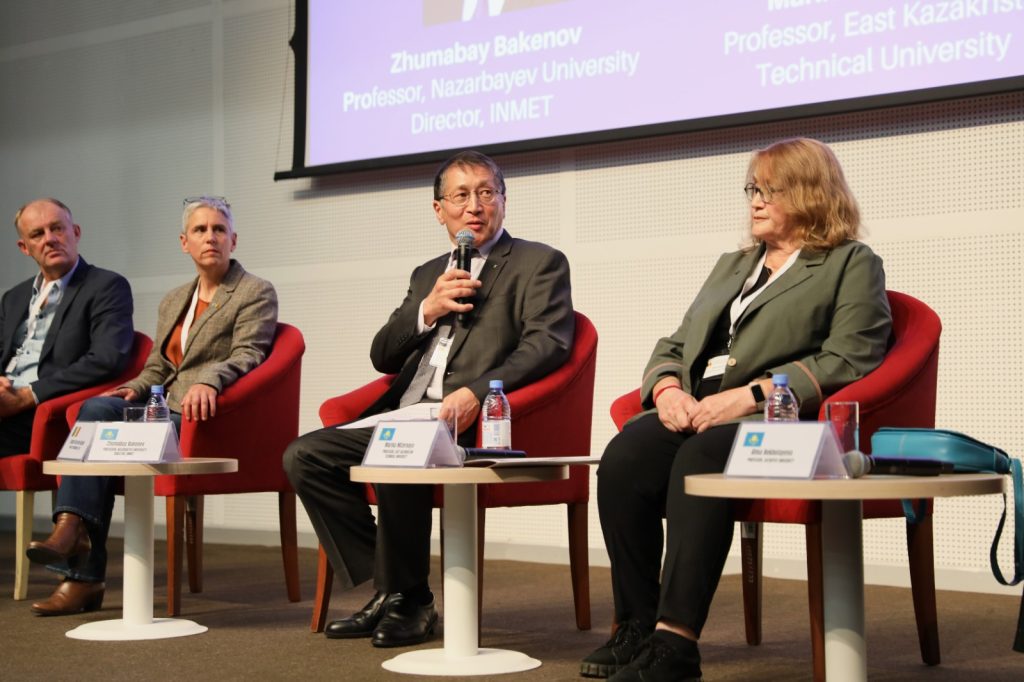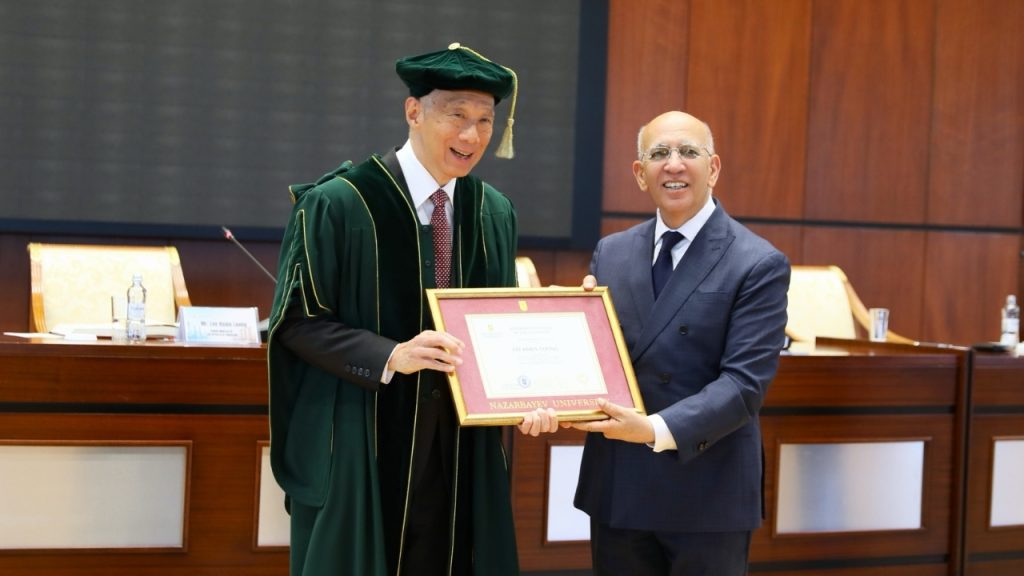


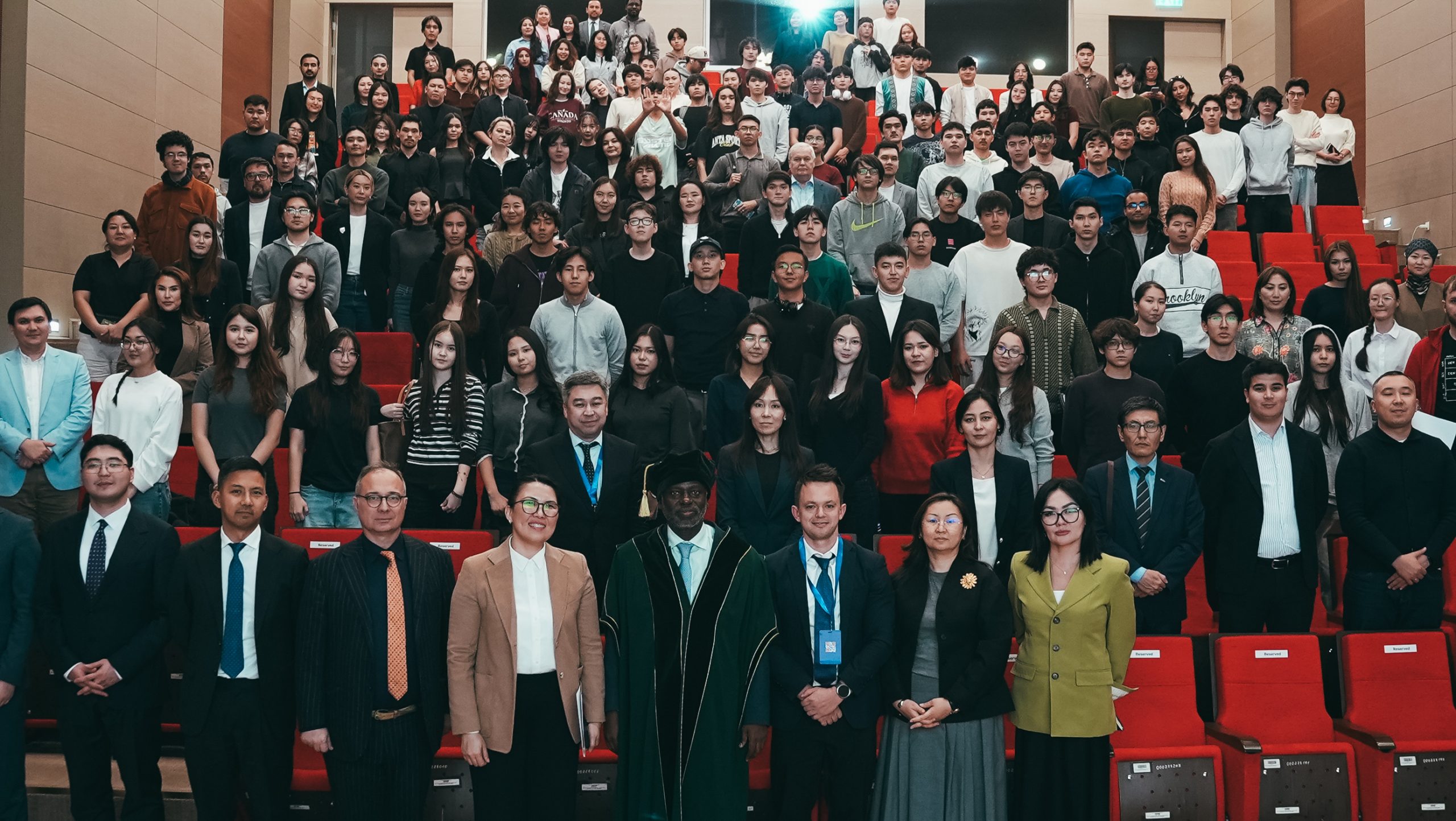
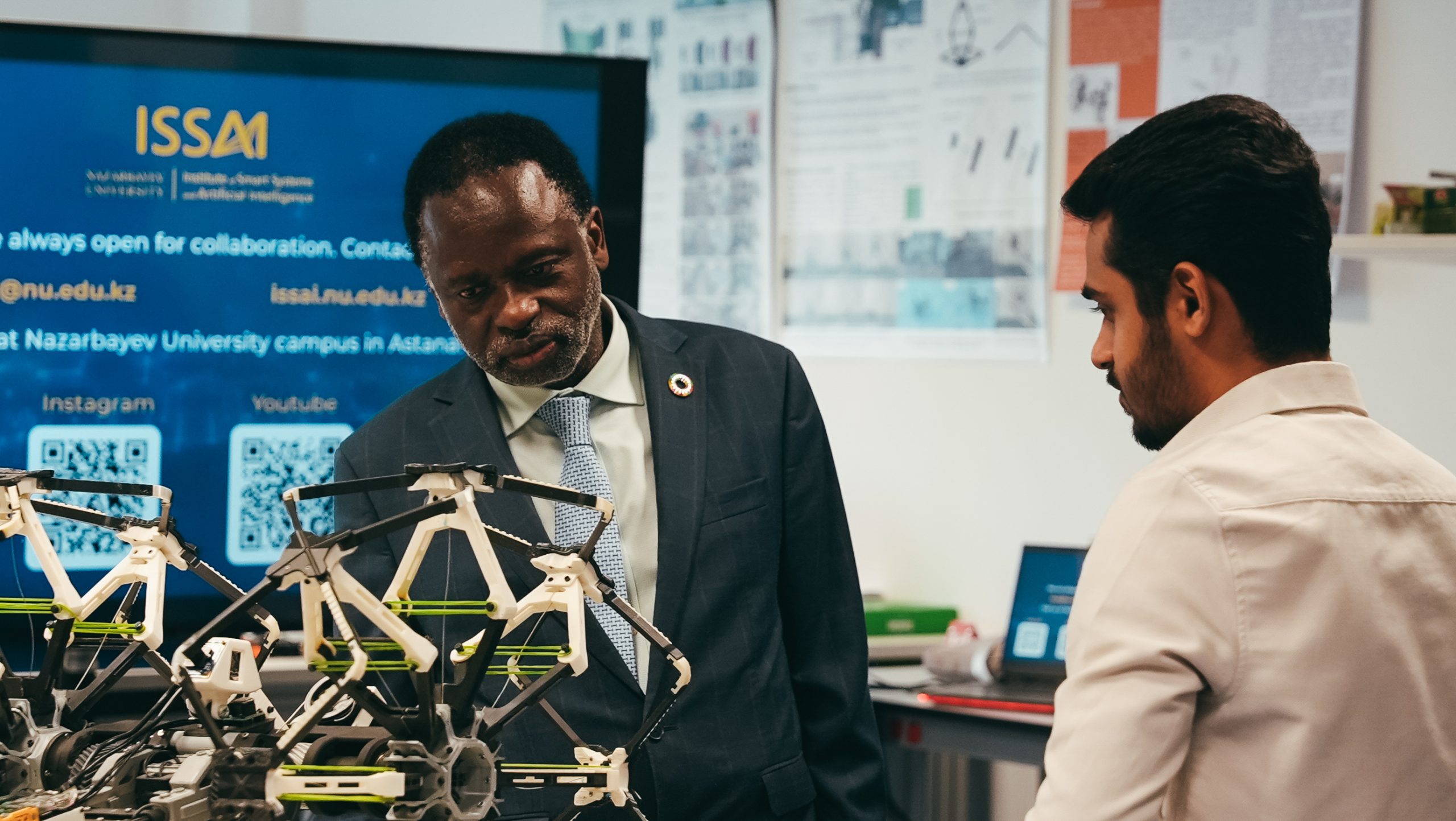


Professor Tshilidzi Marwala, Rector of the United Nations University (UNU) and United Nations Under-Secretary-General, visited Nazarbayev University (NU), where he delivered a guest lecture titled “Shaping AI for Sustainable Development: The Role of Universities and Youth”. During the visit, NU also awarded him the title of Honorary Professor.
Welcoming the guest, NU President Waqar Ahmad highlighted the shared priorities of the two universities in addressing global and regional challenges through research and evidence-based approaches.
“As we use artificial intelligence to advance the Sustainable Development Goals, we must also ensure that the development of AI itself is sustainable,” Waqar Ahmad said. He stressed that universities should engage students in discussions about which challenges AI should address, how its benefits should be distributed, and how technology can best serve society.
In his lecture, Professor Marwala drew on his experience in engineering and artificial intelligence to discuss both the potential and limitations of AI, emphasising the importance of critically evaluating the outputs generated by AI systems.
“Artificial intelligence is a technology based on approximate computation. Ultimately, its performance depends on the data it has been trained on. That data always contains a degree of uncertainty, which is why AI-generated results should not be treated as absolute truth,” Professor Marwala noted.
He also addressed the environmental footprint of AI development. Data centres and semiconductor manufacturing, in particular, require substantial amounts of energy and water. In his view, this creates new opportunities for research, including the development of energy-efficient technologies and more sustainable AI infrastructure.
Speaking about the role of universities, Professor Marwala emphasised that the value of research should ultimately be measured by its practical impact.
“Ultimately, the success of our work is measured by how effectively we translate research into real policy decisions,” he said.
The visit comes amid expanding cooperation between Kazakhstan and the United Nations University. Following his visit to UNU headquarters in Tokyo in December 2025, President of Kazakhstan Kassym-Jomart Tokayev proposed expanding the organisation’s presence in the country.
On 19 November 2026, Kazakhstan and the United Nations University signed an agreement to relocate the UNU Institute on Comparative Regional Integration Studies (UNU-CRIS) from Belgium to Almaty. The institute is expected to expand research into regional cooperation, technology and sustainable development.