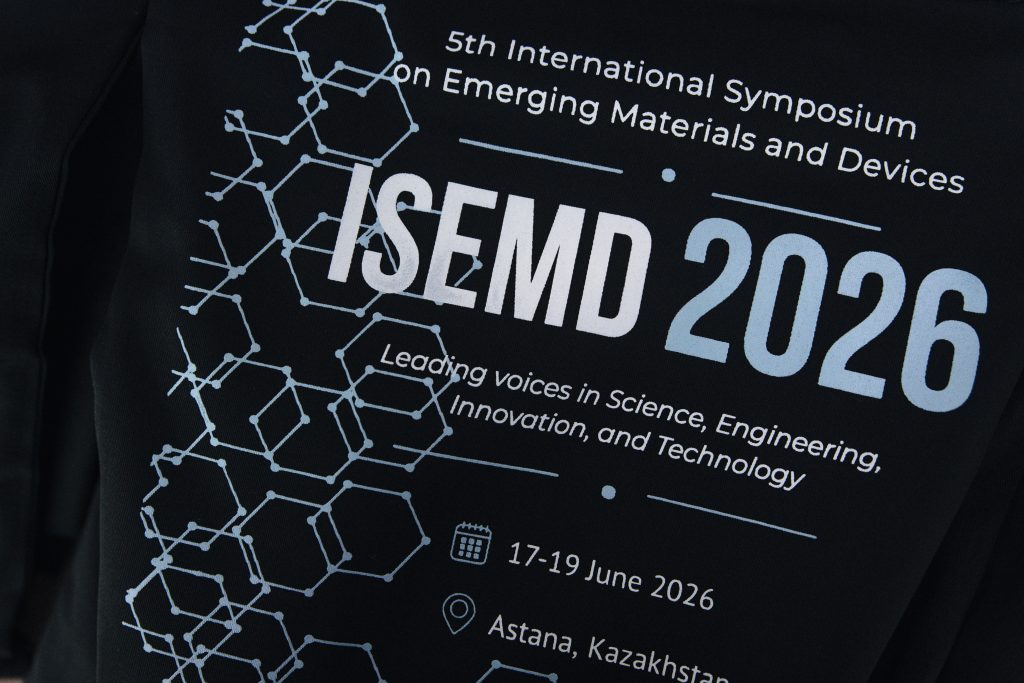
When people think of scientific conferences, they usually think of publications, new discoveries, and cutting-edge research. Yet one of the most talked-about sessions at ISEMD 2026 focused on a different question: what happens after the discovery is made?
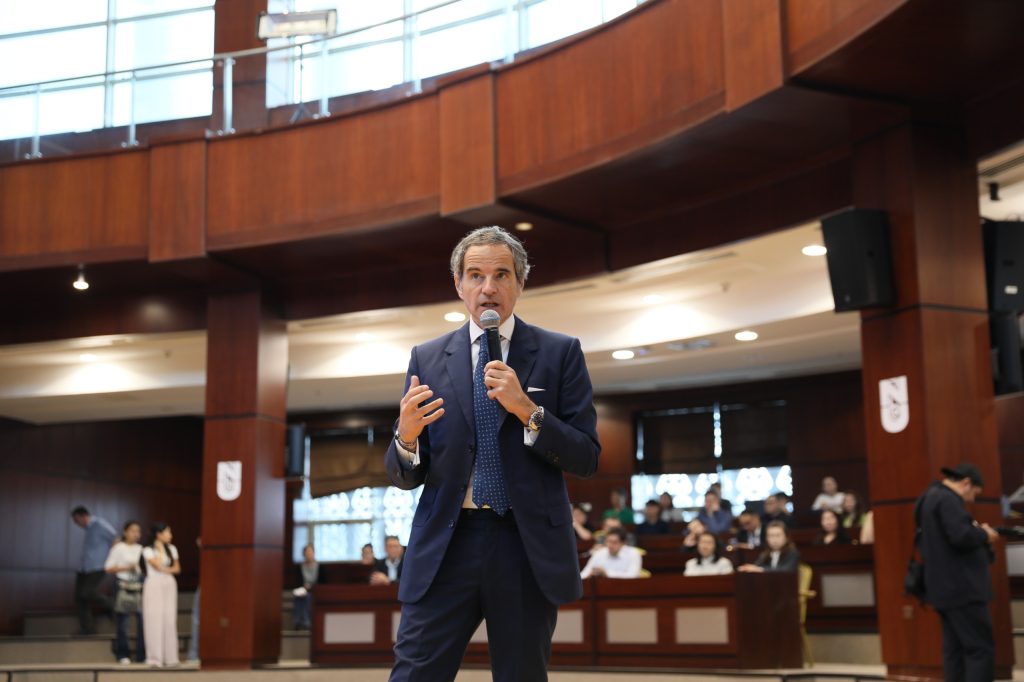
The session “From Lab to Market – Innovation and Commercialization,” moderated by Dr. Olzat Toktarbaiuly and Dr. Makpal Rakhatkyzy, brought together investors, entrepreneurs, researchers, and industry leaders to discuss how scientific ideas can be transformed into real technologies, products, and companies.
ISEMD 2026 was organized by Professor Nurxat Nuraje of Nazarbayev University, who has long championed international scientific collaboration and created platforms that connect academia, industry, and business. This dialogue between science and innovation was at the heart of the session.
A Great Technology Is Not Enough
One of the most engaging speakers was Dr. Lei Yu, a deep-tech investor, entrepreneur, and Harvard University alumnus. Together with Nailya Shodorova from the NU Impact Foundation, he addressed a question that concerns many early-career researchers: how can a scientific idea become a successful venture and attract investment?
The key message was straightforward: investors do not invest in technology alone. They also evaluate the team, market understanding, scalability potential, and the ability to solve a real problem. Even outstanding science may fail to reach commercialization if there is no clear pathway to market.
For researchers, this serves as an important reminder that thinking about real-world applications should begin long before a paper is published.
The Most Valuable Outcome of a PhD Is Not the Thesis Topic
A particularly inspiring discussion came from Bolat Sultankulov, Founder and CEO of Arlan Biotech, a company operating at the intersection of artificial intelligence and biotechnology.
When asked whether young researchers should continue working on their PhD topic after graduation or explore entirely new directions, he offered a powerful perspective: the true value of a PhD lies not in the specific research topic, but in the skills, knowledge, and mindset developed throughout the journey.
Another memorable message from his talk was the importance of overcoming one’s ego and not being afraid of criticism. According to Sultankulov, both entrepreneurship and research involve rejection, uncertainty, and skepticism. Success often belongs to those who continue moving forward despite obstacles and remain willing to learn from failure.
The Long Road from Prototype to Product
Professor Prashant Jamwal, Director of the Center of Excellence in Medical Robotics & Research (CEMRR) at Nazarbayev University, shared his experience in commercializing medical robotic systems.
His story demonstrated that a working prototype is only the beginning. Behind every technology that eventually reaches hospitals and patients are years of engineering refinement, testing, certification, and user engagement. Innovation requires not only scientific excellence but also persistence, teamwork, and long-term vision.
Industry Needs Solutions Today
A practical industry perspective was provided by Zhinsi Sutanbay, CEO of MunaiKhim Ltd. His presentation illustrated how collaboration between science and industry is evolving in Kazakhstan: businesses are increasingly turning to universities not simply for research, but to address specific industrial challenges and deliver tangible outcomes together.
Another important dimension of innovation was presented by Dr. Buyi Yan, Co-founder and CTO of MicroQuanta Semiconductor, one of the global leaders in new solar technologies. His experience demonstrated that there is a significant gap between a successful laboratory experiment and industrial-scale manufacturing—a gap that can only be bridged through engineering expertise, scale-up strategies, and sustained investment.
Science Is a Team Sport
The second part of the session featured representatives from conference sponsors and industry partners, who shared their experiences working with universities, research centers, and industrial companies.
One particularly interesting takeaway was the recognition that modern science depends on far more than researchers alone. Suppliers of laboratory equipment, analytical instruments, scientific software, and consumables play a critical role in enabling innovation by providing the infrastructure that makes research possible.
The main conclusion of the session can be summarized in a single sentence: innovation is not created in a laboratory alone, nor in an investor’s office. It emerges where scientists, entrepreneurs, engineers, industry leaders, and investors come together.
Platforms such as ISEMD 2026 help bring these communities together, creating opportunities to transform scientific discoveries into solutions that can shape industries, economies, and society.
ISEMD is an international symposium dedicated to emerging materials and technologies that underpin solutions for energy, healthcare, and high-tech industries. This year, the event was hosted at NU, opened by Kazakhstan’s Minister of Science and Higher Education Sayasat Nurbek, and brought together more than 200 participants from the United Kingdom, China, South Korea, Türkiye, Malaysia, Georgia, Uzbekistan, Singapore, and other countries