

Infections that were treatable for decades are becoming harder to cure again. The reason is antimicrobial resistance (AMR) — a process in which bacteria stop responding to antibiotics. Often described as a “silent pandemic,” AMR develops gradually, without the dramatic outbreaks that typically draw public attention.
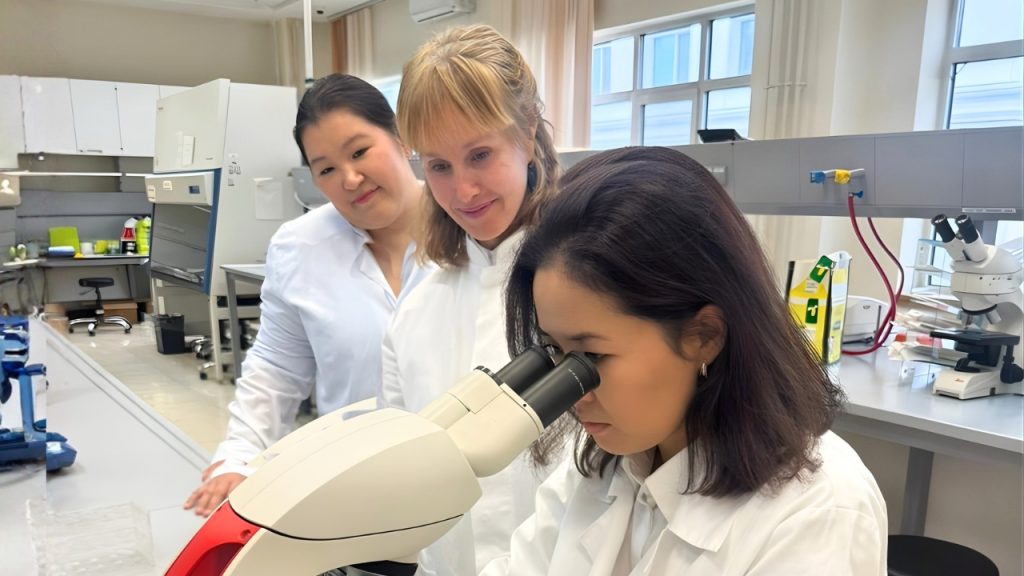
“Antimicrobial resistance is no longer a distant or theoretical threat. It is already affecting clinical outcomes in our hospitals today,” says Yulia Semenova, Professor at Nazarbayev University.
The research is conducted with her team, including doctoral researchers Dariya Zhazykbayeva and Zhanar Kosherova.
The World Health Organization ranks AMR among the most urgent global health threats of the coming decades, warning that drug-resistant infections could undermine decades of medical progress if left unchecked. A major global study published in The Lancet estimates that by 2050, bacterial resistance could be associated with more than 8 million deaths annually worldwide.
At the core of the crisis is a structural imbalance: bacteria evolve quickly through mutation and gene exchange, while antibiotic development is slow, costly, and commercially unattractive. As a result, medical innovation is struggling to keep pace with microbial adaptation.
This gap is already visible in practice.
In Kazakhstan, antimicrobial consumption has been rising, particularly in outpatient settings. After a period of decline before COVID-19, antibiotic use began to increase again, with the sharpest growth during the pandemic. This surge was driven largely by self-medication, weaker control over antibiotic sales, and uncertainty in treatment decisions — often outside clinical guidelines.
Antiviral use has also increased by more than 10% annually over the past seven years, accelerating after COVID-19, particularly for drugs targeting influenza, herpes, and hepatitis B and C. A recent study by Nazarbayev University researchers, published in a journal of the Nature group, highlights this sustained upward trend.
Projections suggest that by 2030, outpatient spending on antivirals could reach nearly USD 40 million, significantly exceeding hospital expenditure. Researchers note that this reflects a broader shift in which medical decision-making is increasingly taking place outside formal healthcare settings.
To address these challenges, Kazakhstan has launched its first national effort to systematically map both antimicrobial resistance and antibiotic use.
The Antibiotic Resistance Map of Kazakhstan, developed with the NU School of Medicine, is the country’s first large-scale surveillance initiative tracking resistance across urinary, respiratory, bloodstream, and skin and soft tissue infections. It provides a baseline for understanding how resistance varies geographically and clinically.
In parallel, the Antibiotic Consumption Map of Kazakhstan analyses antibiotic use across both hospital and community sectors, highlighting regional differences and prescribing patterns.
By linking resistance and consumption data, the initiative aims to create interactive tools that support clinicians and policymakers in making decisions based on regional evidence rather than national averages.
The next phase of the research is being implemented under programmes running from 2025–2027. Early results have already led to peer-reviewed publications, including articles in Scientific Reports — an open-access, multidisciplinary journal within the Nature Portfolio and one of the most widely cited journals globally — as well as other international outlets.
Across Central Asia, similar patterns are emerging. A regional review covering Kazakhstan, Kyrgyzstan, Uzbekistan, Tajikistan, and Turkmenistan found common challenges: fragmented surveillance systems, uneven implementation of antimicrobial stewardship, and limited regional coordination.
A March 2026 review by NU researchers, published in Clinical Microbiology Reviews, highlights antimicrobial resistance as a major public health threat requiring coordinated, cross-sectoral action. The study also shows that antibiotic use is influenced not only by healthcare systems, but also by broader socioeconomic factors such as income levels, inflation, and access to clean energy — reinforcing AMR as both a medical and systemic challenge.
At the same time, a public awareness campaign supported by The Trinity Challenge is using social media, short videos, and a national children’s art competition to make AMR more understandable to families and younger audiences. The goal is to shift awareness from clinical circles into everyday life — promoting responsible antibiotic use and basic preventive behaviours.
Antimicrobial resistance does not emerge as a single event. It accumulates over time — in prescriptions, pharmacies, households, and daily habits. Once established, it becomes far more difficult to reverse than to prevent. Researchers at Nazarbayev University are also actively disseminating findings through digital platforms including YouTube, Instagram, and TikTok to broaden public awareness of antimicrobial resistance and related health risks.