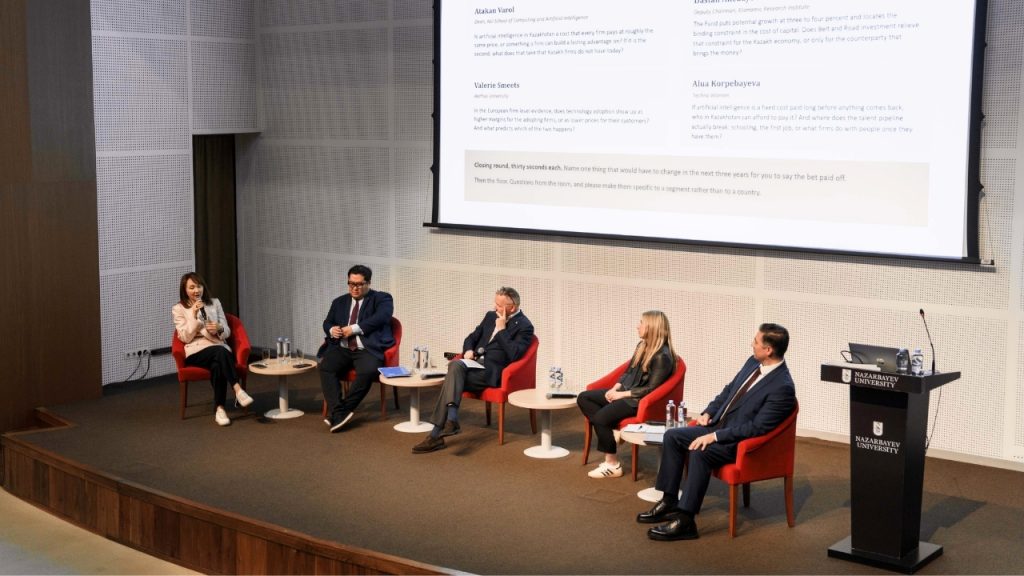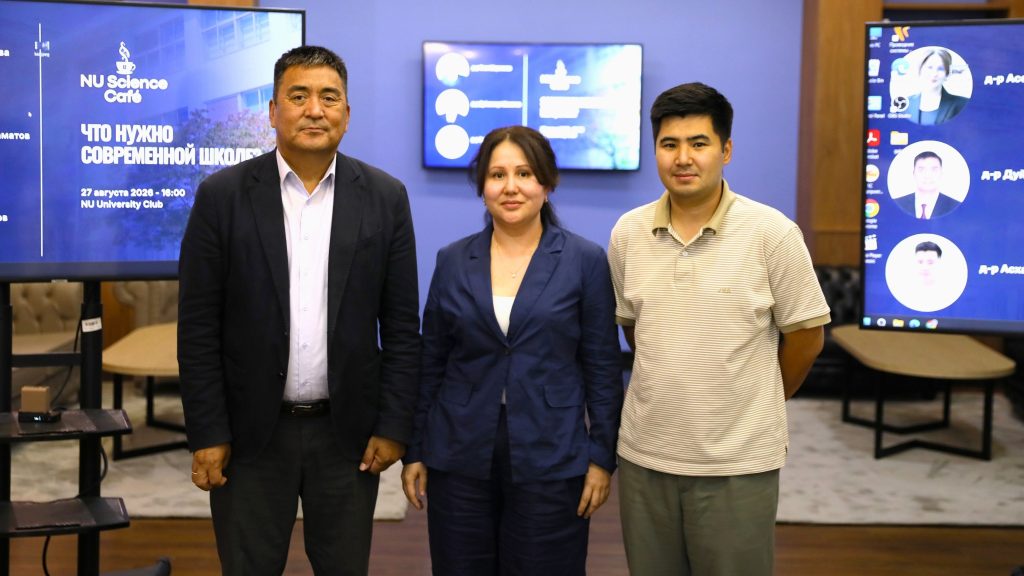
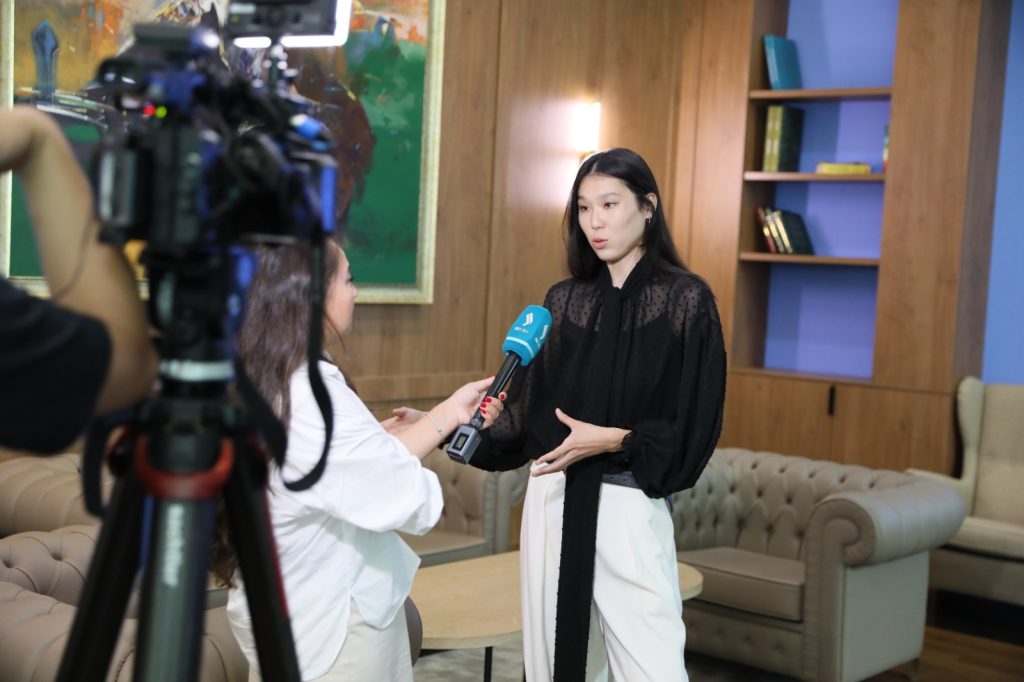
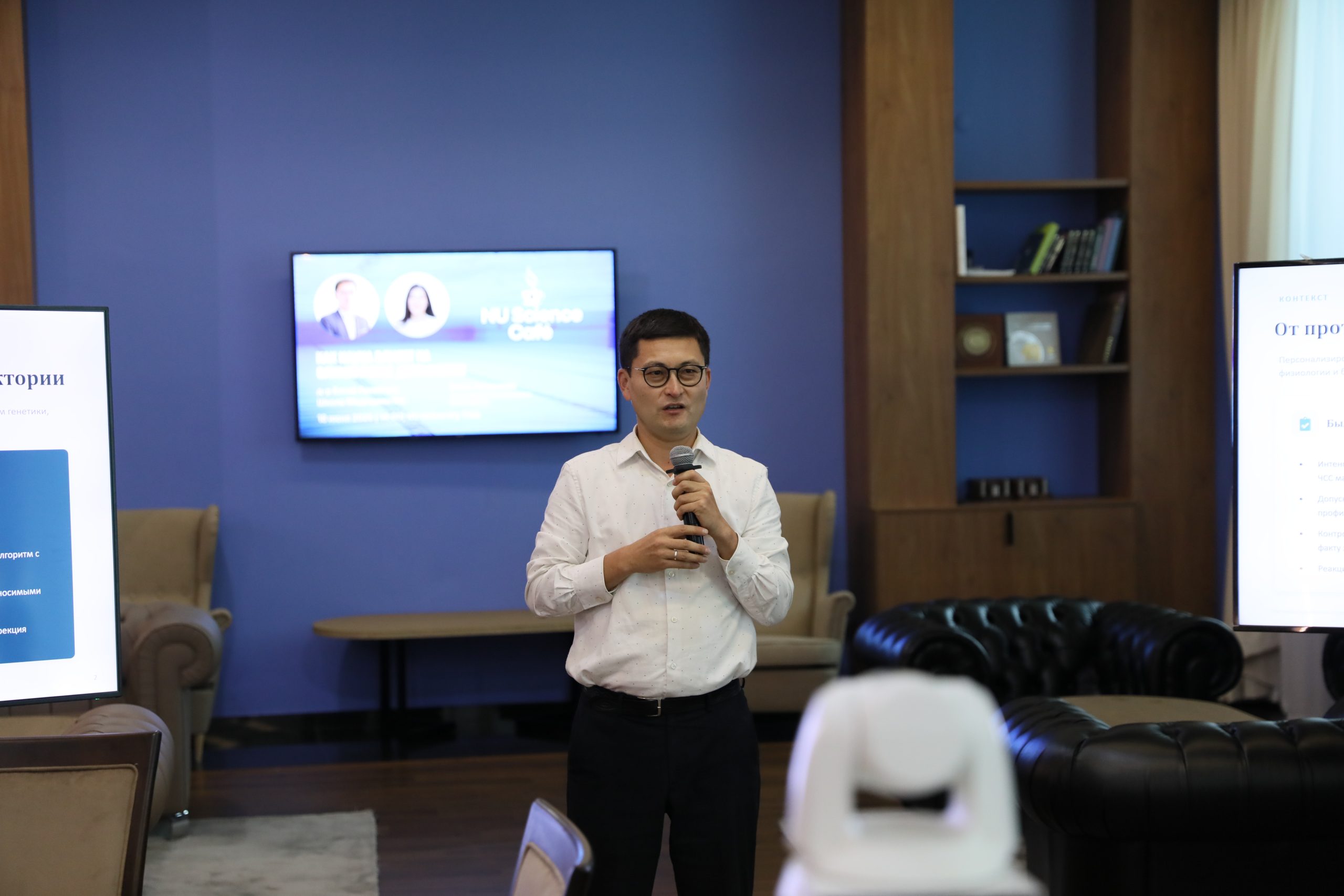
Elite sport today is no longer driven by talent and training hours alone. Increasingly, athletic performance is shaped by data analysis, scientific research, medicine, and the work of multidisciplinary teams. These questions became the focus of the latest NU Science Café session, which explored how modern scientific approaches are transforming high-performance sport.
The first speaker was Dr. Yeltay Rakhmanov, MD, PhD, Co-Director of the Master’s Program in Sports Medicine and Rehabilitation at Nazarbayev University (NU) School of Medicine. His work focuses on how medicine, biomechanics, and scientific analysis can support more informed decision-making in athlete preparation and long-term performance management.
Dr. Rakhmanov received education and research training across Kazakhstan, Italy, Poland, and China. Throughout his career, he has worked at the intersection of sports medicine, physical activity, rehabilitation, and medical technologies, and contributed to the development of a pilot Bachelor’s program in Physiotherapy for universities in Kazakhstan.
Another important area of his work addresses access to sports and medical expertise beyond major urban centers. His research explores telemedicine and remote approaches to athlete support, aiming to make modern sports medicine more accessible across Kazakhstan.
One of the most unusual experiences in his professional journey came during the Tokyo Olympic and Paralympic Games. Invited by the International Olympic Committee, Dr. Rakhmanov served as a volunteer physician at the Olympic Village clinic and supported athletes during the COVID-19 pandemic. The experience offered a firsthand look into medical decision-making at the world’s largest sporting event—under conditions where protocols and operational procedures changed almost hourly.
During the session, Dr. Rakhmanov encouraged the audience to think about sports medicine beyond injury treatment—as a tool for prevention, more accurate assessment of athlete condition, and sustainable long-term performance.
One of the key concepts discussed was personalized sports medicine. Rather than relying on population averages and standardized protocols, this approach tailors assessment, training, and medical support to an individual athlete’s genetics, physiology, and biomechanics. Even athletes with similar performance indicators may respond differently to training loads and recovery.
The discussion also highlighted the growing role of wearable technologies and data analytics in sport. According to international surveys, wearable devices remain among the leading global fitness trends. Yet their value is shifting from collecting numbers to generating meaningful interpretation and supporting better decisions.
Modern digital and AI-based models increasingly combine multiple indicators—including training load, sleep, stress, and recovery—to identify risks before symptoms appear. In some cases, these systems can detect elevated injury probability one to two days in advance, shifting sports medicine from reactive care toward prevention.
Dr. Rakhmanov also presented applied research that extends sports science into healthcare practice. One ongoing project investigates how AI-based circuit training influences health outcomes among patients with Type 2 diabetes. Conducted in partnership with healthcare institutions in Astana and Kosshy and involving local communities, the project demonstrates how scientific approaches can be tested and translated into real-world settings.
Another speaker at the event was Yenlik Ultarakova, an NU alumna, sports science researcher, member of the World Aquatics Sports Medicine Committee, participant of the International Olympic Committee’s IOC Young Leader programme, founder of Y-IMPACT, and founder of NU Swimming and coach of the university swimming team.
Her work combines sports analytics, athlete monitoring, and data-driven decision-making. One of the central ideas of her presentation was viewing athletic excellence as a long-term process rather than an outcome of talent alone.
Research on expertise development suggests that world-class performance requires not only ability but years of deliberate practice. As one example discussed during the session, studies in sports and cognitive science suggest that reaching chess grandmaster level may require mastering up to 50,000 gameplay patterns and around a decade of systematic training. Similar principles, she argued, apply to elite sport.
Using swimming in Kazakhstan as an example, the discussion highlighted what is often referred to as the “bottleneck effect”: approximately 12,000 children participate in swimming programmes each year through youth sports schools, yet only around 400 progress to compete at the national summer championships. The challenge, therefore, is not only identifying talent but understanding where and why promising athletes leave the system.
The session also explored practical innovation at the intersection of sport and technology. One example was SWAN, an athlete monitoring system designed to support training decisions through data-informed insights. In late May, the project won first place at the Founders School Bootcamp 2026, demonstrating the potential of sports technologies emerging from the university innovation ecosystem.
NU Science Café is a media platform created by the NU Press Office that brings together researchers and journalists to discuss complex scientific topics in an accessible way and explore their impact on society and national development. Since January 2026, Science Café sessions have covered topics ranging from medicine and energy to sustainability and emerging technologies, generating story ideas and media coverage across leading Kazakhstani and international outlets.