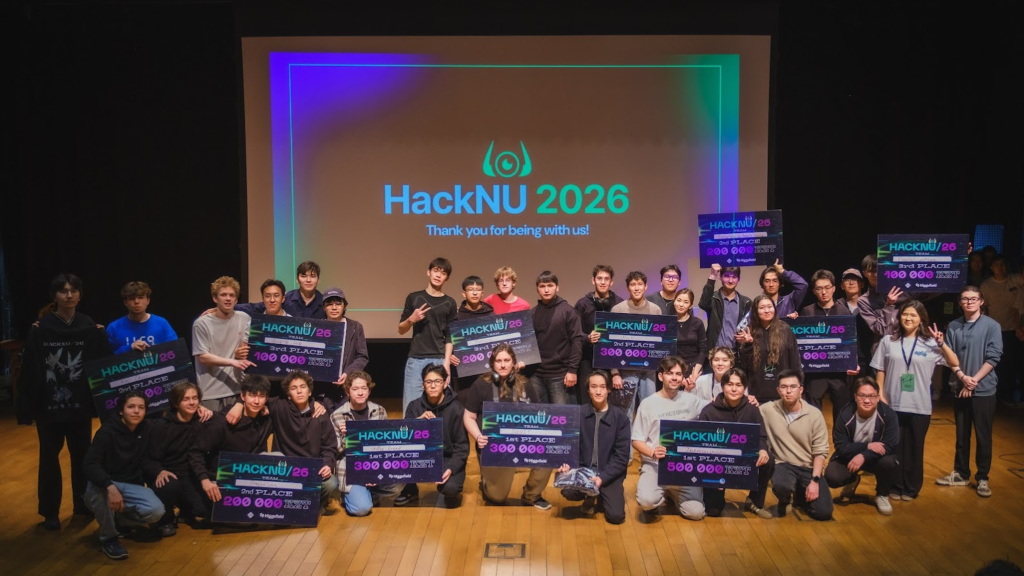
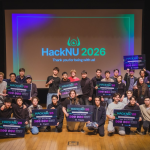
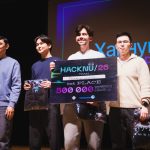
This past weekend, April 4-5, Nazarbayev University operated in a state of maximum concentration. It hosted HackNU’26—an annual 24-hour marathon organized by the student club Association for Computing Machinery (ACM). This year, Central Asia’s largest student hackathon hit record numbers: 705 participants forming 229 teams from all across Kazakhstan.
The events of these days confirmed an obvious trend: the format of traditional interviews is gradually fading into the past. The hackathon has definitively evolved into a platform where leading companies headhunt talent directly in the workflow, observing how participants think, delegate tasks, and deliver a finished product under extreme conditions.
Walking into a hall at 10 AM, completely packed with students awaiting the opening, was an extraordinary experience. When Dalida Yerkuliyeva, Vice President for Talent at Higgsfield AI, began her speech, the audience was in a state of absolute focus—that very “locked in” feeling. You could read a dual motivation in this intense concentration: the drive to snatch first place and the desire to land a coveted offer from one of the most ambitious companies.
Hollywood from Almaty and the Realism of Neural Networks
The speaker set the tone with hard numbers: a $300 million startup valuation, 22 million users worldwide, and a team composed 97% of specialists from Central Asia.
“We want to turn Almaty into Hollywood,” Dalida declared, detailing plans to build a global hub for generative AI.
She emphasized that for such massive tasks, the company isn’t just gathering engineers: “If you follow the news, you know that our team now includes not only top developers and ML researchers but also the strongest creative talents in Central Asia. We are already working with top producers, directors, and screenwriters, whom we are headhunting from Kazakhfilm and leading production companies. They are helping us build the first streaming platform where you will be able to watch our first releases.”
Backing up these words, a trailer entirely generated by the company’s neural networks played on the screen. The level of realism was striking: the main characters had natural facial wrinkles, looking nothing like the familiar “plastic” AI videos from social media.
The Infrastructure Scale of KTZ
The second key partner of the hackathon was the national company JSC “NC ‘Kazakhstan Temir Zholy'” (KTZ): managing 64% of the country’s entire freight turnover, employing 118,000 people, and ranking 19th in the world by railway network length.
Four Challenges for Students: From User Behavior to Train Telemetry
Both companies prepared real-world business cases for the participants, mirroring the actual work of their in-house specialists:
- KTZ Track: The infrastructure giant challenged students to digitize the operation of its main asset—a fleet of 1,700 locomotives. Students had to create a user-friendly system that collects real-time train metrics (temperature, speed, pressure) and instantly displays the condition of the equipment.
- Growth Engineering (Higgsfield): A challenge at the intersection of marketing and technology. The goal was to figure out how to track the online popularity (virality) of AI products to understand how to attract and retain new audiences.
- Software Engineering (Higgsfield): Developing a smart virtual workspace (Canvas) where people could interact and collaborate on projects alongside an AI assistant.
- Data Science (Higgsfield): Creating an algorithm that analyzes user behavior within an app and can proactively predict who is likely to delete the program soon (churn rate), allowing the company to retain them in time.
The Results: 24 Hours to Build a Product
After the tasks were announced, the 24-hour marathon kicked off. Whether beginner programmers or experienced developers, all teams (ranging from 2 to 4 members) plunged into night-long brainstorms, role delegation, and non-stop coding. Exactly 24 hours later, the tired but energized participants presented their solutions to the jury.
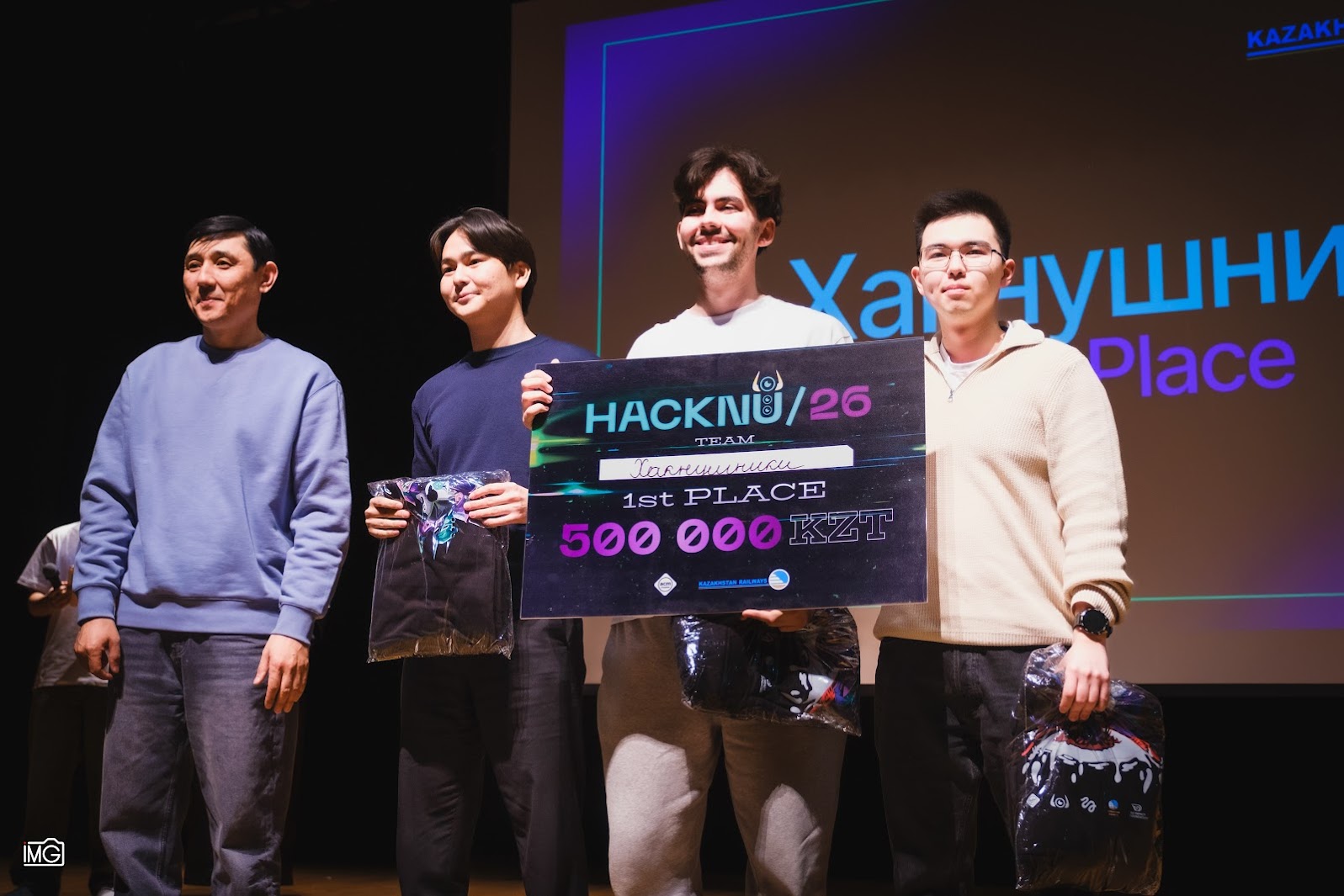
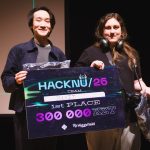
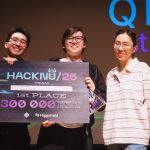
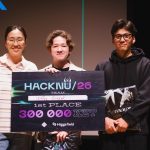
In the KTZ track, the undisputed victory went to the team “Khaknushchiki” (3rd-year NU students: Adilet Dautbek, Nurbek Baktygali, and Leon Kazaryan). Instead of rushing straight into coding, they bet on extensive preparation: the first 4-5 hours were spent mapping out logic, discussing details, and designing. The team created a highly realistic system featuring 150 stations across Kazakhstan with trains running between them. They recreated 3 actual KTZ locomotive models in exact accordance with the blueprints. The project’s uniqueness lay in the fact that all parameters were pulled from genuine train operation manuals. At the same time, the interface turned out so simple and visual that a specialist of any age could easily figure it out.
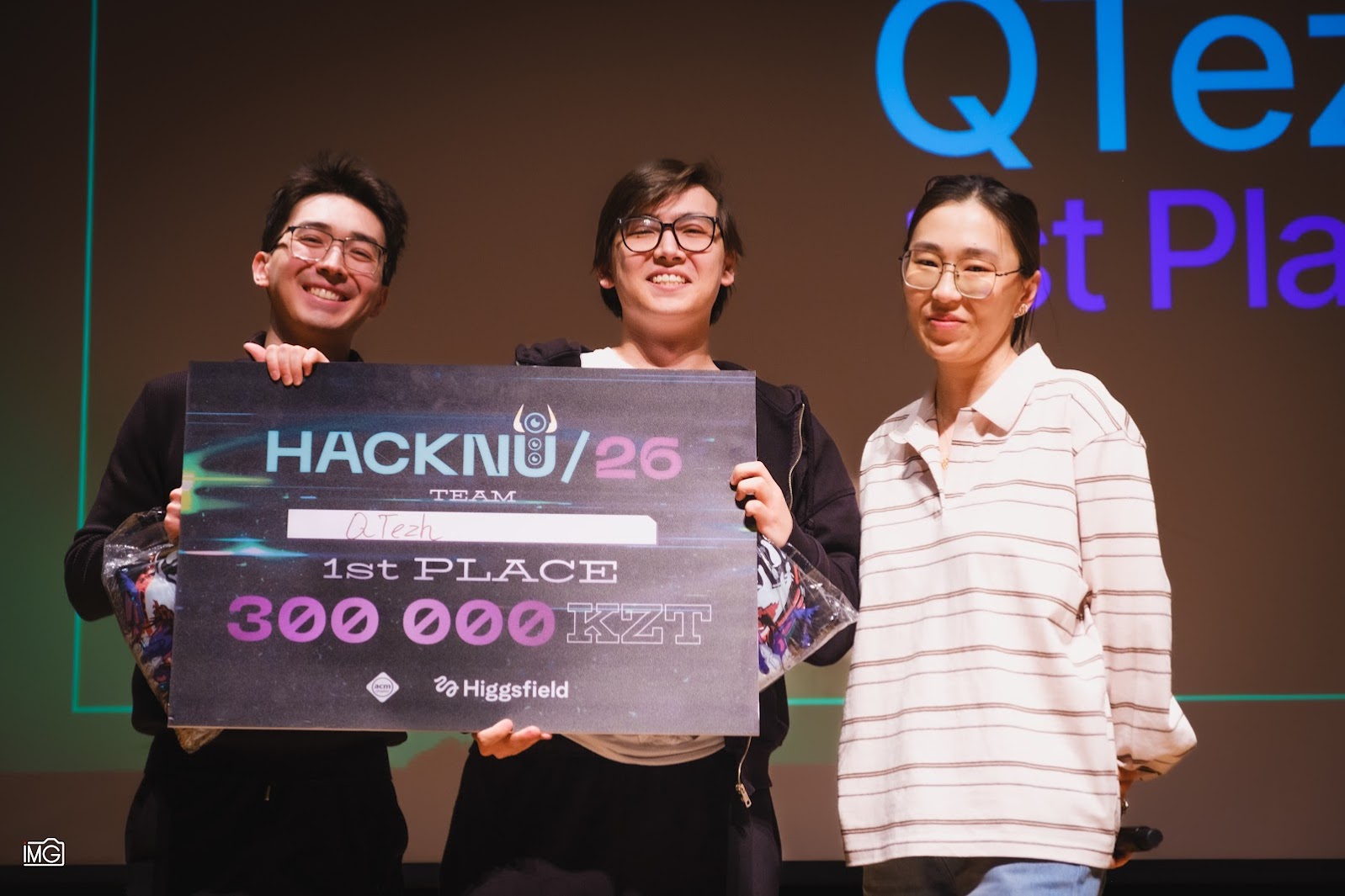
In the Growth Engineering track, 1st place was claimed by team QTezh (4th-year NU students: Nurzhan Bakenov and Damir Ospanov). The guys proved that an interdisciplinary approach is vital for winning a tech competition. Their solution captivated the jury because they built a real “digital detective.” The students focused on the Reddit platform. The team wrote a program that operates completely independently: it reads forums 24/7, finds mentions of an AI product (in their case—Claude AI), filters out junk comments, and tracks the speed of accumulating likes. Essentially, the program takes the “temperature” of internet interest. Upon spotting a viral trend, the algorithm instantly sends a Telegram notification. This is a ready-to-use, automated tool for marketers.
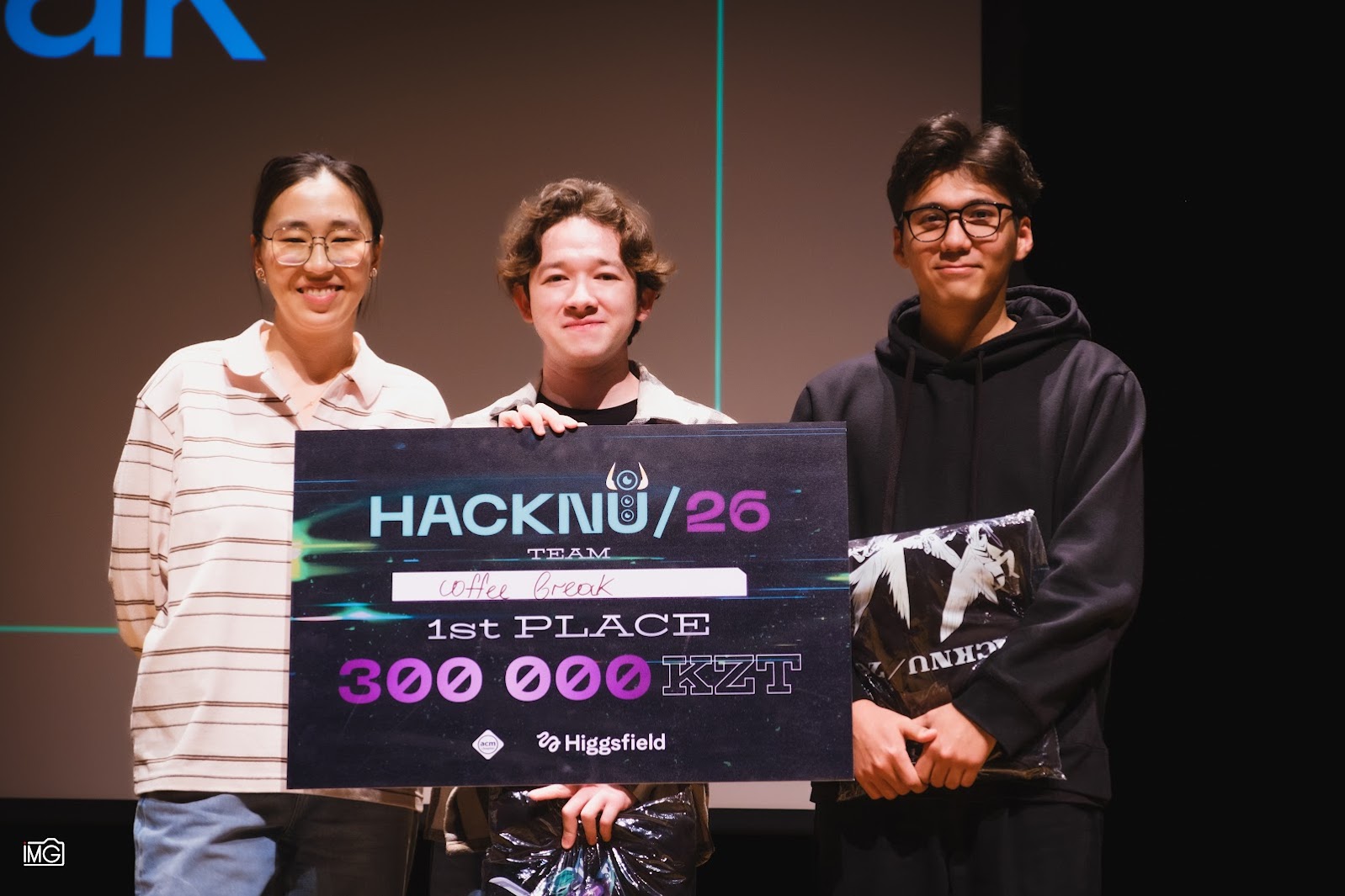
In the SWE (Software Engineering) track, the best team was Coffee Break (3rd-year NU students: Kadirzhan Lutfullayev and Nariman Isayev). As the winners themselves admitted, they weren’t sure of their success until the very end. The hackathon started at noon, and for the first few hours, the team didn’t know where to begin—the task turned out to be much broader than expected. One of the participants even had to learn a new programming language right during the competition. By 3 AM, they had almost nothing ready, but then came the breakthrough. The students tackled a common teamwork problem. Usually, people sketch ideas in Miro or FigJam, communicate via Zoom, and use an AI bot in a separate tab, constantly copying context to it. The team created a unified collaborative canvas where the AI isn’t just a side chatbot, but a full-fledged participant in the brainstorming process. It sees everything happening on the board in real-time, understands the context of the discussion, and proactively suggests ideas, structures thoughts, and generates visuals via Higgsfield models. The jury highly praised their product thinking: thanks to the team’s design experience, the interface turned out beautiful, polished, and completely ready for use.
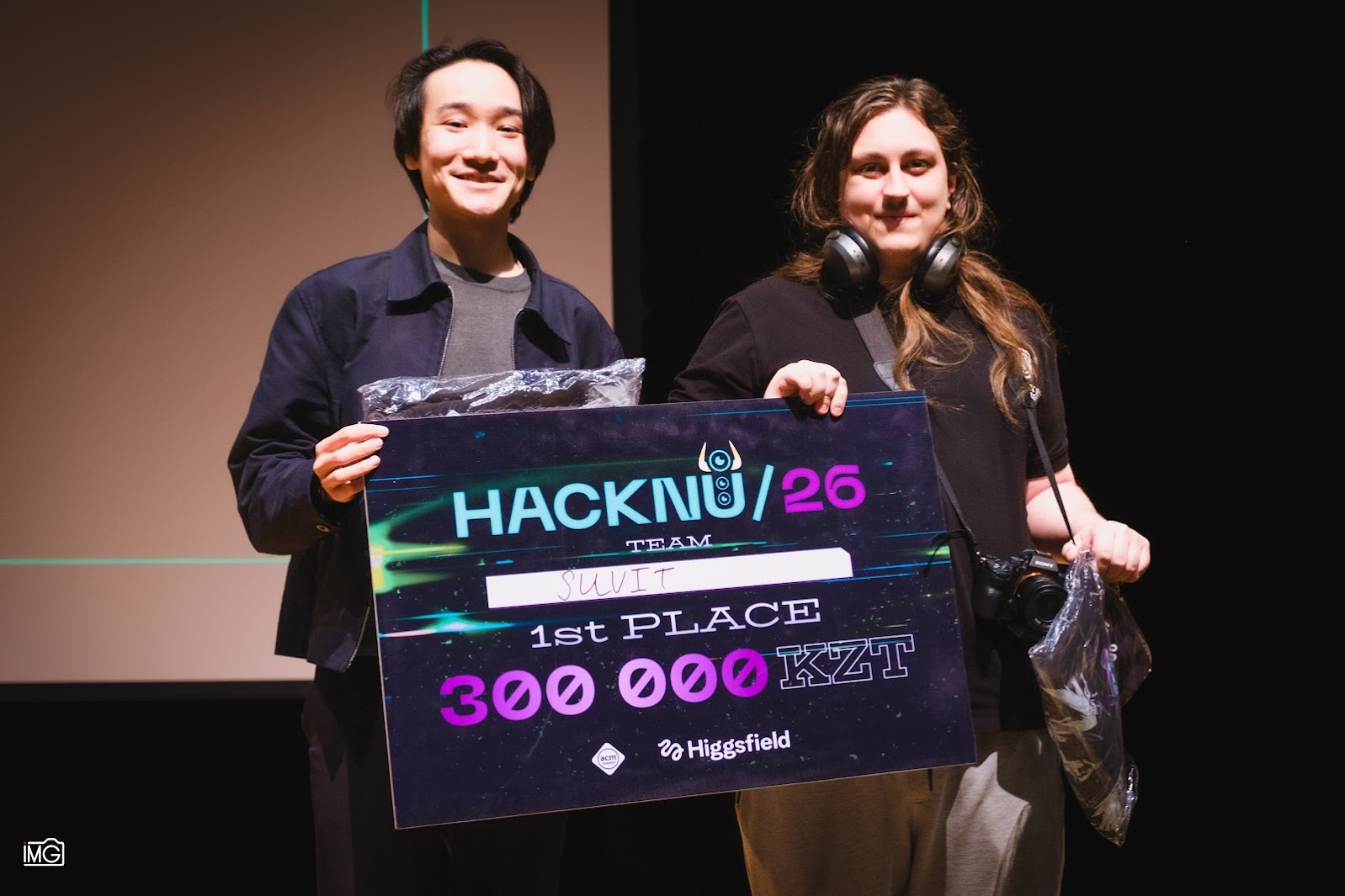
In the DS (Data Science) track, the victory was secured by team SUvIT from Satpayev University (Vyacheslav Yurievich, Yessenkeldi Askhatuly). The secret to their success lay not only in a strong technical foundation but also in a deep understanding of business processes. The team utilized cutting-edge data analysis methods, which meant their model didn’t just produce dry mathematical calculations, but delivered actionable business insights. In simple terms: their algorithm learned to spot hidden patterns in user behavior. By analyzing how often a person opens the app, what they click on, and how much time they spend there, the program accurately predicts the exact moment a user’s interest begins to fade. This gives the company precious time to send the customer a push notification or a bonus, retaining them before they decide to uninstall the app.
HackNU’26 clearly demonstrated: watching students build complex, well-thought-out solutions from scratch under a brutal deadline is the most honest and effective way for companies to find their future talent.