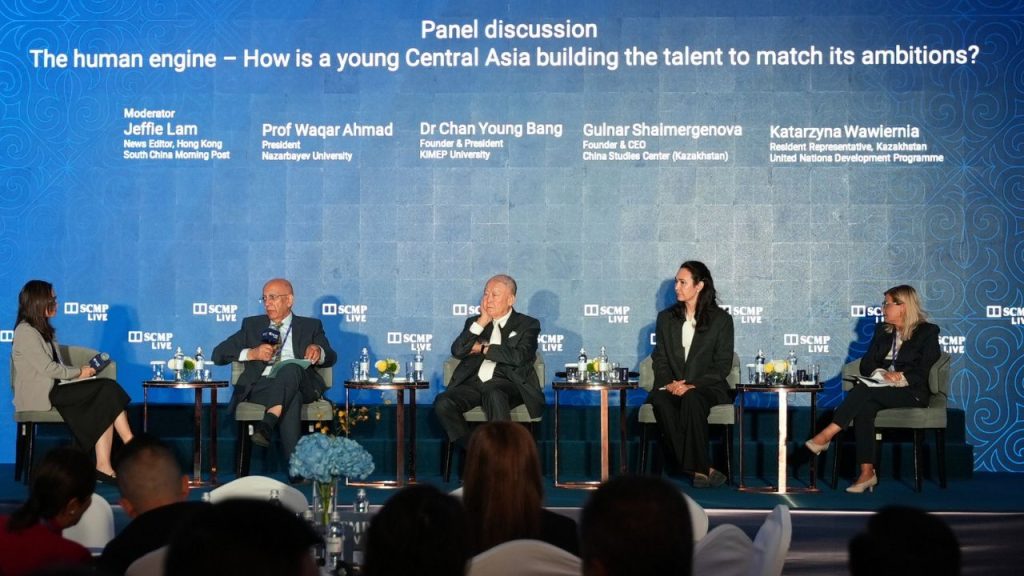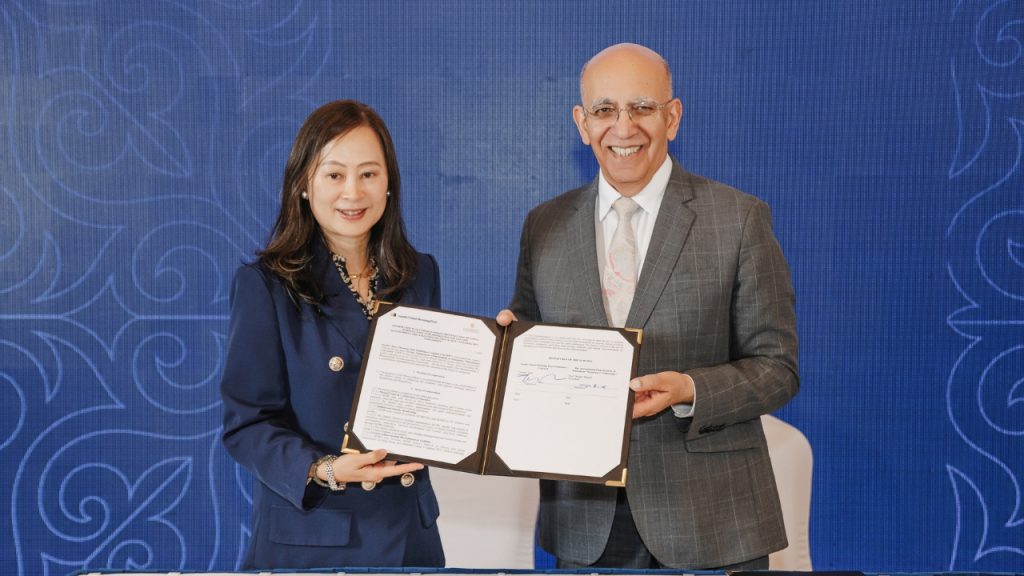
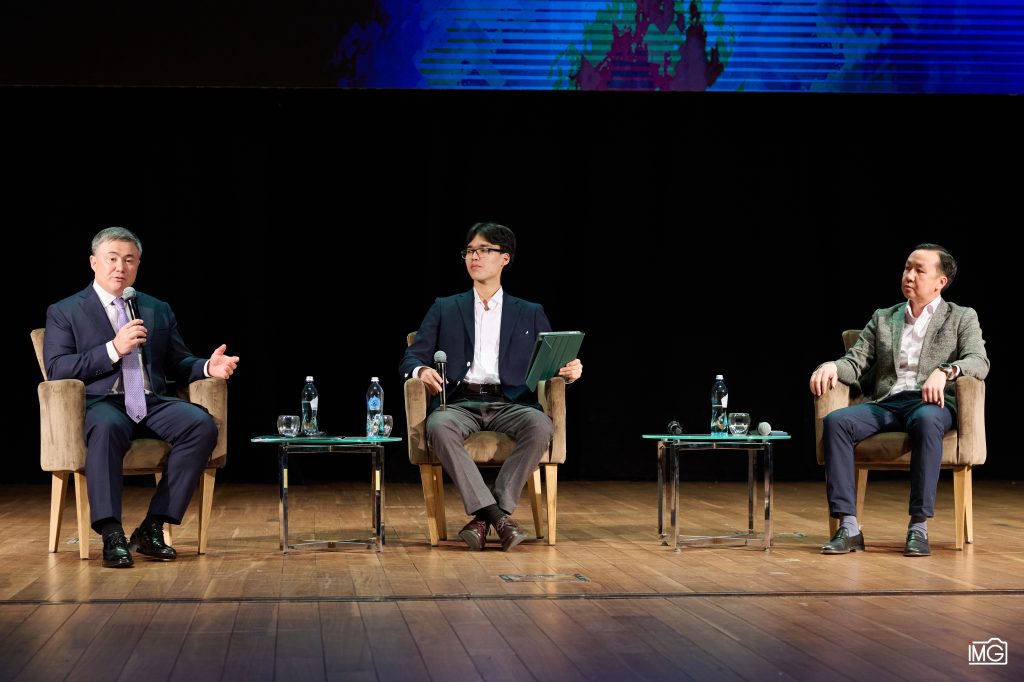
Nazarbayev University hosted a panel session featuring Saken Zhumashev, Managing Partner & CEO of KPMG Caucasus and Central Asia, and Timur Suleimenov, Chairman of the National Bank of Kazakhstan. The event was organized by the NU student community, Economic Leadership Society. Thanks to their initiative, around 500 participants — professionals and enthusiasts in finance, economics, and analytics — gathered on the NU platform.
The discussion focused on three key areas: the development of the financial system, confidence in the tenge, and current business trends. The session brought together perspectives from both government and international business, highlighting how diverse approaches shape the country’s financial and human capital future.
Timur Suleimenov emphasized that NU plays a crucial role in preparing future employees of the National Bank. Through grant programs, the bank invests in students’ research competencies and human capital development, fostering specialists capable of making data-driven decisions.
He also stressed that high inflation remains a serious economic threat, with the National Bank’s target set at maintaining a 5% rate. Modern monitoring systems have prevented fraud totaling approximately 6.7 billion tenge, reducing financial risks for hundreds of thousands of citizens.
Saken Zhumashev highlighted the role of the Big4 firms as both economic infrastructure and an indicator of growth. These companies are not just auditors, but comprehensive institutions that consolidate expertise across multiple areas, including IT system implementation, tariff methodologies, and tax regulation.
As an example, KPMG employs 300,000 professionals across 140 countries, while the Caucasus and Central Asia region is becoming increasingly integrated — with Kazakhstan remaining the largest practice hub for projects across the region. According to Zhumashev, NU provides Big4 firms in Kazakhstan with the largest pool of specialists, many of whom demonstrate knowledge at or above the level of graduates from Western universities.
The discussion also focused on strategically important economic sectors: oil, rare earth metals, and construction. These industries shape the country’s future opportunities, support knowledge and service exports, and attract foreign investment. For instance, Kazakhstan’s construction sector grew from 5 trillion tenge in 2020 to nearly 11 trillion in 2025, while transport and logistics are gradually turning the country into a key regional transit hub.
Concluding the session, the speakers answered audience questions on practical tools for economic management, the impact of global turbulence on the tenge, and career prospects. The discussion proved especially valuable for students, young professionals, and analysts interested in financial markets, digital innovation, and human capital development.
Photo: NU Image