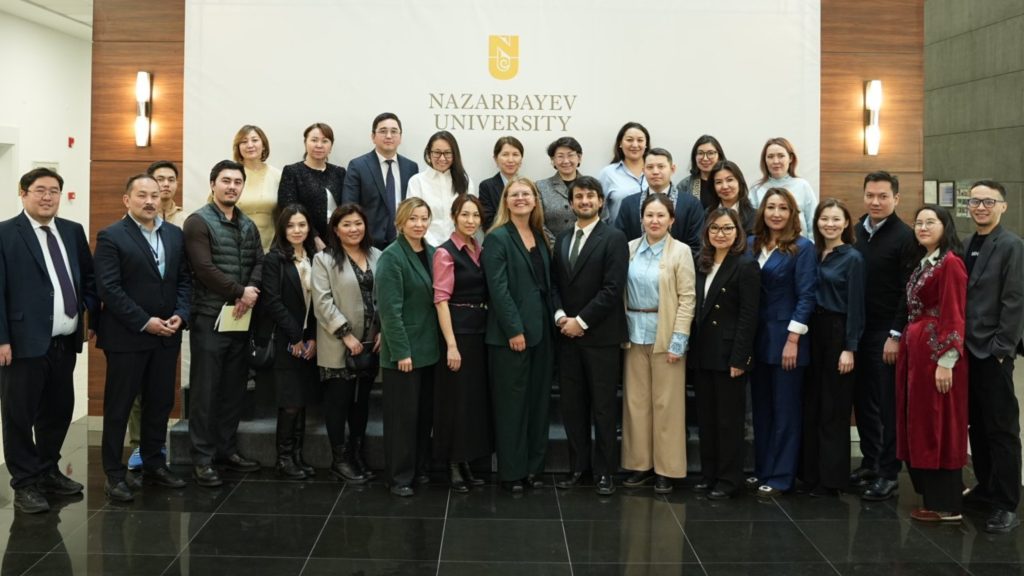
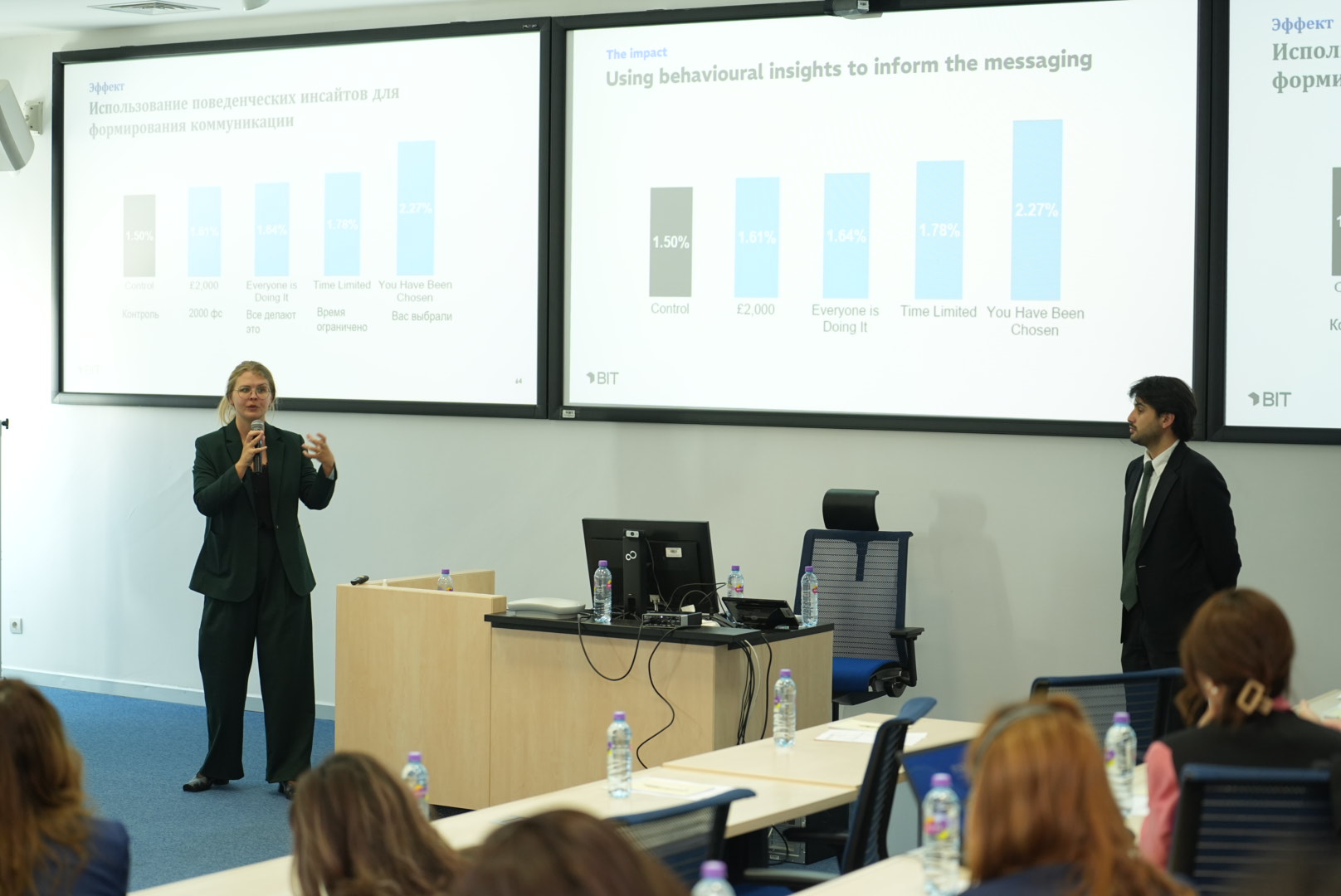
Nazarbayev University (NU) hosted an international seminar, “Applying Behavioural Insights to Policy Making,” organized by the National Analytical Center (NAC) with experts from the UK’s Behavioural Insights Team (BIT).
The event brought together representatives from Kazakhstan’s central government agencies and analytical centers to explore how behavioral science can make public policies more effective. Participants discussed how understanding human behavior can improve tax compliance, public health programs, and social services.
Saltanat Janenova, Director of NAC’s Center for Public Administration and Behavioral Public Policy, said:
“Behavioral science is not just a trend—it’s a powerful tool that can improve policy outcomes without big budgets. Kazakhstani agencies are starting to use these insights, but more pilot testing and evaluation are needed to make evidence-based decisions.”
Experts from BIT shared real-world examples of measurable impact. Andres Cueto highlighted the UK experience:
“Simplifying tax forms increased completion rates by 22%, and a sugar tax cut sugar consumption by 45 million kilograms per year. Behavioral science really works when applied carefully.”
The seminar also focused on how these approaches can be adapted to Kazakhstan. Experts and participants discussed ways to improve tax administration, promote healthier lifestyles, and enhance social services, using tools that help government agencies better understand citizen behavior and make data-driven decisions tailored to local realities.
Kazakhstan is actively adopting behavioral science methods (“nudges”) as a practical tool to improve the effectiveness of public policy. In the education sector, these approaches have already shown results: informational videos increase students’ willingness to participate in recycling, while peer influence further strengthens this effect. In one study, Kazakhstani students demonstrated higher engagement levels even with less developed infrastructure, pointing to strong social norms.
Similar mechanisms are being introduced in the e-government system (eGov), where behavioral insights help shift citizens toward “digital-by-default” services, improving convenience, speed, and compliance without additional costs.
By hosting events like this, NU reinforces its role as a hub for applied research and international collaboration, fostering partnerships between universities, think tanks, and government institutions. The seminar demonstrates how the university contributes to evidence-based policy making that benefits all Kazakhstani citizens.
Established in 2010 within the UK government, BIT is the world’s first institution dedicated to incorporating a better understanding of human behaviour into public policy, programs and products.