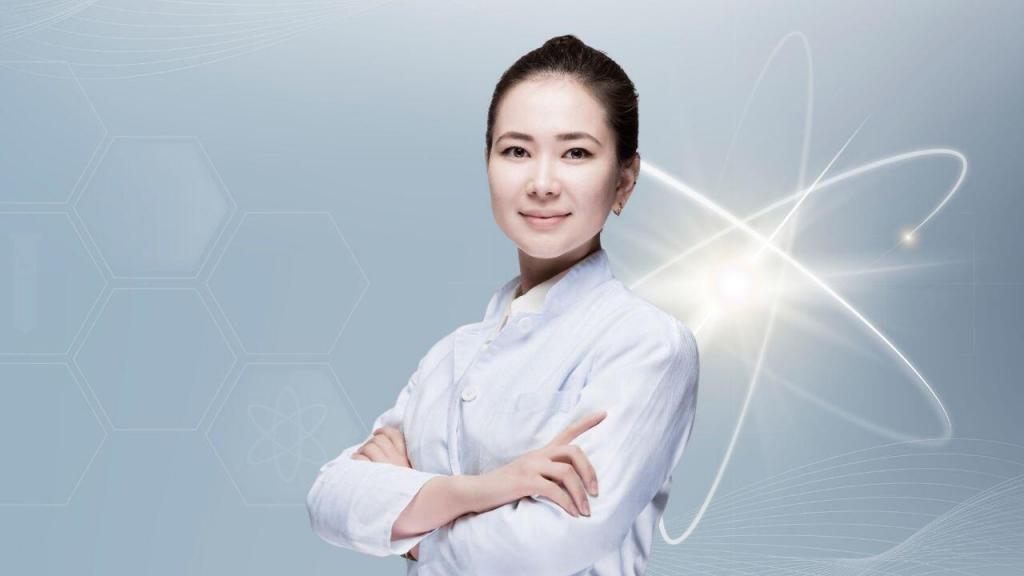
At the NU School of Medicine, in the doctoral program, Madina Sarsenova studies the properties and potential of stem cells to treat autoimmune diseases.
Could you please tell us about your educational and professional background?
In 2014 I earned my Bachelor’s degree at Eurasian National University. In the same year, I went into the Master’s program, and in 2016 I got a Master’s diploma in Life Sciences. Since September 2014, I have worked at the National Center for Biotechnology. In 2019, I made a one-year Internship Program at Seoul National University.
How was your internship at Seoul National University?
It is challenging to be in a completely different environment, as if on another planet, in an environment with its own established rules, culture, and traditions. The language barrier also played a role. Only a few people spoke English well in the lab where I was. The first two months were a period of adaptation, but I could join the team after that. I acquired many necessary lab skills and learned to work hard because Koreans live in a competitive environment. This year was my point of growth because I grew professionally and learned to cope with difficulties, be more responsible, and not despair.
Tell us about your doctoral research.
The title of my research is “The Study of the Therapeutic Potential of Cytokine-Preconditioned Umbilical Cord Blood Mesenchymal Stem Cells (MSCs) in Rheumatoid Arthritis (RA)”. These cells can acquire anti-inflammatory properties if they are in an inflammatory environment. Thus, MSCs showed the potential to be used in clinical practice due to their immunomodulatory potential, particularly in autoimmune disorders such as RA. Further, scientists questioned how these unique properties of the cells could be strengthened and proposed different strategies to enhance the therapeutic capacities of MSCs. So, in my research, I will treat the cells with inflammatory factors and later use them in mice with rheumatoid arthritis.
What is the applied value of your work?
The obtained results of this work can serve as a basis for applying a new cell-therapeutic approach for treating RA using preconditioned MSCs and (or) exosomes. Patients during RA treatment suffer from severe side effects. Additionally, in some cases, they acquire drug resistance. Thus, the current treatment methods are not effective enough. So, there is a need for alternative therapy. A cell-therapeutic approach based on MSCs might be a solution because this strategy not only improves the disease symptoms but mediates the balance in the immune system during autoimmune disorders.
What can you tell us about the process of writing your thesis?
We have almost completed the in vitro part of the research, processed the obtained data, and described it. In vitro means something performed in laboratory conditions outside of a living organism. So, we isolated MSCs, characterized them and created the inflammatory environment (treated with inflammatory factors) in a culture dish. Finally, we obtained the data that the cells enhanced their immunomodulatory capacities compared with the control groups (non-treated cells).
Please, tell us about your plans.
We are planning the start the in vivo study on mice. In vivo means something performed in a living organism. In my case, it’s a mouse. Firstly, we will model RA in mice and assess the disease development and progression. After that, we will treat the mice with MSCs prepared earlier (already with enhanced properties).
What would you advise future doctoral students?
Firstly, be sure that your future research is really something that you are interested in. Secondly, work hard and remember that it’s work, not study. And, thirdly, take care of yourself, and have breaks. And last, never give up because sometimes failures happen, but they will strengthen you and help you learn how to adapt to PhD life!
Thank you for your time, and we wish you a successful dissertation defence!