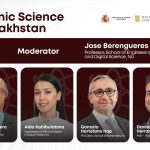
Astana hosted an educational event focused on academic and scientific collaboration between Kazakhstan and Spain, bringing together researchers, diplomats, and students. The event took place at the ORTA Cultural Center and covered topics such as artificial intelligence, interdisciplinary research, and growing bilateral cooperation in education and science.
The program opened with a lecture by Luis Francisco Martínez Montes, Ambassador of Spain to Kazakhstan, Kyrgyzstan, and Tajikistan. He highlighted Spain’s contributions to science and innovation, from early humanitarian vaccination missions to modern medical and technological advances, emphasizing the role of science as a foundation for international cooperation.
He also addressed the historical connections between Central Asia and Spain in global knowledge development. “You can clearly see this continuity,” he said. “From astronomy to early mechanical innovations, to algebra and mathematics – Central Asian, Muslim, Latin, Greek, and European scientific traditions crossed paths and enriched one another.”
Speaking about science diplomacy and NU role, Ambassador Martínez Montes added: “Often, cultural diplomacy is thought of in terms of music or literature, which is important. But culture also encompasses science – we cannot separate the two. To be literate in the 21st century, one must understand technology, artificial intelligence, and related fields. Scientific diplomacy brings science to the forefront as an integral part of cultural exchange between countries. In this context, Nazarbayev University plays a vital role in fostering cooperation between Spain and Kazakhstan.”
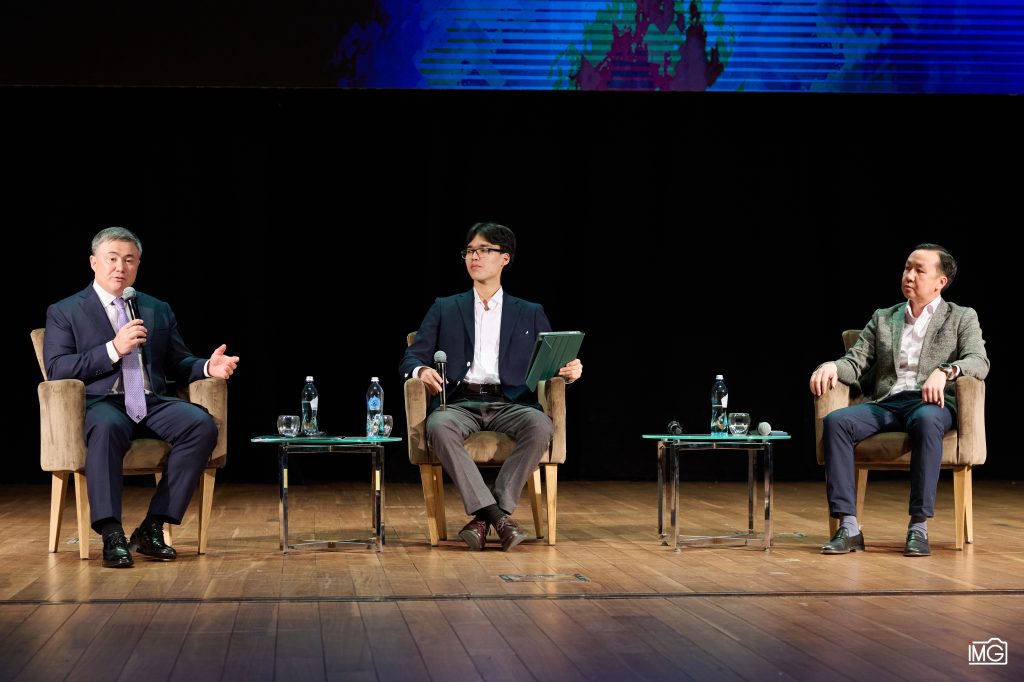
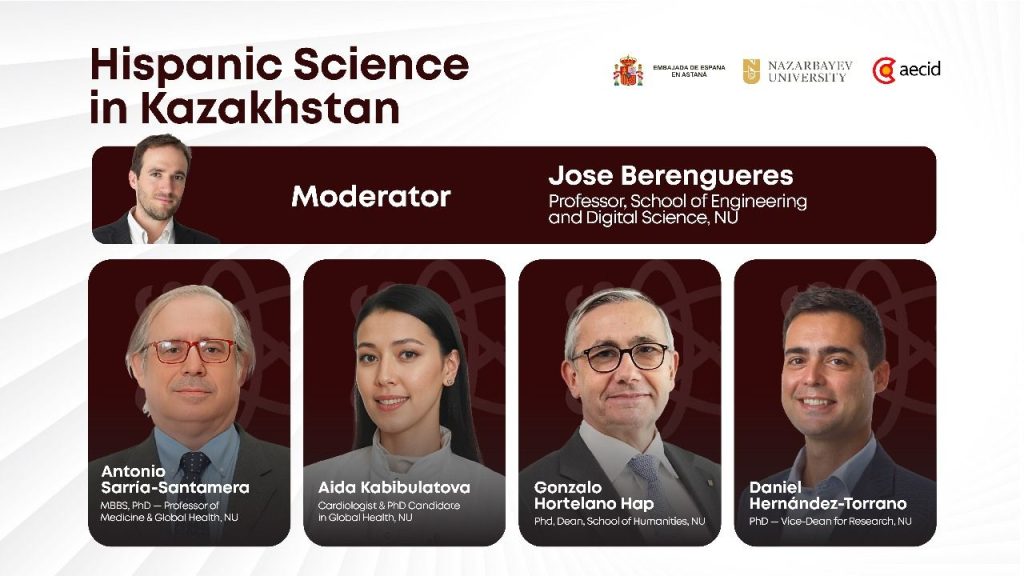
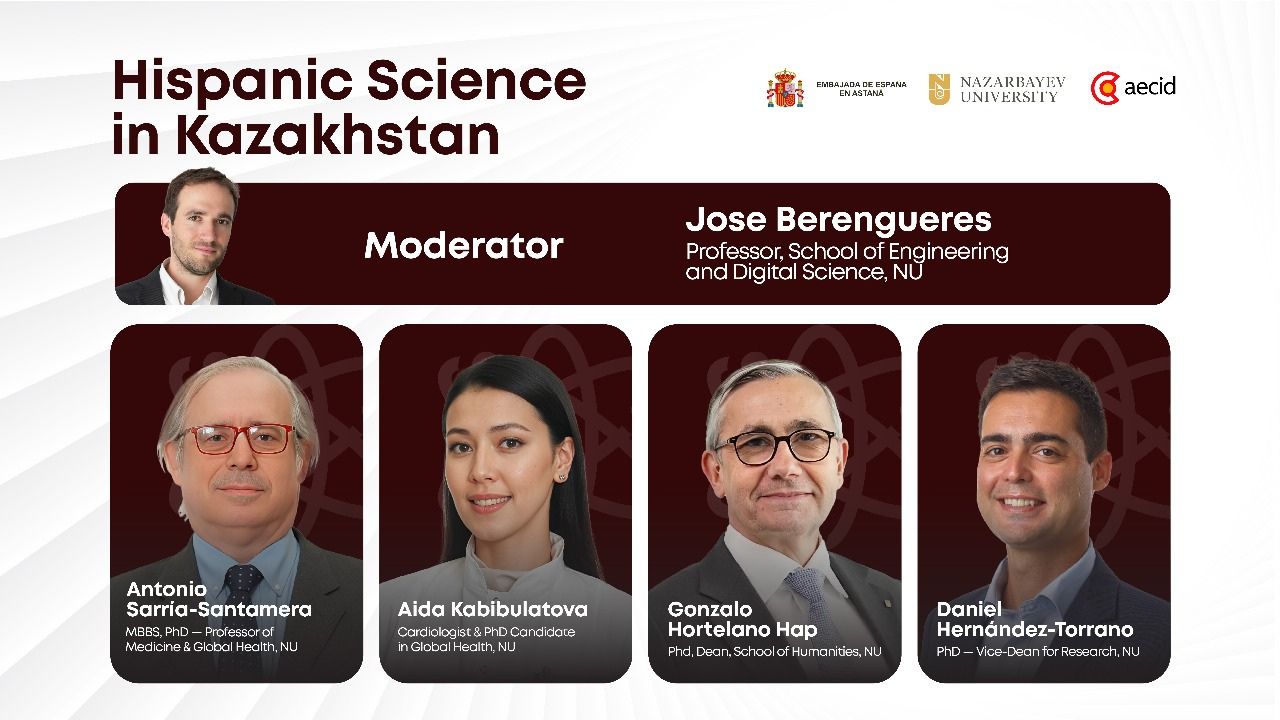
The event continued with a panel discussion featuring José Berengueres, Associate Professor and moderator; Daniel Hernández-Torrano, Vice-Dean for Research; Aida Kabibulatova, cardiologist and PhD candidate in Global Health; and Gonzalo Hortelano Hap, Dean of the School of Social Sciences and Humanities. The discussion explored trends in science, interdisciplinary collaboration, and the practical impact of academic partnerships.
Daniel Hernández-Torrano, Vice-Dean for Research, shared data on the collaboration between the two countries. “Over the past 30 years, there have been 1,130 joint research publications between the two countries,” he said. “While it’s hard to judge whether this number is high or low, it reflects sustained collaboration. For Kazakhstan, Spain ranks among the top research partners – 12th overall – with more than 2% of all publications produced in Kazakhstan co-authored with researchers affiliated with Spain.”
The event underscored the growing importance of scientific cooperation between Kazakhstan and Spain, highlighting how shared research can strengthen bilateral ties.