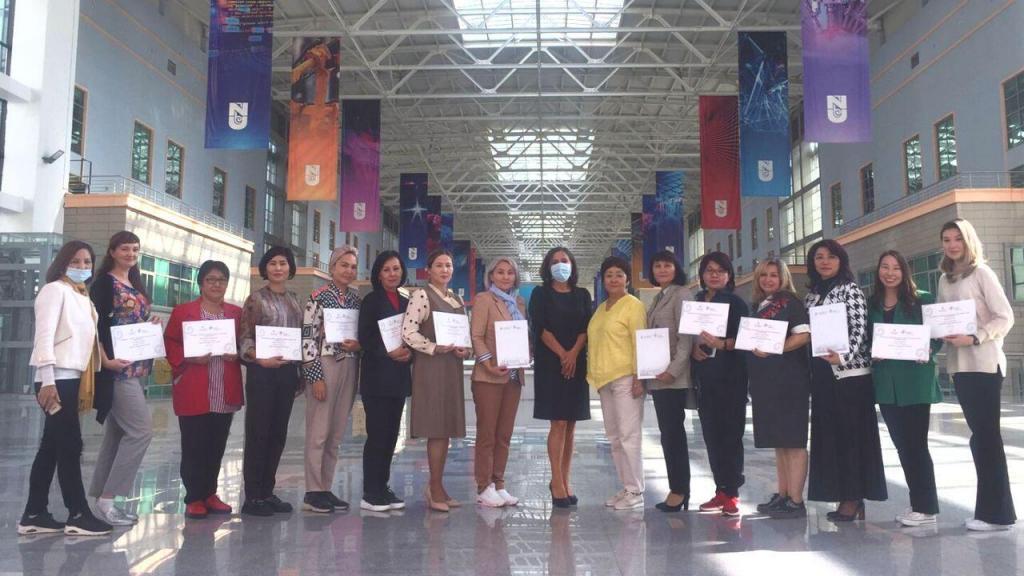
A total of 14 early childhood education professionals, including defectologists, speech therapists, and psychologists of 12 capital state kindergartens and one state kindergarten in Karaganda, took part in a two–day training session. The free training was led by a specialist from the University of Illinois, USA – Nikki Donnelly.
The ICP is designed to evaluate the quality of inclusive classroom practices supporting the individual needs of young children with special educational needs and disabilities in early childhood settings. The ICP, for which permission was granted, was translated into Kazakh and Russian languages. The participants were provided with a copy of the tool before the training.
The active participation of kindergartens that took part in the training and subsequent application of the ICP confirms their interest in the development of inclusive preschool education in Kazakhstan:
“In general, everyone (teachers in the kindergarten) liked this tool and believes it is suitable and possible to make some improvements to fit our mentality and our region” shared Karataeva Dinara, defectologist, “Merey” Nursery – garden №53.
This training on the assessment tool for inclusive education reveals the current practice’s strengths and weaknesses. As teachers note, inclusive education was recently introduced in Kazakhstan. There are many systemic and social barriers to its implementation, including a lack of trained personnel, large class sizes, and a lack of tutors to support the individualized needs of children with special educational needs. However, any training, including ongoing training and the opportunity to assess current practice using a new observational tool, contributes to the development of inclusive early childhood education in Kazakhstan. The NUGSE is looking forward to expanding its collaboration with the community of schools across Kazakhstan to contribute to bridging the gap between theory and practice.