The research group of NU Professor Nurxat Nuraje, together with NU Professors Salimgerey Adilov and Tri Pham, and Professor Rafael Luque from the University of Cordoba (Spain), has successfully developed a strategic synthesis method for making 2D and 3D conductive polymers – plastics capable of conducting electricity – and their composites.
This work was recently published in Advanced Materials, which is regarded as the most prestigious journal in the field of Materials Science, with a current impact factor of 32.08.
Conducting polymers have gained widespread application and interest in recent decades. During this time, various ways of producing nanostructures from conducting polymers have been found, but the derivation of two-dimensional nanosheets has remained a complex and expensive process. The new method is unique in that it can be used to synthesize other conducting polymers to create two-dimensional, three-dimensional and composite structures. The morphology of polypyrrole, a special kind of conducting polymer, was controlled from 0D to 2D and 3D structures in this study. The 2D nanosheet morphology gave the highest electrical conductivity of 219 C/cm, a record high conductivity for polypyrrole.
In addition, NU scientists managed to document an integrated approach to create 2D and 3D materials. They presented a simple and scalable synthetic protocol for creating such polymers, which was described in detail in the scientific journal.
This scalable synthesis technique will open up new opportunities for conducting polymer applications in various sectors, including nanomedicine, energy storage, polymer solar cells, and LEDs.
The research was conducted with a grant from the Ministry of Education and Science (now – MSHE) and a Faculty Development Competitive Research Grant from NU. Graduate students, doctoral students and researchers from the Department of Chemical Engineering and Materials Technology at NU SEDS and the Departments of Chemistry and Biology at NU SSH have contributed greatly to this project. This means that in the future they may start their own projects or lead a research group.
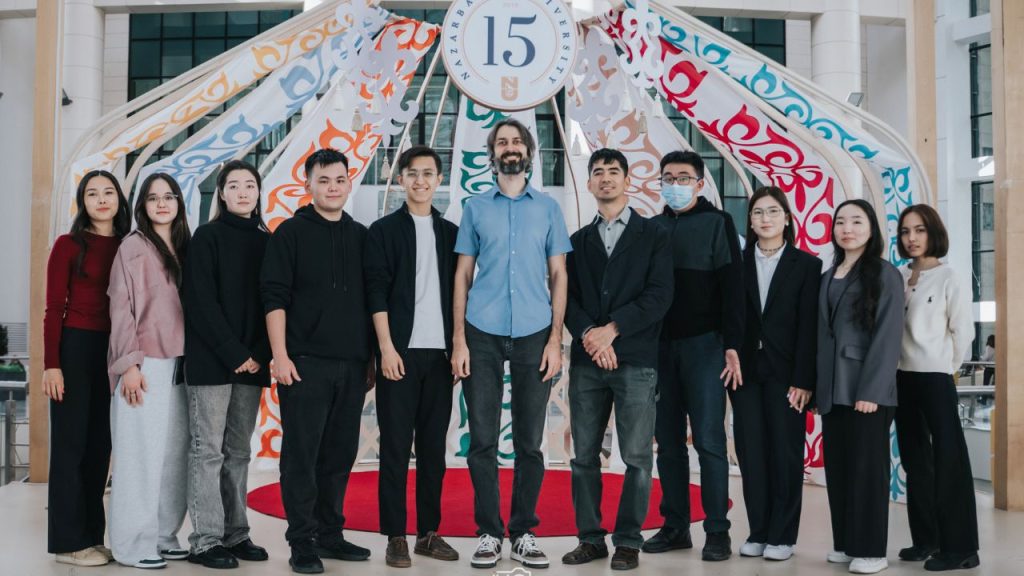
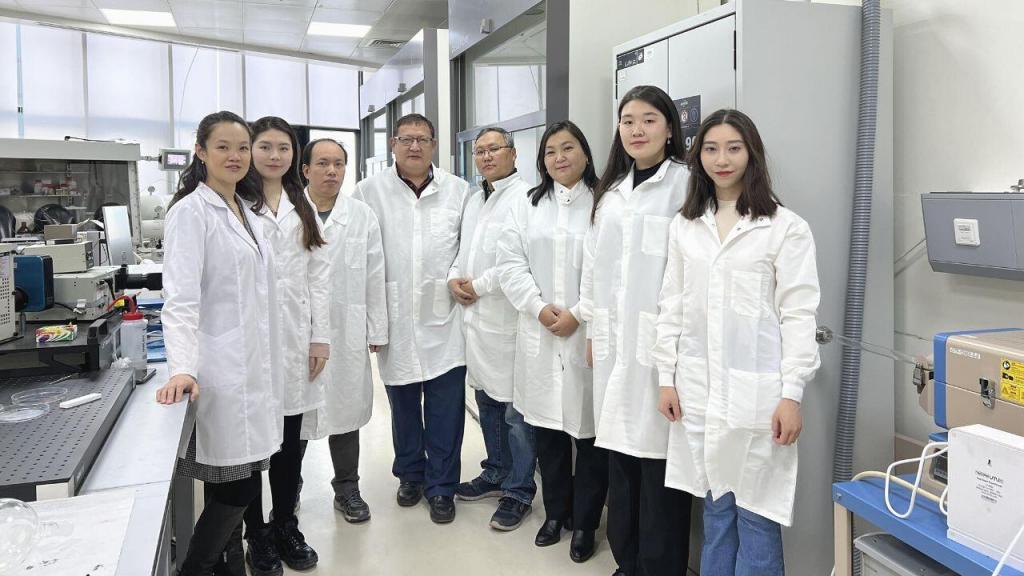
Here, we can proudly list the names of the graduate students and researchers who performed the experimental work in the following order:
Guldana Zhigerbayeva, 3rd year Ph.D. student, Department of CHME SEDS,
Perizat Askar, 2nd year Master Student, Department of CHME SEDS,
Yelriza Yeszhan, 2nd year Master’s Student, Department of CHME SEDS,
Dr. Munziya Abutalip, senior researcher of RESMS lab, NLA, and a postdoctoral researcher at the Department of Chemistry, SSH,
Dana Kanzhigitova, a research assistant at the Department of Chemical and Materials Engineering, SEDS,
Dr. Nurxat Nuraje, Associate Professor, Department of Chemical and Materials Engineering, SEDS, Head of Renewable Energy Systems and Materials Science (RESMS) lab, National Laboratory Astana,
Dr. Salimgerey Adilov, Assistant Professor, Department of Chemistry, SSH,
Dr. Tri Pham, Assistant Professor, Department of Biology, SSH.