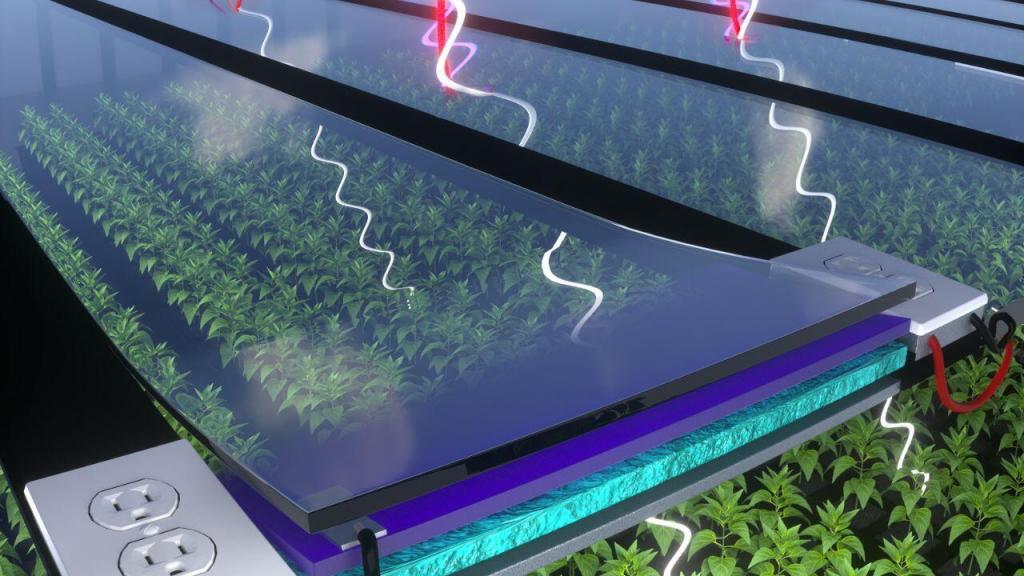
Organic photovoltaics offer sustainable, solution-processable, and cost-effective integrated energy harvesting solutions. While opaque organic solar cells underwent enormous progress in the past decade, it remains challenging to reach high performance and transparency in the visible spectral range simultaneously.
In the Department of Physics, Viktor Brus, Assistant Professor at NU SSH, is working in the new field of semitransparent organic solar cells trying to improve their efficiency through a detailed understanding of the photoelectronic processes in these devices.
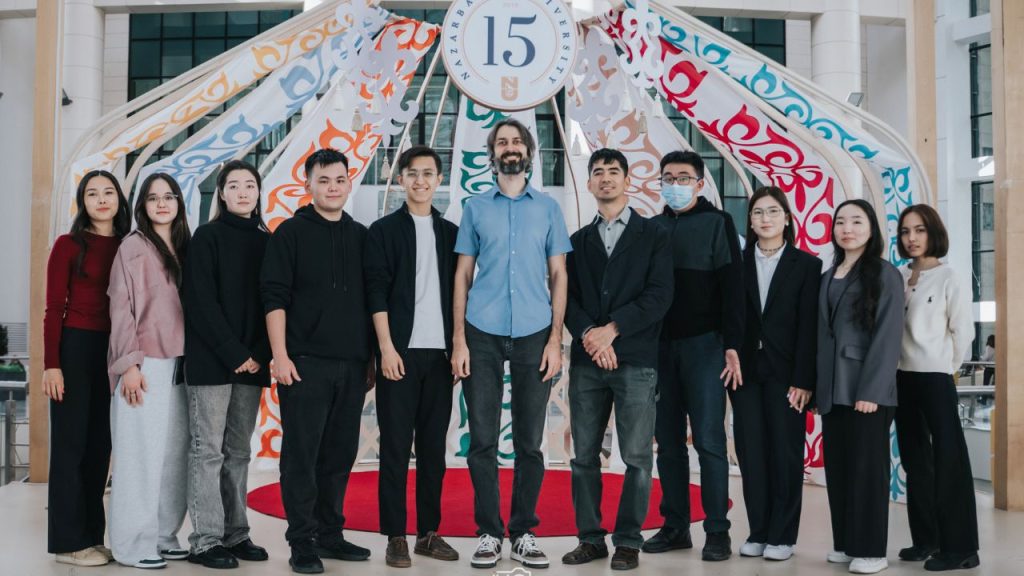
In the scope of this project, Prof. Brus coordinated an international research group comprising his Ph.D. student Gulnur Akhtanova, enthusiastic colleagues from NU Core Facility Dr. Alexandr Arbuz and Nurgul Daniyeva, and prominent scientists from the University of California Santa Barbara (USA), Vidyasirimedhi Institute of Science and Technology (Thailand) and Pusan National University (Korea). The international team developed highly-transparent organic active layers based on a narrow-bandgap acceptor and wide-bandgap donor via the systematic dilution of the donor concentration from 40% to just 20%.
The investigation of advanced materials science and device physics in these structures yields quantitative insights into changes in the charge generation, recombination, and extraction dynamics upon the donor dilution. These researches pave the way for the next-generation integrated green energy solutions based on visibly transparent organic solar cells.
The results obtained recently were published in Advanced Materials (Wiley), a prestigious top-tier interdisciplinary journal.