How Supercomputers and Artificial Intelligence Support Researchers at Nazarbayev University
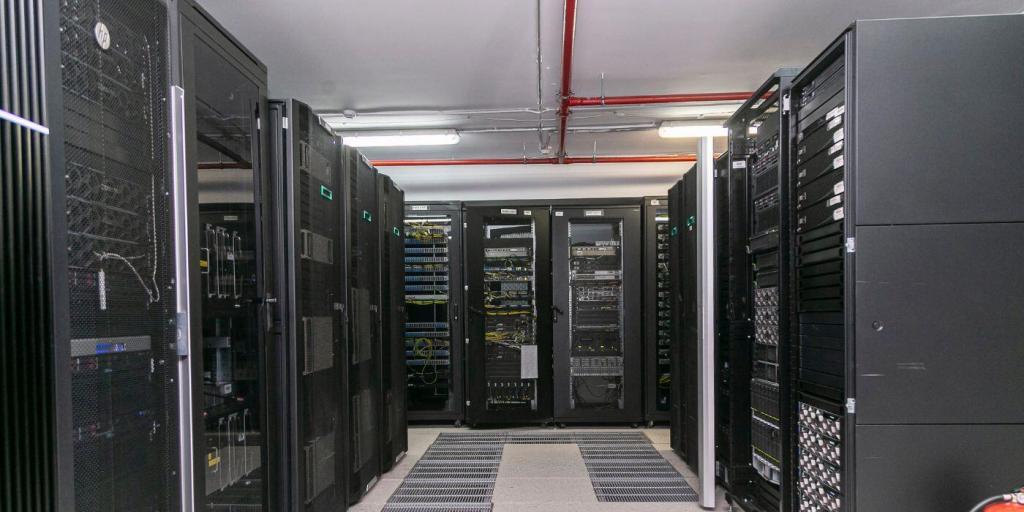
AI is being actively integrated into science, medicine, and education. To carry out research projects, the power of supercomputers is essential, as they allow scientists to process queries and tasks faster and more efficiently. Since 2018, NU has been expanding its computing resources with supercomputers, periodically upgrading its systems. This year, the infrastructure has been reinforced with a powerful next-generation supercomputer named Irgetas, which translates as “foundation.” Its capacity is forty times greater than its predecessors. This means that researchers now have the opportunity to implement their research developments more quickly and effectively.
NU develops math-free AI control for tensegrity robots
Researchers at NU’s ARMS Lab, led by Dr. Azamat Yeshmukhametov, have introduced a breakthrough in robotics by creating a math-free, AI-driven method to control tensegrity robots. Tensegrity (short for “tensional integrity”) is a design principle where rigid rods are suspended in place by a network of tensioned cables, creating structures that are lightweight, flexible, and remarkably strong. While this makes tensegrity robots resilient and energy-efficient, it also makes them notoriously difficult to manage with traditional equations. By replacing complex mathematics with a data-driven, machine learning approach, the team has enabled tensegrity robots to adapt and move more smoothly in real-world conditions. Their research, recently published in Robotics and Autonomous Systems, opens new possibilities for using these flexible robots in space missions, disaster response, and other environments where conventional designs struggle.
NU researcher harnesses AI to boost clean energy and green chemistry
At NU, Prof. Nurxat Nuraje is bringing together artificial intelligence and laboratory experiments to speed up the search for sustainable solutions. In his green hydrogen project, his team uses experimental data and AI modeling to predict and design more efficient photocatalysts – key materials that can unlock cleaner hydrogen production. In another project, focused on biomass conversion, AI is helping researchers design high-yield experiments that turn natural waste into valuable chemicals and medicines. To support these efforts, Prof. Nuraje has created a theoretical modeling team within his lab, dedicated to using AI as a powerful tool to guide experiments and improve results.
NU Graduate School of Business to launch “AI Jockey” in the classroom
Led by Dr. Tom Vinaimont, NU’s Graduate School of Business is preparing to launch the “AI Jockey”, an interactive AI companion that appears on a second screen next to lecture slides. Students will take turns prompting the AI to clarify concepts, give examples, or challenge ideas in real time. While many universities remain hesitant to integrate AI into teaching, NU is taking a bold step – using the AI Jockey to make learning more dynamic, build students’ AI literacy, and prepare them for leadership in an AI-driven world.
NU opens joint China–Kazakhstan lab using AI to study brain disease treatments
Nazarbayev University has launched a joint “One Belt, One Road” laboratory focused on treating brain diseases with traditional Chinese medicine, in collaboration with a specialized hospital in China. Researchers are studying how brain cells respond to these treatments to better understand their effects and explore future medical applications. The lab also relies on artificial intelligence to analyze vast datasets beyond human capacity, marking the start of a new phase in cross-border medical research.
And this is only part of the projects being carried out by NU scientists, made possible through the synergy of AI and supercomputing power.