

Twenty years ago, Kazakhstan opened its first Public Service Centers (PSCs) — known as One Stop Shop— to improve the quality of public services and reduce corruption. Over the past two decades, PSCs have undergone a remarkable transformation, evolving from pilot projects into a nationwide network of front offices that have become an integral part of citizens’ daily lives.
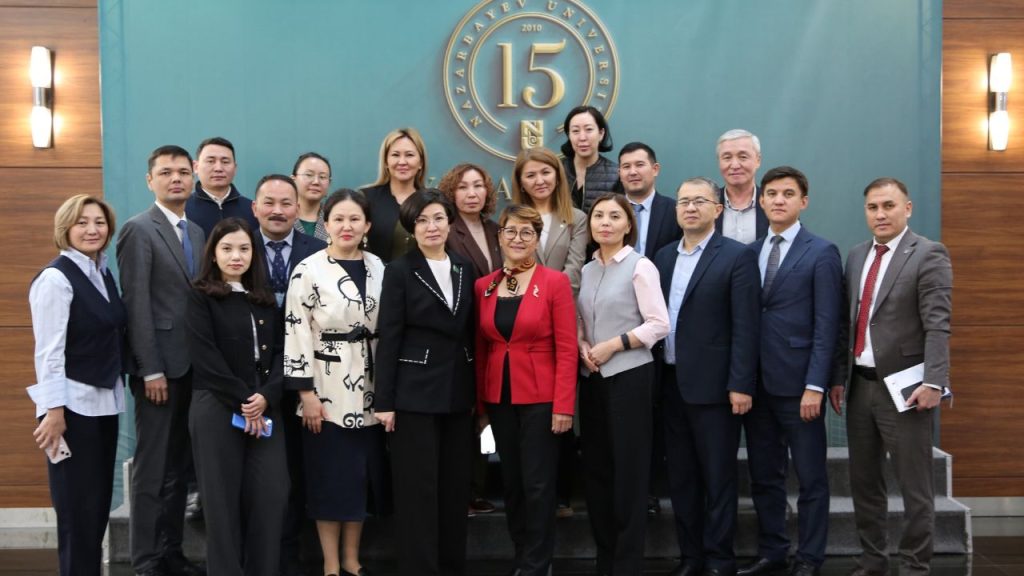
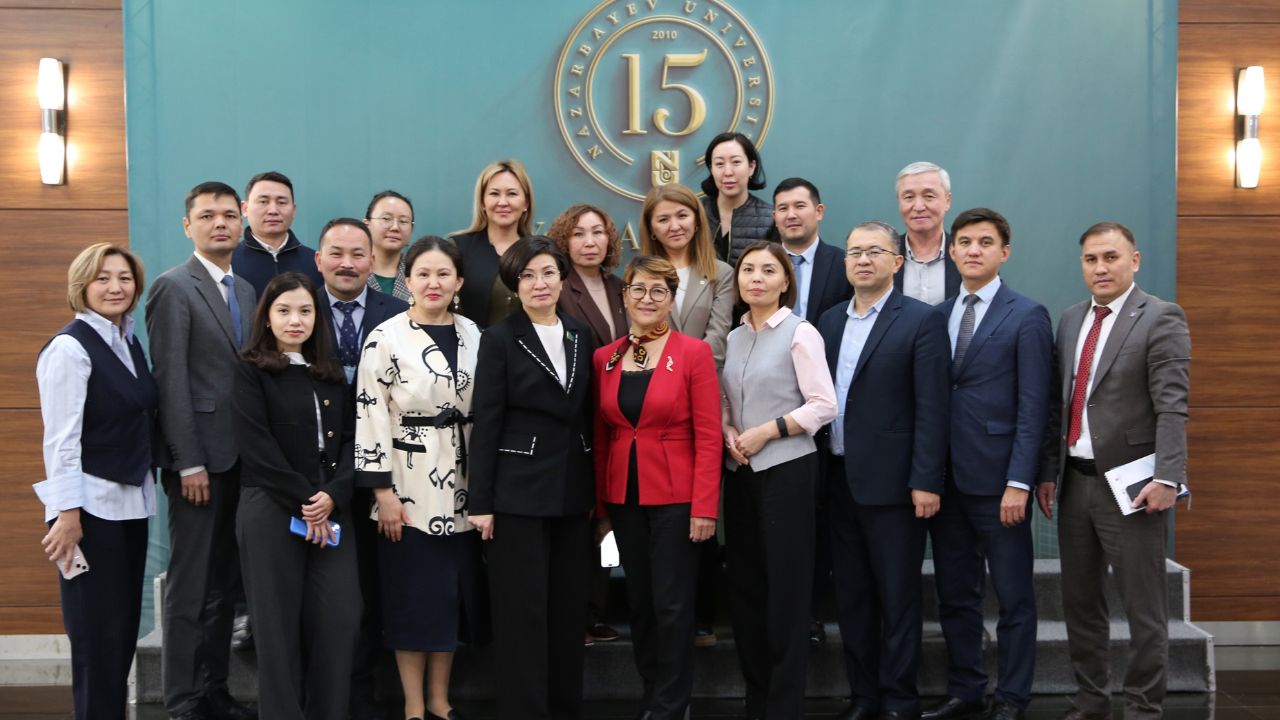
On November 12, 2025, the National Analytical Center (NAC) at Nazarbayev University (NU) hosted a roundtable discussion on the development of PSCs in the context of public service digitalization. The event brought together representatives from the Presidential Administration of the Republic of Kazakhstan, the Senate of Parliament, the Public Services Committee, the Agency for Civil Service Affairs, the State Corporation “Government for Citizens”, and the academic community.
“This roundtable is part of a series of events organized by NAC to bring together government officials and academics for open dialogue and exchange of ideas,” noted Rassul Rysmambetov, Chairman of the Board of NAC, emphasizing the PSCs’ connecting role between government institutions and society.
Aibol Kozbagarov, Head of the Department of the Agency for Civil Service Affairs, and Lyudmila Zakharova, Head of the East Kazakhstan Youth Information and Analytical Agency, presented the results of a public monitoring study on the quality of government services provided by PSCs. NAC experts Saltanat Janenova and Saule Gazizova presented the findings of a study supported by NU’s Social Development Fund, titled “Is There a Need for PSCs in the Context of Digitalization of Government Services?” The research explored citizens’ and employees’ perspectives on the relevance of PSCs amid the shift toward digital services.
Participants discussed the experts’ recommendations to transform PSCs rather than phase them out, proposing their evolution into Digital Support Centers for Citizens. The envisioned centers would provide consultations on complex services and life situations, offer digital literacy training, and launch a national program to educate socially vulnerable groups who rely on offline services. Additional recommendations focused on enhancing the social and legal protection of PSC employees, aligning their status more closely with that of civil servants.
Overall, participants agreed that despite the rapid growth of e-government services, PSCs continue to play a critically important role in ensuring accessibility, inclusion, and trust in public service delivery.