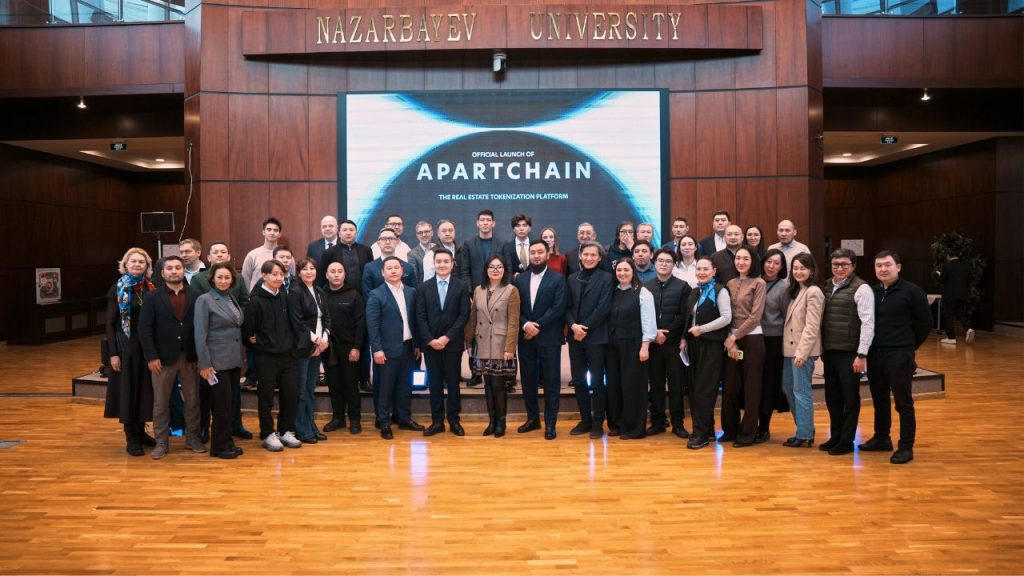
Organized by the NU Office of Sustainable Development, the “National Conservation Initiative” Corporate Fund, and NU Green Campus, the event brought together students and faculty members from six universities: Karaganda Buketov University, Kozybayev University, East Kazakhstan Technical University, Kokshetau University, Kazakh Agro-Technical Research University, Korkyt Ata Kyzylorda University, and NU – about 30 people.
The festival began with lectures by NU scientists and climate change experts from the United Nations Development Programme (UNDP) and “QazaqGeography”. They discussed crucial topics such as water use and its impact on climate change, biodiversity conservation, and the role of youth in climate policy. Afterwards, participants toured the NU campus, visiting the renewable energy site and the innovative DC LAB and FAB LAB.
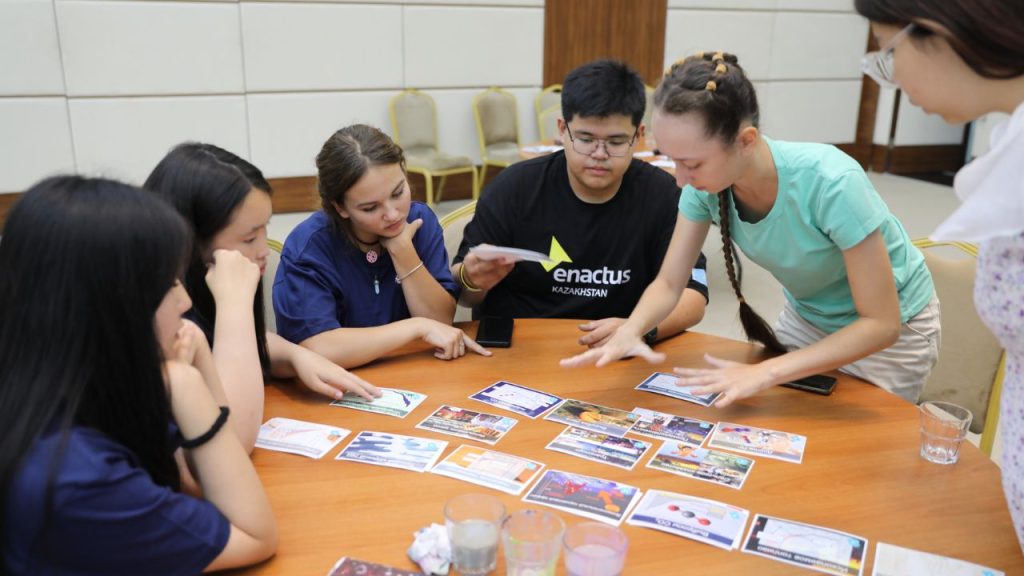
On the first day, the festival concluded with the engaging Climate Fresk game, where participants explored the connections between human activities and global warming. A standout feature was a workshop by the NU Green Society on creating eco-canvases from old clothing. This project is one of many ecological projects from 12 universities, supported by the Sustainability Living Lab (SLL) program to make Kazakhstani universities a platform for innovative student projects. Each year at the final conference, they present their developments, such as solar panels made from recycled disks and devices for cleaning water bodies from plastic, a gravity generator, ozone-based household cleaners, etc.
The next day, the festival moved to the picturesque resort area of Borovoe, where the impactful ‘Clean Games’ campaign was held in partnership with the Burabay National Park. Through their collective efforts, participants cleaned the area around Abylai Khan Square at the foot of Mount Kokshetau, collecting about ten cubic meters of trash.
In the national park, activities also included feeding red deer (marals) and a tour of the Botai-Burabay archaeological and ethnographic museum, where students learned about rare plants and animals and the work of forest inspectors. The educational aspect of the festival was further enhanced by the ‘Climate Box’ game, conducted by UNDP trainer Adlet Tkenov. This game raised students’ awareness about climate change as they explored climate changes in tropical forests and developed adaptation programs.
The Climate Week festival demonstrated how scientific knowledge and civic engagement can promote sustainable development. Inspired by NU’s example, the youth of Kazakhstan continue to play a crucial role in advancing environmental awareness.