The NU Graduate School of Education, ranked in the world’s top 200 by Times Higher Education, has launched the August session of its program “Regional Leadership in Education: Innovation and Artificial Intelligence in Action.”
Developed in partnership with the Ministry of Education of Kazakhstan, the program brings together 77 education leaders, including heads of regional, city, and district education departments, as well as principals of schools and colleges from across the country.
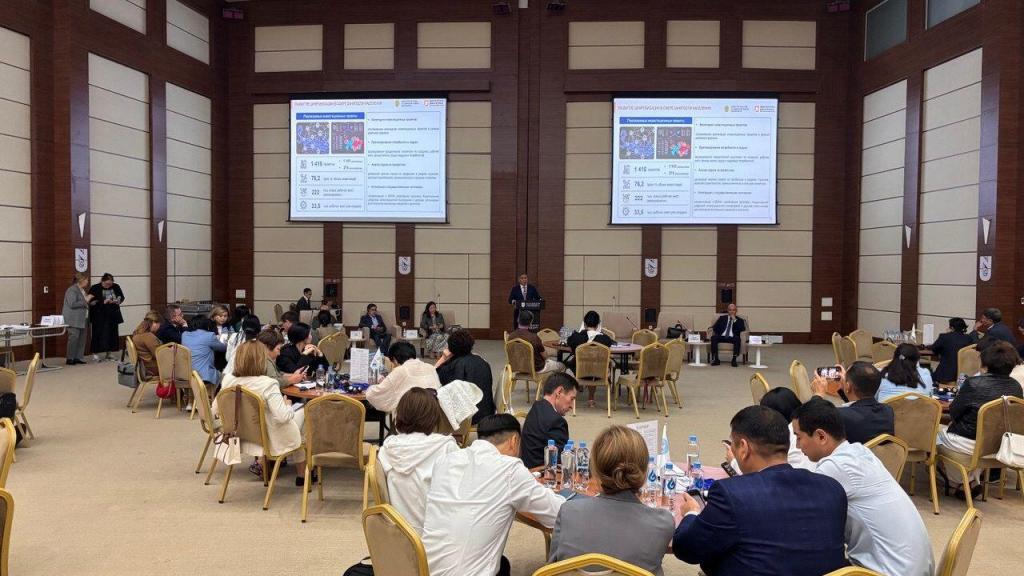
Today, on August 4, the August session of the program officially began, featuring three modules focused on current challenges and opportunities in the education sector:
August 4 – Module 6: Development of Technical and Vocational Education (TVET) in the Era of Digital Transformation. Participants will discuss emerging professions, collaboration mechanisms with industrial clusters, and the integration of AI into curricula. Sessions will be moderated by representatives of the Ministry of Education and NU.
August 5 – Module 7: Personalized Learning and Psychological Wellbeing. This module focuses on the application of AI in Lesson Study and action research, and on practices that nurture reflective educators who actively contribute to shaping school environments.
August 6 – Module 8: Systemic Challenges of Digitalization. Topics include AI ethics, cybersecurity, and the development of policies for data use and analytics within educational institutions.
The program was developed by NU Vice Provost for Academic Planning and Budgeting and Dean of GSE, Dr. Aida Sagintayeva, alongside GSE professors Mir Afzal Tajik and Sourav Mukhopadhyay. Its aim is to foster strategic thinking and to build leadership and digital competencies essential for implementing reforms and operating effectively amid rapid technological advancement and AI proliferation.
Earlier this year, participants completed five intensive modules, held both on NU’s campus and at regional sites in Pavlodar and Kyzylorda. A key highlight of the first half of the program was an international study tour to Shanghai, where, in collaboration with the UNESCO Teacher Education Centre, participants explored China’s experience in digitalization, EdTech, and AI-driven solutions in education.
Adding further value to the program is a parallel national pedagogical hackathon, in which ten teams are developing regional, data-driven projects. Final presentations will take place in September during the concluding modules, and the most promising projects will be recommended for scaling in other regions of the country.