Students and professors of Nazarbayev University (NU) came together to celebrate Nauryz, the centuries-old festival of renewal and the arrival of spring across Central Asia.
The university campus transformed into a vibrant tableau of tradition and festivity, as the air filled with the rhythmic beats of dombra music and the aroma of freshly prepared baursaks. The event, curated by faculty, staff, and student clubs, was more than just a celebration—it was an immersive experience designed to showcase Kazakh heritage and deepen the community’s connection to the country’s cultural roots.
The festival began with a grand concert, where the NU Orchestra and NU Choir set the tone with a repertoire that blended classical steppe melodies with beloved Kazakh folk songs. Among the selections were “Zhumyr Kylysh,” “Dos-Mukasan Mashup,” “Qazağym-ai,” and “Ata Tolğauy,” each carrying echoes of history and identity.
In his congratulatory speech, NU President Dr. Waqar Ahmad spoke of the festival’s deeper significance: “This special holiday reflects the rich cultural heritage and traditions of this great country, symbolizing hope, harmony, and new beginnings. As nature awakens, a season inspires all of us to embrace growth, knowledge and innovation. In NU we value a spirit of collaboration and progress. May this Naurus bring each of you new opportunities, success and fulfilment, strengthening our community as we walk towards a brighter future. Nauryz kutty bolsyn! ”
.jpg)
Vice President Kadisha Dairova, in her remarks, tied the occasion to two significant milestones: the 180th anniversary of Abay Kunanbayuly, Kazakhstan’s revered poet and philosopher, and NU’s own 15th anniversary, becoming a leading institution in Central Asia. She highlighted how Abay’s philosophy of “Tolyq Adam” (The Complete Human) had shaped the university’s educational ethos—one that fosters not only intellect and courage but also compassion and justice.
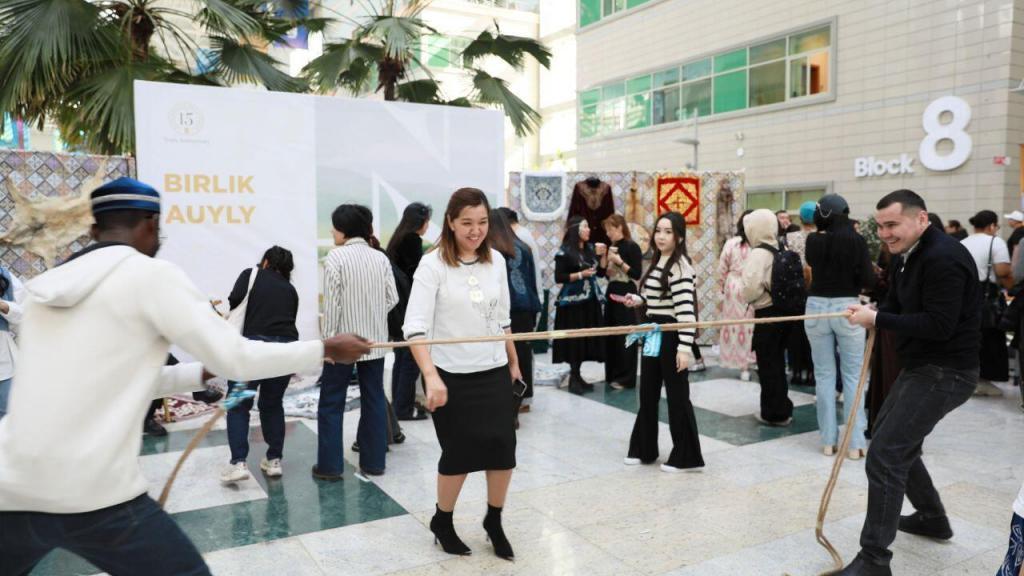
Across the campus, thematic auls—Aq Niyet Auyly (Village of Good Intentions), Baqyt Auyly (Village of Happiness), Bereke Auyly (Village of Prosperity), and Bіrlik Auyly (Village of Unity)—welcomed visitors into spaces that reflected the spirit of Nauryz: renewal, joy, and communal harmony. In elaborately decorated yurts, guests sampled traditional delicacies, observed master artisans at work, and engaged in age-old Kazakh games.
But beyond the food and festivities, the celebration was also a living testament to cultural continuity. Students reenacted key Kazakh rituals, from betashar—the unveiling of the bride—to tusau kesu, a child’s first step-cutting ceremony. Performers in richly embroidered shapan and silk saukele headdresses took to the stage with folk dances and songs, while guests strolled through the campus, admiring the intricate designs of national costumes. The festivities culminated in a special competition honoring the best traditional attire of the evening.