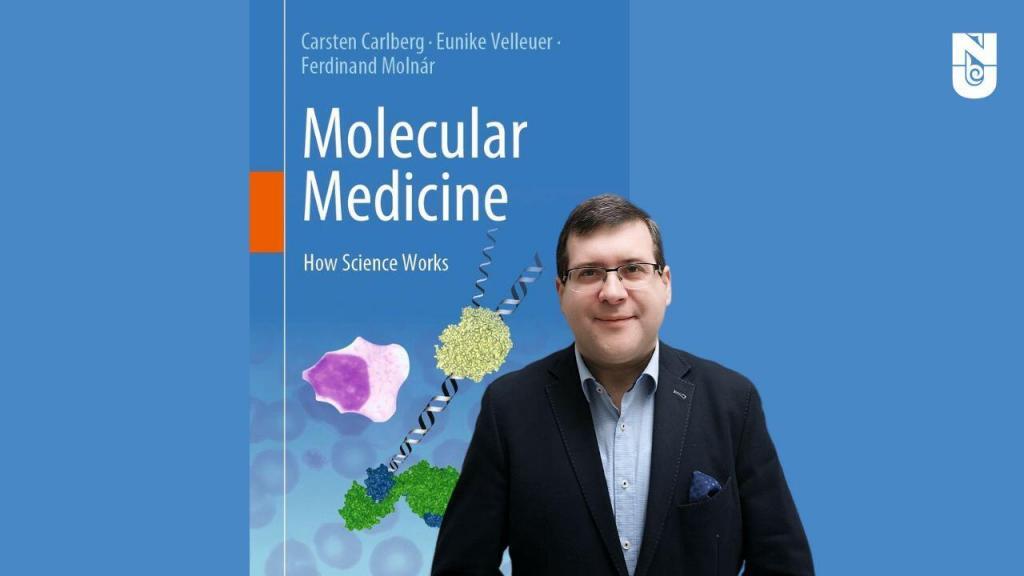
Associate Professor at NU Ferdinand Molnár, in collaboration with Professor Carsten Carlberg of the Polish Academy of Science and Dr. Eunike Velleuer of the University of Düsseldorf, wrote an undergraduate textbook “Molecular Medicine: How Science Works,” which covers gene regulation, human epigenetics, molecular immunology, cancer biology, and nutrigenomics.
The merged textbook, comprising 42 chapters and published by Springer Nature, provides a broad overview of Molecular Medicine, delving into the molecular and cellular aspects of health and disease. It explores gene regulation, including epigenetic changes influenced by lifestyle choices and the environment. The principles of molecular immunology are also covered, from the body’s defense mechanisms to immune disorders. Within this context, the book examines the molecular basis of common diseases such as cancer, diabetes, heart disease, and immune disorders. It also explains the impact of nutrition on epigenetics and diseases.
The authors emphasize the significant role of epigenetics in common diseases, with genetic predisposition explaining less than 20% of its cause and the remaining 80% primarily attributed to the epigenome, which can be influenced by lifestyle choices. Thus, maintaining good health involves a high level of individual responsibility. This knowledge is valuable not only for biologists and biochemists but also for students pursuing biomedical disciplines.
Prof. Ferdinand Molnár has taken the Associate Professor position in the Department of Biology at NU’s School of Sciences and Humanities in 2018. Before that, he worked in the School of Pharmacy at the University of Eastern Finland (Kuopio, Finland) since 2008, studying the interactions of nuclear receptors with ligands, proteins, and DNA. Prof. Molnár’s interests include integrative structural biology and bioinformatics, eukaryotic transcriptional regulation in health and disease, and recombinant protein production.
Students and researchers affiliated with Springer Nature subscription holders can download the book for free.