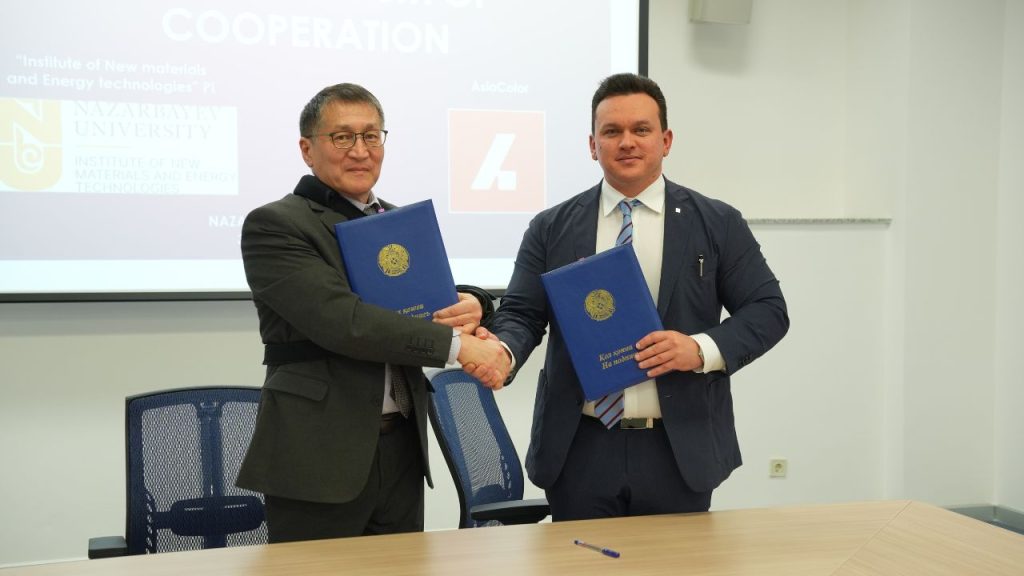

Sayasat Nurbek, Minister of Science and Higher Education of Kazakhstan, held a briefing with the diplomatic corps at NU, where he outlined the state’s vision and strategies for international cooperation in higher education and science.
Foreign diplomats from over 50 countries and international organizations attended the meeting in person, and Kazakh ambassadors working abroad could attend the meeting online. NU President Shigeo Katsu moderated the discussions.
The current student body of Kazakhstan totals 626,200, earning degrees in 119 local universities. According to Minister Nurbek, the student number is projected to grow to 800,000 by 2025, and surpass 1,000,000 in the next decade. This will create a shortage in educational programs, teaching staff, and infrastructure if more vigorous, robust, and extensive measures are not taken.
Ensuring accessibility of higher education is a key priority of the minister’s strategy. This will be achieved through building capacity for professors and instructors, internationalization of the student body and faculty, increasing the academic autonomy of higher education institutions, infrastructure development, and digitalization of higher education.
“We are really focusing on bringing digital technologies. We have already switched to online hybrid higher education. Last week, I was in the U.S. signing a three-year strategic partnership with Coursera – online platform, so we will provide all our students with access to the Coursera courses as electives and its 654 best courses will be translated and adopted in Kazakh and Russian languages. And on the next stage we will be teaching our faculty to prepare real content in Russian and Kazakh. It is an interesting opportunity,” informed the minister.
Bridging the current infrastructural gap is one of the more urgent priorities of the ministry. The current need for student dorm beds is 87,000 and will continue growing. Minister Sayasat Nurbek urged the diplomatic community to serve as liaisons between businesses, academic institutions and other actors to form public-private partnerships, exchange expertise and create solutions in order to meet the growing demand in higher education, research and marketable skills.
“This year, Kazakhstan officially is a co-chair of the Bologna organization. We signed a framework cooperation agreement with our colleagues in Uzbekistan for creating an open higher education area in Central Asia to exchange credits, diplomas, and academic mobility. There is a chance to shift some academic mobility to Central Asia, ” stressed Sayasat Nurbek.
The minister also mentioned a growing student inflow into Kazakhstan and the Central Asian region, at large, due to a changing geopolitical landscape, increased interest in the region and improved education opportunities created here.
Sayasat Nurbek was appointed to lead the new Ministry of Higher Education and Science in June 2022. The ministry was created last year, signaling to the market the Kazakh government’s increased focus on science-led economic development.