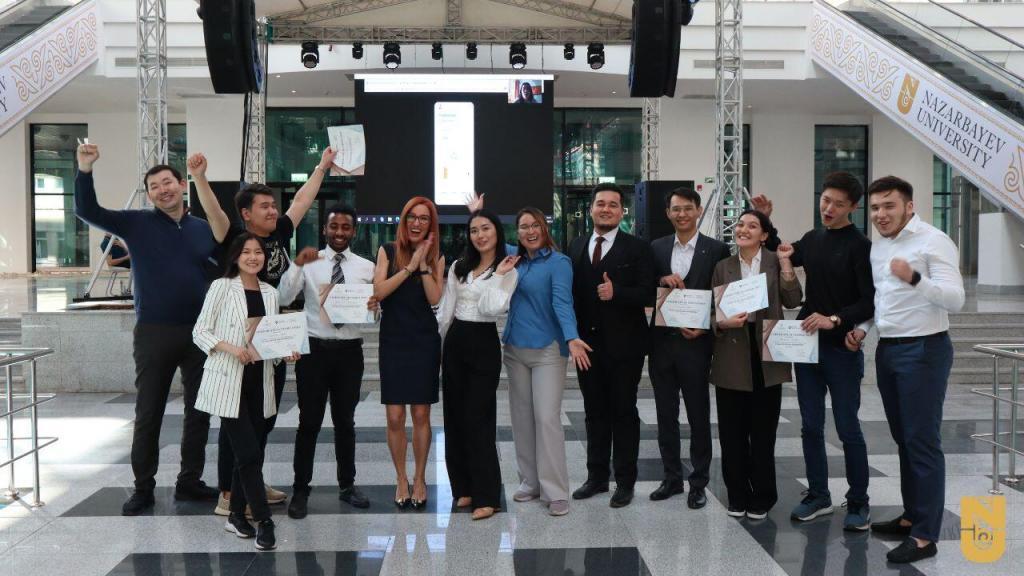
NU School of Engineering and Digital Sciences has been offering the Globalization and Engineering course as part of its Master of Engineering Management program since 2015.
Back then, after teaching it for the first time, Associate Professor Maria Tsakalerou felt that major points did not come across as anything other than theoretical and abstract knowledge, so she searched for best practices internationally that have been effective in addressing the impact of globalization on the education, training, and practice of engineering. With her help, NU has established a mutually beneficial agreement with Penn State University (PSU) to teach the course jointly.
Professor Tsakalerou and Dr. Dena Lang, Associate Director of Engineering Leadership Research at Penn State University jointly developed a new structure for the course and have been offering it since 2016. Over seven years, up to 150 students have completed the course, indicating that they found it extremely helpful to study and work in groups with students from another part of the world, in a truly globalized environment.
“The course Globalization and Engineering allowed me to understand how cultural differences impact business practices and team dynamics. We explored the essential knowledge areas and key competencies required for successful engineers to live and work in today’s global marketplace. Special attention was given to the influence of individual and cultural differences on communication and team dynamics. I am now able to understand the sources of conflicts that can arise in multicultural teams,” wrote a student Yermukhan Maikhanov in his LinkedIn profile.
“This course helped me understand the challenges and benefits of working in international teams in different time zones, overcome barriers, and develop the skills needed to collaborate in a global environment. […] This course has had a strong impact on my perspective on working in international companies and I look forward to applying this knowledge in future projects,” said another student Alisher Aitbayev.
In addition to cross-continental collaboration, the course included such innovative teaching methods as weekly self-assessment and peer-supported review, the use of multimedia and PSU’s Canvas online platform, as well as a flexible self-study schedule. These methods have been showcased during the 2019 American Society for Engineering Education (ASEE) Annual Conference, where the overall acceptance rate is 20%.