
Kazakhstan Aims to Attract 150,000 International Students by 2029
A recent Euronews report titled “Kazakhstan aims to attract 150,000 international students by 2029 — what’s driving the push?” highlighted the country’s strategic efforts to position itself as a regional hub for higher education and innovation.
With more than one billion people under the age of 25 across Central Asia and Eurasia, Kazakhstan is responding to growing demand by expanding partnerships with leading global universities and establishing new research centers. The government aims to attract 150,000 international students by 2029 — nearly five times the current number.
Today, most international students in Kazakhstan come from India, particularly for medical programs, followed by students from China, Russia, Pakistan, Turkey, Germany, and the United States.
To support this growth, Kazakhstan is strengthening its collaboration with Western institutions by opening international branch campuses and launching joint research centers focused on strategic sectors such as critical minerals. At the same time, the government is backing artificial intelligence innovation — funding student-led startups and creating pathways for entrepreneurship from early learning through incubation and acceleration.
“We had a very clear vision,” said Sayasat Nurbek, Minister of Science and Higher Education of Kazakhstan. “Every single university student in Kazakhstan will have to go for AI courses, get certificates. Out of 650,000 students, over 4,000 already have the certificates. Then we are launching a 100-million-dollar seed fund just to fund AI startups of these college students and faculty members. And then we are going to go through AI entrepreneurship module. So, every single student will have the possibility to become what we now call unicorns — one-person billion-dollar company, a founder with full support at every level: incubation, acceleration, and basic learning.”
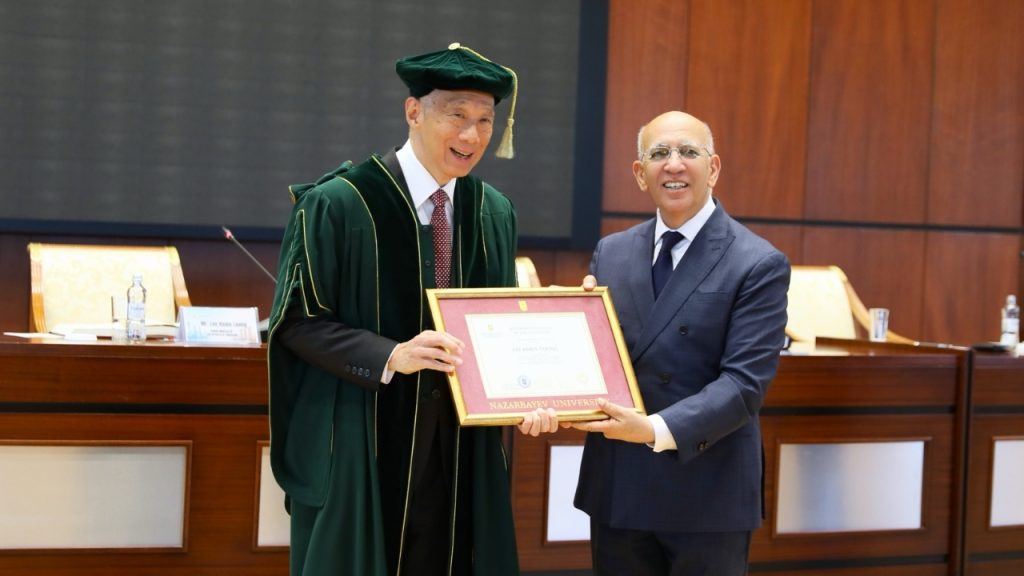
NU President Waqar Ahmad emphasized the importance of joint funding models to elevate research quality and reputation:
“We are developing new kinds of partnerships, but we are also looking at how we can use the money that we invest in research jointly. So, let’s say we are investing a million dollars in research in a particular area. If we were to go into partnership with two other universities and if they were to match our funding, we now have three million dollars that we can bid for, and they can bid for. But it also has the inbuilt advantage of collaborative research which would be of higher quality. It would get more in prestigious journals. More people will use it. It will enhance the reputation of the university and the country.”
As Kazakhstan scales up its education and research ecosystem, institutions like NU are playing a vital role in shaping a globally connected, innovation-driven academic environment.