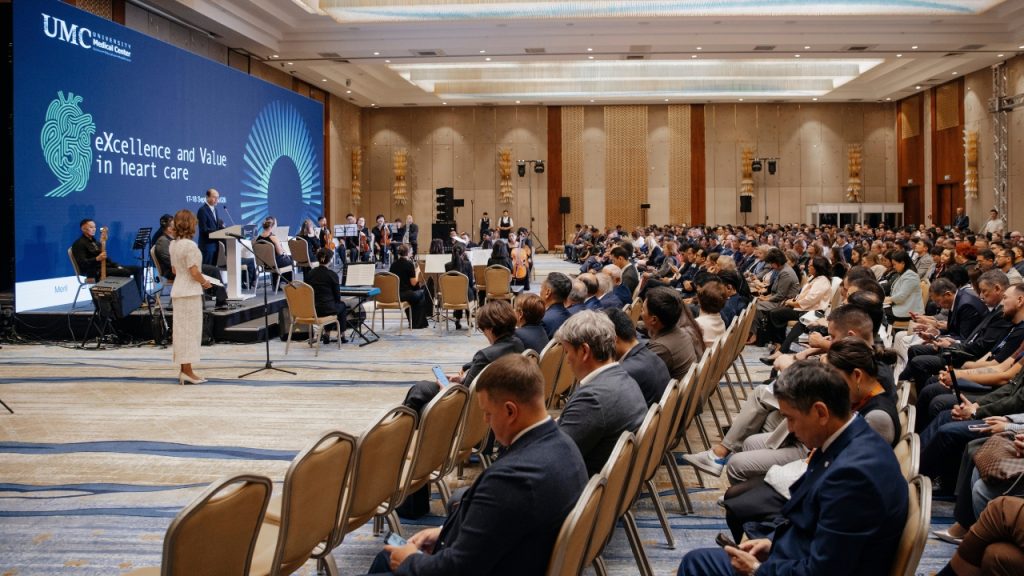
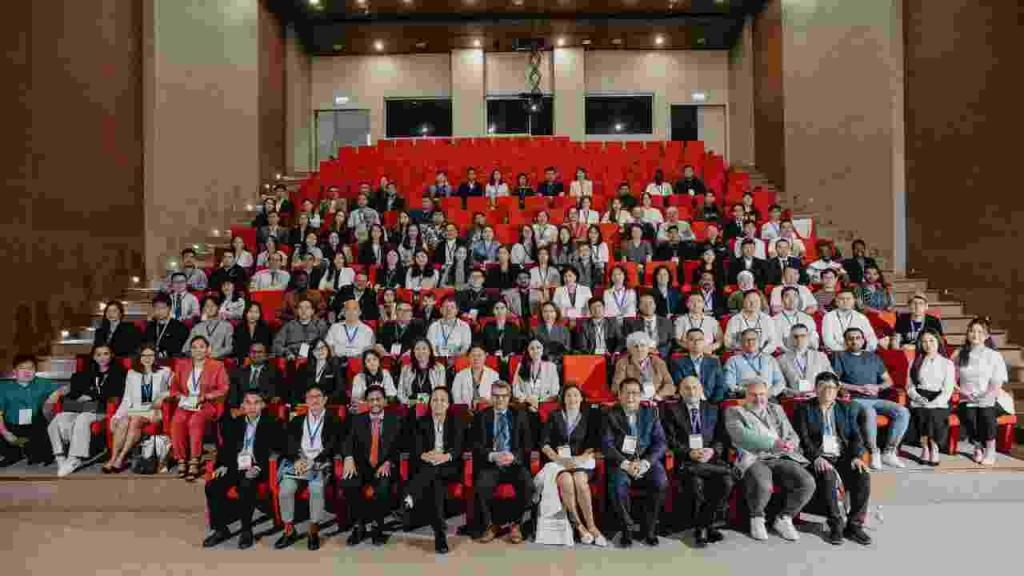
Nazarbayev University hosted the IV International Symposium on Emerging Materials and Devices (ISEMD 2025) from May 28 to 30.
The symposium brought together more than 180 researchers from Spain, the United States, China, the United Kingdom, Turkey, Finland, Ecuador, Uzbekistan, Russia, and Kazakhstan. Local participants included scientists from KazNU, Satbayev University, Abai University, Astana IT University, and other institutions.
“As the world faces the growing challenges of climate change and environmental degradation, the need for sustainable energy solutions is critical,” said NU President Waqar Ahmad in his opening remarks. “At Nazarbayev University, research and education in renewable energy are central to our mission. We are preparing future leaders who can develop and implement innovative technologies in solar, wind, and other clean-energy sectors.”
The program featured more than 46 presentations, covering topics such as solar cells, biomass conversion, hydrogen production and storage, and topological materials for quantum applications.
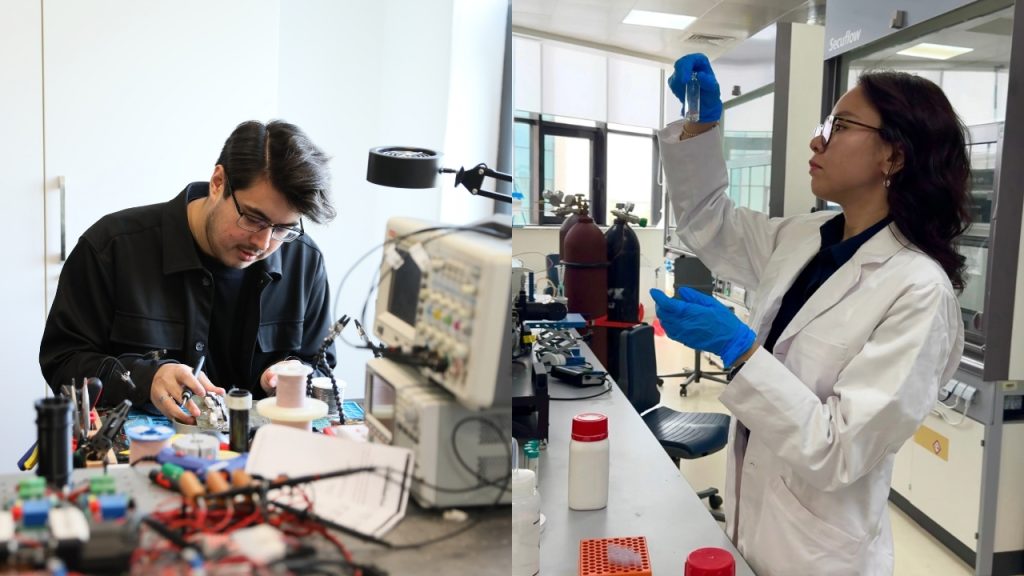
NU’s Renewable Energy Laboratory showcased a porous polymer designed for flexible electronics and biosensors. Resistant to mechanical deformation, it improves the performance of wearable devices and is already being applied in other environmental and energy-related projects by the team. Meanwhile, a biomass research group, led by senior researcher Minawar Shaimardan, presented a pioneering study for Kazakhstan — a hypertension medication based on furfural, an organic compound extracted from corn husks, recognized as one of the most promising bio-based chemicals for future applications.
“Our primary goal is to bring strong scientists from around the world here to Kazakhstan,” said Professor Nurxat Nuraje, head of the Renewable Energy Laboratory at NU National Laboratory Astana. “These kinds of meetings help foster collaboration, launch joint research projects, and elevate Kazakhstan’s contributions to global science.”
“I am genuinely impressed by the rapid development of science in Kazakhstan and the remarkable progress in your university system. Your talented students have completed internships in my lab in Scotland and at Oxford, consistently delivering outstanding results,” said Mojtaba Mirzaeian, professor at the University of the West of Scotland.
At the opening of the symposium, speeches were delivered also by NU Professors Elizabeth Arkhangelsky, Dean of the School of Engineering and Digital Sciences, Zhumabay Bakenov, Director of the Center for Energy and New Materials Science (NLA), Professor Hiroshi Matsui from Cornell University (USA), Professor Alina-Mariana Balu from the University of Córdoba (Spain), and other esteemed researchers.
The symposium reaffirmed NU’s growing role as a regional research hub and an active participant in the global movement toward a sustainable future.